
If you reheat one chapati at a time
You want to reheat one or a few chapatis after getting home, and are mainly looking for a cooking surface that suits your bread and the space available on your worktop.


If you usually reheat one chapati at a time, choose a flat cooking surface that suits the diameter of your bread. A compact electric frying pan can also be used for other dishes. If you want to heat several chapatis side by side, a longer flat griddle gives you more room, but it also takes up more space on your worktop and in storage. The stated dimensions describe the models, not how evenly they reheat chapatis.
You want to reheat one or a few chapatis after getting home, and are mainly looking for a cooking surface that suits your bread and the space available on your worktop.
You’re looking for an appliance with its own heating element and temperature control, which you may also be able to use for other dishes.
You want to heat several chapatis one after another or side by side, so you’re comparing the usable cooking surface with the space you have to store the appliance.
First, compare the size of your chapatis with the usable cooking surface. Then work out how much space you have and which cleaning requirements suit you.
| What to consider | What should you look for? | Who is this important for? |
|---|---|---|
| Cooking surface that fits | Compare the diameter of your chapati with the diameter or both sides of the usable cooking surface. Don’t confuse the pan’s capacity with the size of its cooking surface. | If I usually reheat one chapati at a time, I want it to fit flat on the surface without taking up more worktop space than necessary. That’s why around 36% of consumers prioritise a cooking surface that fits. |
| Space and temperature control | Check the model’s external dimensions, power cord, thermostat and placement instructions. | If I don’t have a free hob, I’m looking for an electric appliance that fits the space I have and can also be used for other dishes. Around 29% of consumers prioritise being able to cook independently in a suitable space. |
| Several chapatis | Compare the dimensions of the breads you usually make with the cooking surface, and decide whether reheating in batches works for you. | If I’m reheating for several people, I want to know how many chapatis fit side by side and how much space the griddle takes up. Around 21% of consumers prioritise room for several breads. |
| Coating and cleaning | Check which type of coating is listed, which parts can be washed and whether you need to remove the thermostat first. | If I use the appliance regularly, I want to know in advance how to clean it and how to care for its coating. Around 14% of consumers give maintenance and coating the highest priority. |
Litres tell you a pan’s capacity, not how many flatbreads will fit flat on it. Tristar lists both a capacity of 1.75 litres and a cooking surface of Ø 30 cm for the PZ-2963.
Choose based on the usable cooking surface and the size of your own chapati, not just the pan’s capacity.
If the cooking surface is too small, you may need to reheat the chapatis in extra batches.
A non-stick coating doesn’t automatically tell you what it’s made of or how to clean it. FRITEL states that the TY 1689 is not PFAS-free and is not dishwasher-safe.
Check the information for the exact model and follow its cleaning and heating instructions.
The PZ-2963 is a round electric frying pan with a cooking surface of Ø 30 cm. The BP-2638 is a separate flat crêpe maker with the same diameter.
The Multi Wonder Chef Pro, variant 01.162367.01.500, is a deeper electric pan for those who also prepare other meals.
The FCSP110EBK40 is a larger electric frying pan with a rectangular cooking surface.
The TY 1689 is a flat teppanyaki griddle, offering an alternative to a pan when you want to place chapatis side by side.
The PP 3570 C is a large electric party pan, also described as a frying pan.
These Joybuy picks are flat electric griddles for chapatis. If you choose a combination griddle, check which part is actually flat.
 No image available
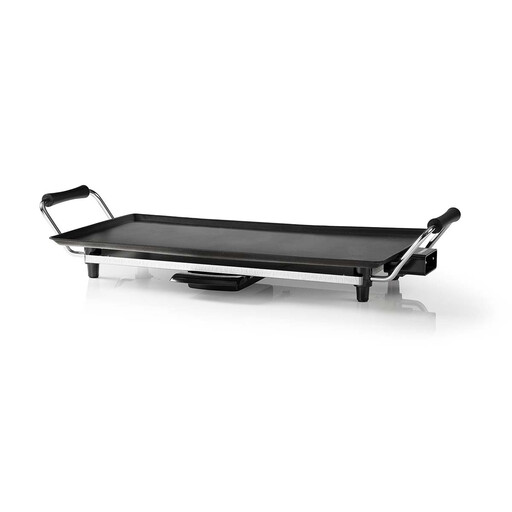
A flat cooking surface for anyone who wants to heat several chapatis side by side.
Cooking surface: 47.5 × 26.5 cm. The thermostat is detachable and continuously adjustable.
 No image available
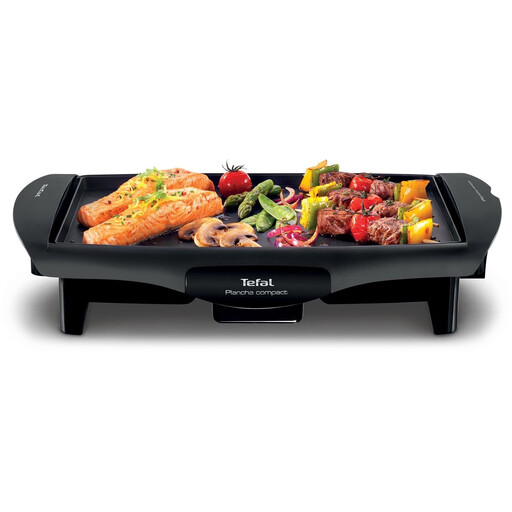
A flat plancha for anyone who wants to reheat chapatis and use the griddle for other dishes too.
Cooking surface: 35 × 25 cm. Detachable thermostat with five settings; remove the thermostat before putting the griddle in the dishwasher.
 No image available
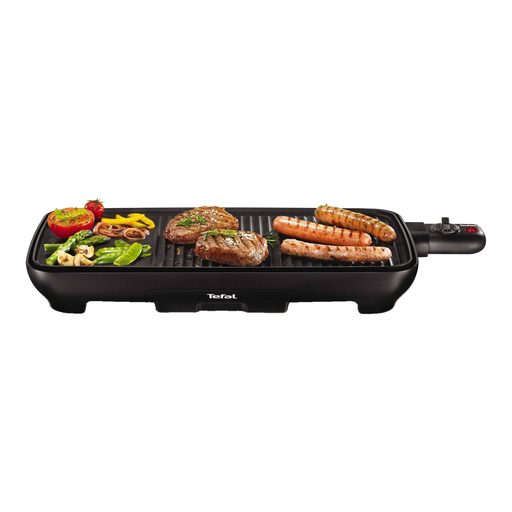
A combination griddle with a flat section that fits one chapati; the rest is ridged for grilling.
The thermostat is detachable and has six settings. Only a third of the stated surface is flat.
 No image available
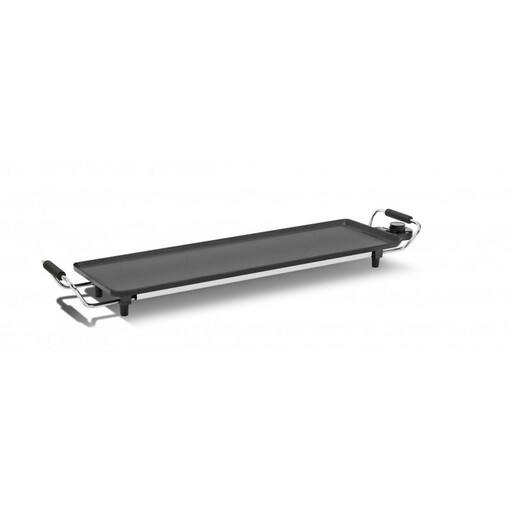
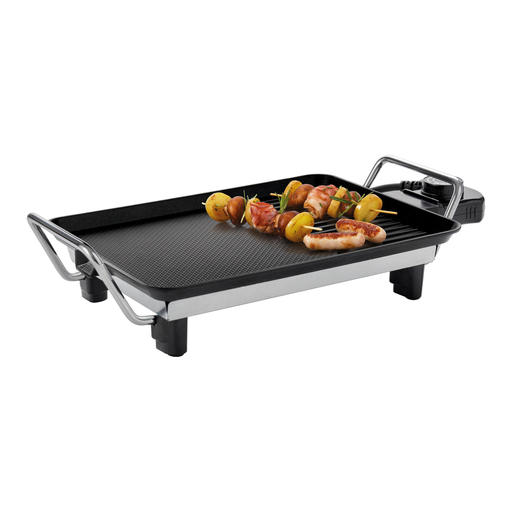
The long, flat griddle suits anyone who wants to heat several chapatis side by side.
Cooking surface: 70 × 22 cm. Five temperature settings. FRITEL states that the griddle is not dishwasher-safe; its width may be restrictive for larger chapatis.
 No image available
A combination griddle where you can place a chapati on the teppanyaki section; a third of the stated surface is for grilling.
The thermostat has five settings. The stated griddle size is 28 × 20 cm.
No. Compare the diameter of your chapati with the usable cooking surface; Tristar lists a cooking surface of Ø 30 cm for the PZ-2963. The size of the whole pan may not be the same as the cooking surface.
Follow the instructions for the exact model. The Nedis manual says to place the FCSP110EBK40 on a stable, flat, heat-resistant surface. It also says the pan and lid can be cleaned in the dishwasher, but the temperature control cannot. Tristar states that the PZ-2963 is not dishwasher-safe.
According to the Netherlands Nutrition Centre, cooked leftovers should be covered, cooled and refrigerated within two hours of cooking, then reheated until piping hot throughout. If you’ve bought a packaged product, also follow the storage instructions on the label.
ACM ConsuWijzer generally states that online purchases come with a statutory 14-day cooling-off period from delivery, subject to legal exceptions. The statutory guarantee is separate: if a product breaks sooner than you could reasonably expect under normal use, the seller must resolve the issue in line with the applicable terms.
Yes. The Netherlands Food and Consumer Product Safety Authority states that CE marking is required for electrical products and classifies kitchen appliances as electrical appliances. This statutory marking alone does not prove that an individual model has been independently tested.