
Vandaag of morgen in huis

Kwaliteit gegarandeerd

Welkomstaanbiedingen ontgrendelen: GRATIS bezorging | Tot 80% korting | Gratis 30 dagen JoyPlus-proefperiode
Download de app
A baking tray seems simple: you place dough, vegetables or an oven dish on it and slide the tray into the oven. Yet many people buy a model that disappoints after just a few uses. The tray may not fit the oven properly, warp or prove difficult to clean.
When buying a baking tray, you should therefore look beyond colour and price. The material, dimensions and care instructions in particular determine whether an oven tray is suitable for everyday use.
A 48 x 33.5 cm baking tray offers plenty of space, but it will not fit every compact oven. Measure the inside width and depth of your oven first. Also check the height of the rim. A high rim is useful for oven dishes, while a low rim works better for pizza and biscuits.
Also check whether the baking tray is designed for a standard oven, a small oven or an air fryer baking tray. A tray that physically fits inside the appliance is not automatically suitable for its air circulation system or maximum weight capacity.
A non-stick baking tray can make it easier to remove baked goods. That does not mean every tray is dishwasher-safe. The care instructions for various coated models, including some metal pizza trays, recommend hand washing. Scouring pads and metal spatulas can damage the coating.
So do not just look for the term “non-stick”; also check:
For some items, the title, photos and specifications may contradict one another. For example, the description of the Alpina muffin baking tray mentions steel, while a product specification lists plastic. If in doubt, check the current material information and dimensions on the product page before buying.
A serving tray is also not the same as an oven tray. A stainless-steel serving tray or divided meal dish may be suitable for serving, but it should not be used in the oven or microwave without clear instructions.
A metal baking tray is usually lightweight and suitable for a wide range of oven dishes. Steel is a commonly used material for baking tins, pizza trays and baking tray sets. It heats up relatively quickly, but a thin tray may warp when exposed to large temperature differences.
A stainless-steel baking tray is worth considering if you are looking for a sturdy, uncoated tray. However, check that the product is specifically described as oven-safe. Stainless steel conducts heat differently from carbon steel and is not automatically ideal for every type of bake.
Carbon steel is often used for baking tins because it is relatively lightweight and can distribute heat evenly. If the tray has a coating, careful maintenance is important. According to the PURECOOK set’s product information, it is suitable for ovens and air fryers, but not for microwaves, hobs, naked flames or charcoal barbecues.
Choose the shape based on what you prepare most often:
Measure not only your oven but also the available storage space. A set with three sizes is versatile, but takes up more room than a single compact baking tray.
A non-stick coating helps you remove cakes, pizzas or savoury tarts from the tray. Ideally, use wooden, plastic or silicone utensils. Allow a hot tray to cool before washing it; a sudden change in temperature can put stress on the material.
An uncoated tray may remain usable for longer with intensive use, but it may require more preparation. Lightly grease the tray or use baking parchment when the recipe calls for it. Always follow the care instructions for the specific model.
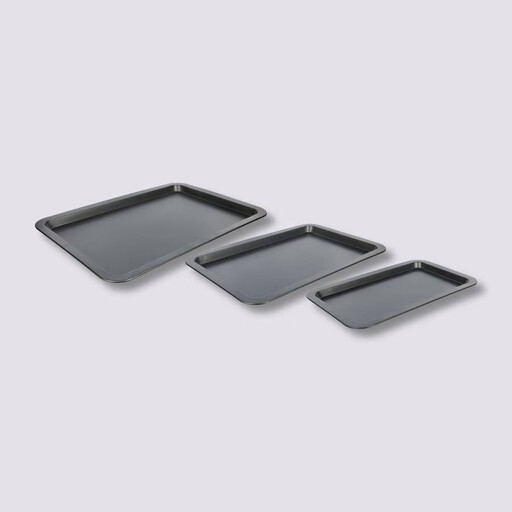
Why it suits this profile: Three steel sizes give beginner bakers the flexibility to try different recipes without having to buy several separate trays straight away.
The three dimensions make it easier to choose a suitable size. The set is suitable for the oven, but not for the microwave or dishwasher.
Steel set with three sizes; dimensions of 48 x 33.5 x 2.3 cm for the largest tray.
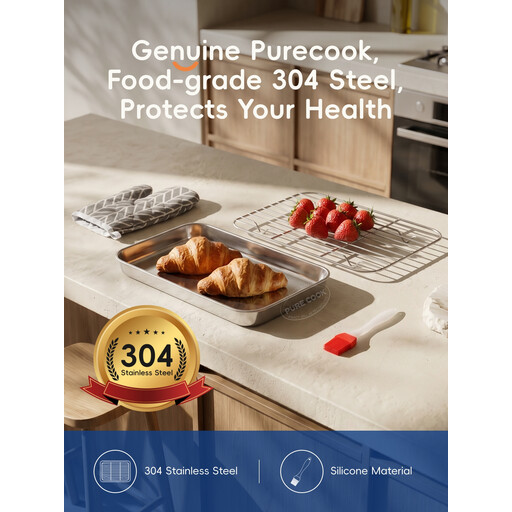
Why it suits this profile: Suitable for anyone looking for a compact baking tray with a rack and additional accessories for baking, roasting and draining.
The product information specifies 304 stainless steel and clear dimensions. However, check that your oven is large enough before use.
23.5 x 17.5 x 2.5 cm baking tray with grill rack, silicone brush and heat-resistant gloves.
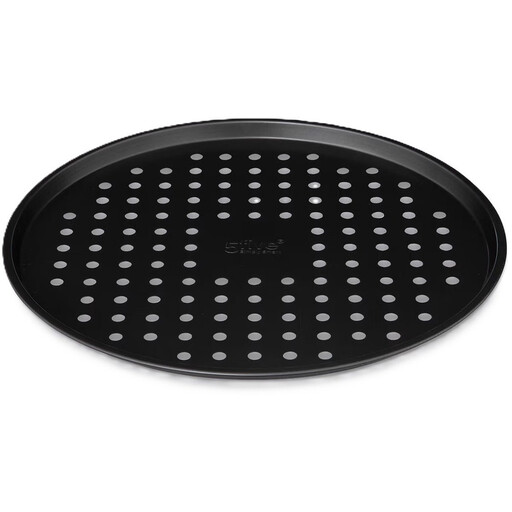
Why it suits this profile: A targeted choice for households that regularly bake pizza and want to use a round, perforated tray.
The 33 cm diameter and 1.2 cm height are clearly stated in advance. The tray is not dishwasher-safe; hand washing helps prevent care mistakes.
Steel pizza tray with perforations and an ILAG non-stick coating, according to the product information.
Wash a coated baking tray with warm water, mild washing-up liquid and a soft sponge. Do not use wire wool. Allow the tray to dry completely before storing it. Stainless steel can generally be placed in the dishwasher when this is explicitly stated, but hand washing helps to limit scratches and marks.
Use baking parchment for sticky preparations and allow a baking tray to cool before removing food residue. Replace the tray if the base remains permanently warped, the coating starts to peel or sharp damage appears.
We have compiled a complete, up-to-date list of products that fully meet these strict selection criteria and the applicable European safety regulations.
First measure the internal dimensions and check whether the handles or raised rim take up any space. A compact tray is more practical than a large model that only fits in the oven at an angle. Also check that air circulation is not blocked.
This varies from product to product. Stainless-steel models are sometimes dishwasher-safe, while trays with a non-stick coating often recommend hand washing. Always follow the care instructions on the product page.
Its lifespan depends on the material, the temperature at which it is used and how well it is maintained. A baking tray with no damage to the base or coating can last for many years with normal household use. Avoid sharp metal utensils, thermal shock and abrasive cleaning products.
