
Vandaag of morgen in huis

Kwaliteit gegarandeerd

Welkomstaanbiedingen ontgrendelen: GRATIS bezorging | Tot 80% korting | Gratis 30 dagen JoyPlus-proefperiode
Download de app
A quality sauté pan is an essential tool in any kitchen. It's perfect for a quick stir-fry, a slow-cooked stew, or a one-pan meal for the whole family. However, switching to an induction cooktop introduces new challenges. A pan that performed perfectly on a gas stove might disappoint on an induction hob, with uneven heating or a base that warps under pressure.
Before you invest in a new induction sauté pan, it's crucial to look beyond the marketing claims. Many pans promise the world but fail to deliver after just a few months of use. Let's discuss the most common pitfalls.
non-stick frying pan that starts to flake after only a few weeks. This is often caused by a base layer that is too thin or the use of inferior materials that can't withstand the rapid, direct heat of induction cooking.To ensure a durable and enjoyable cooking experience, there are a few technical specifications you shouldn't overlook.
For an induction sauté pan, the construction of the base is crucial. Induction works via a magnetic field, so the pan must have a ferromagnetic base. But that's not all. For even heat distribution, the material of the pan itself is just as important.
A good non-stick coating makes cooking and cleaning easier. The focus is increasingly on safety and durability.
ceramic sauté pan is a popular alternative. These coatings are made from natural materials and are free of harmful chemicals. They can often withstand higher temperatures but require careful maintenance to preserve their non-stick properties.An all-in-one pan saves space and money. Pay attention to the details that make a difference in daily use.
induction pan with a lid is essential for stewing and keeping dishes warm. A glass lid is convenient for monitoring the cooking process without losing heat.easy-to-clean pan is a blessing. Although many pans are labelled as dishwasher-safe, handwashing with a soft sponge significantly extends the life of the non-stick coating.Based on these criteria, we have selected several pans that suit different cooking styles and households.
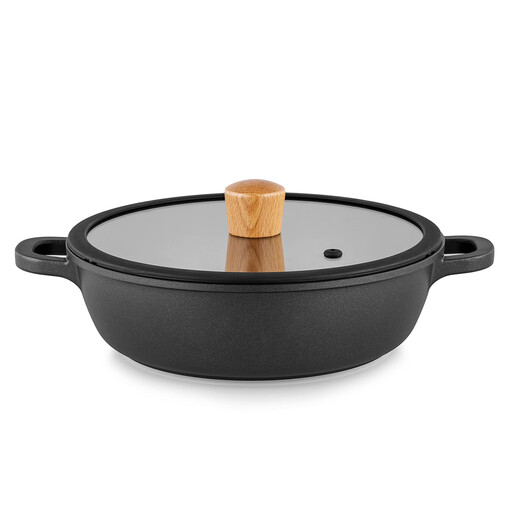
Why This Fits Their Persona: Perfect for those who want one pan for almost everything. The spacious 28 cm ceramic sauté pan is ideal for stews, pasta dishes, and stir-fries for the whole family. The two handles make moving a full, heavy pan safe and easy.
The die-cast aluminium construction ensures superior, even heat distribution and prevents warping. The Swiss ILAG coating is PFOA-free and, according to the manufacturer, highly durable.
A true all-in-one pan: suitable for frying, searing, stewing, and simmering. It comes with a glass lid and silicone handle protectors.
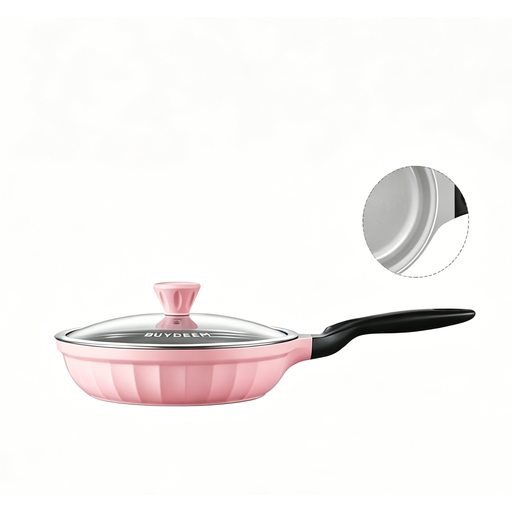
Why This Fits Their Persona: For those who believe cookware should be as beautiful as it is functional. This pan combines a modern design with a strong focus on healthy cooking, ideal for the conscious home chef who values both aesthetics and safety.
The Swiss ceramic coating is explicitly free of PFAS, PFOS, and PFOA. The die-cast aluminium base provides a stable, flat bottom that resists warping and distributes heat perfectly.
Fast and uniform heat distribution for consistent cooking results. The smooth coating makes the pan very easy to clean.
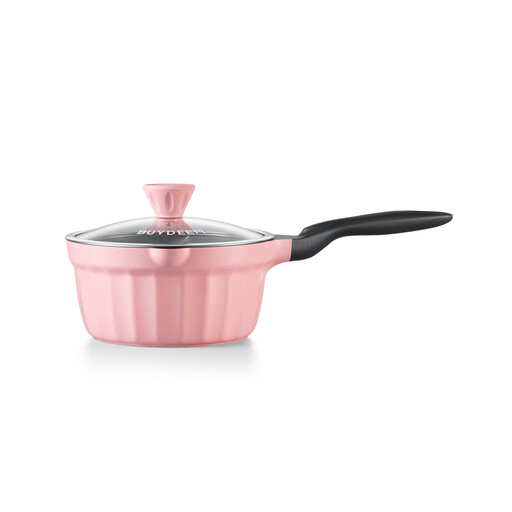
Why This Fits Their Persona: Not everyone needs a large pan. For one- or two-person households, or for preparing sauces and side dishes, this compact model is ideal. It offers the same high-quality features in a smaller footprint.
This pan is made from the same materials as its larger sibling: a solid die-cast aluminium base and a PFAS-free ceramic coating. This guarantees durability and safety, even in a smaller size.
Compact and efficient. The built-in spout is particularly useful for pouring sauces or soups without dripping.
We have compiled a complete, real-time list of products that fully satisfy these strict selection criteria and UK safety regulations.
The easiest way is the magnet test: if a magnet sticks to the bottom of the pan, the base is magnetic and therefore suitable for induction. Additionally, most induction-compatible pans have a special symbol on the base or packaging, which looks like a coil or a series of loops.
The traditional non-stick coating, often known by the brand name Teflon, is based on the plastic PTFE. In the past, PFOA was used in its production, a substance that has now been largely phased out. A ceramic coating is made from a sand derivative and contains no plastics. According to manufacturers, ceramic coatings can often handle higher temperatures without degrading. Both types require careful use (no metal utensils) to maximise their lifespan.
