
Vandaag of morgen in huis

Kwaliteit gegarandeerd

Welkomstaanbiedingen ontgrendelen: GRATIS bezorging | Tot 80% korting | Gratis 30 dagen JoyPlus-proefperiode
Download de app
Stainless steel pans for induction are popular because they can be suitable for everyday cooking, are often supplied without a non-stick coating and can also work on gas, electric and ceramic hobs. However, not every stainless steel saucepan is automatically suitable for induction or pleasant to use.
If you only look at appearance or an attractive offer, you may encounter a few familiar problems. These include a pan that is not recognised by the induction hob, a base that becomes too hot in certain areas or a handle that is difficult to keep clean. With these selection criteria, you can compare induction pans based on practical features rather than marketing copy.
Induction works through magnetic transfer. A pan therefore needs a suitable magnetic base. Check the product information to confirm that the pan is explicitly suitable for induction. A thick composite base or multi-layer base can also help distribute heat more evenly across the cooking surface.
Pay attention to the diameter as well. A 24 cm pan will not always work optimally on a very small cooking zone. A good match between the pan base and cooking zone helps minimise unnecessary heat loss.
A tri-ply pan generally consists of several layers, such as stainless steel, aluminium and another layer of stainless steel. This can contribute to faster and more even heat distribution. However, check whether the construction is limited to the base or continues up the sides.
For an ordinary saucepan, a sturdy sandwich base is often sufficient. For an induction frying pan or a sauté pan with a lid, a multi-layer construction covering a larger part of the pan wall may be more practical.
Not every stainless steel pan is dishwasher-safe. According to the product information, the MAXCOOK 304 Stainless Steel 3-Tier Steamer is recommended for hand washing. The PURECOOK tri-ply frying pan, on the other hand, is described as dishwasher-safe. The WMF Profi Resist frying pan is specifically stated as unsuitable for dishwasher cleaning.
Therefore, check the following before buying:
304 stainless steel is a common material specification for cookware. Product pages describe it as food-grade stainless steel. This is a technical product feature, not a guarantee that every dish or cooking method will produce the same result.
316L stainless steel is also used for pans. Its composition differs from 304 stainless steel, but always check the full product specifications and care advice. According to the product information, the Maxcook 316L Hotpot has a glass lid, silicone handles and a composite base.
WMF uses Cromargan 18/10 stainless steel for various models. A TransTherm universal base is listed for the WMF Vitalis and Astoria. These are verifiable features that you can compare: material, base type, diameter, capacity and hob compatibility.
The following points are particularly relevant for induction:
A pan may be suitable for all hobs on paper, but you still depend on the cooking zone, power setting and temperature used. With stainless steel, it is best to start on a medium heat. Excessive direct heat can cause discolouration, as stated in the care information for several MAXCOOK models.
For one or two people, a saucepan or stainless steel cooking pot of around 2.5 litres is often sufficient for sauces, soup or small portions. Families are more likely to benefit from pans with a capacity of 5 litres or more.
A steamer or steam cooking pot is useful when you want to cook vegetables, fish or other ingredients above boiling water. A hotpot with divider is better suited to sharing a meal with two broths or flavours in one pan. With larger models, consider the weight, storage space and the cooking zone on which they will be placed.
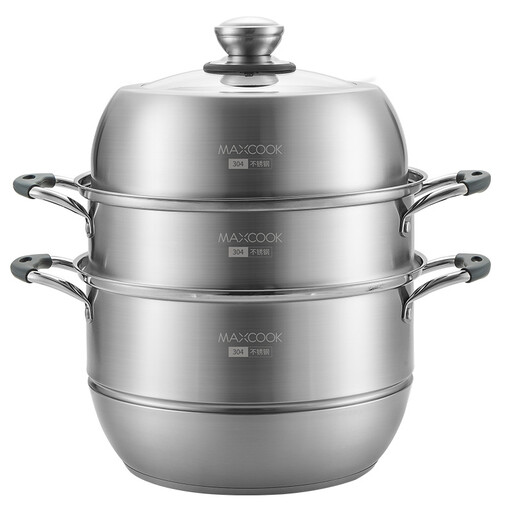
Why it suits this profile: This 28 cm steamer offers multiple tiers for vegetables and other ingredients. According to the product information, it is suitable for induction, gas, electric and ceramic hobs.
The product description explicitly states that it is induction-compatible and has a reinforced composite base. Hand washing is required, so you will not mistakenly assume that it can go in the dishwasher.
304 stainless steel, three tiers, silicone handle protection and use on multiple hobs.
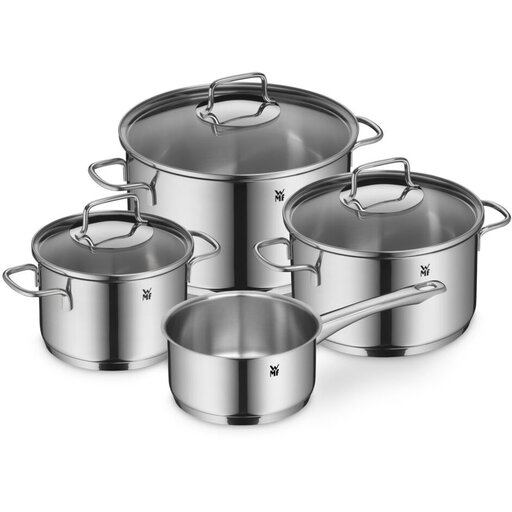
Why it suits this profile: The set includes three cooking pots with lids and a saucepan. This is practical for households looking to replace several essential pans at the same time.
The 16, 20 and 24 cm sizes are clearly stated. The set is suitable for all heat sources, including induction, and according to the product information it is dishwasher-safe.
Cromargan stainless steel, glass lids, wide pouring rims and TransTherm base.
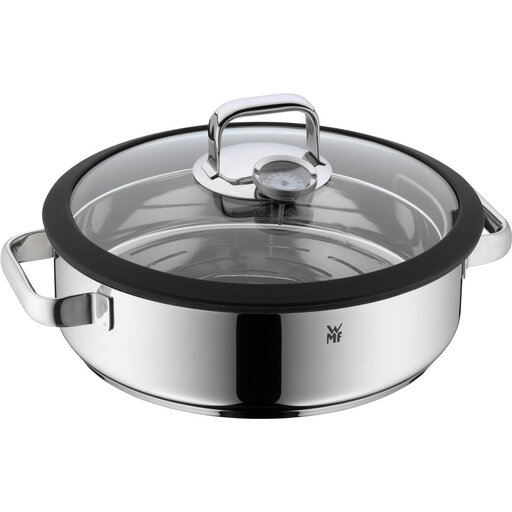
Why it suits this profile: With a capacity of approximately 5 litres, a steamer insert and a thermometer, this pan is well suited to elaborate recipes and families who regularly steam or roast food.
The product details state compatibility with all heat sources and separate oven limits: up to 180 °C with the lid and 250 °C without the lid. The thermometer is not dishwasher-safe.
28 cm diameter, approximately 5-litre capacity, steamer insert and removable thermometer.
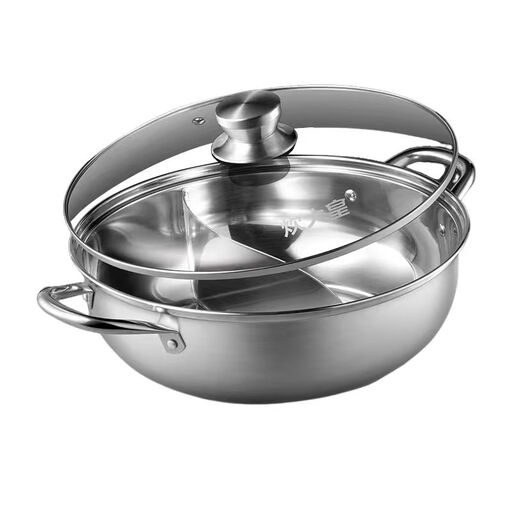
Why it suits this profile: The divider allows you to prepare two broths or dishes at the same time. With a diameter of 30 cm, it is designed for meals shared by several people.
The product information mentions an integrated divider and compatibility with induction, gas, electric and ceramic hobs. This makes its intended use clear from the outset.
304 stainless steel, 30 cm diameter, two cooking sections and use on multiple hobs.
According to the product information, new stainless steel pans may contain a small amount of polishing wax. Clean the pan with warm water and washing-up liquid before using it for the first time. For some MAXCOOK models, it is also recommended that you boil the pan for five to ten minutes and then rub it dry.
White marks are often caused by minerals in water or starch. A little vinegar or lemon can help loosen this type of residue. According to the care information, rainbow-coloured discolouration usually indicates overheating or mineral deposits. Use a soft sponge and avoid harsh abrasive cleaners when specified by the manufacturer.
No. Always check whether the product page states that the pan is suitable for induction. A magnetic or composite base is required for use on an induction hob. Many models are also suitable for gas, electric and ceramic cooking, but check this for each individual pan.
Heat the pan gradually, then add oil or fat and use a suitable temperature. Do not leave ingredients directly in an empty, extremely hot pan. A stainless steel frying pan generally requires more temperature control than a pan with a non-stick coating.
With normal use, stainless steel pans can last for many years, but their lifespan depends on the quality of the base, heat levels, cleaning and storage. Do not continue using a pan that has warped, become damaged or has a loose handle. Therefore, look beyond the material name and check the base construction, care requirements and warranty.
We have put together a complete, up-to-date list of products that fully meet these strict selection criteria and the applicable European safety regulations.
