
Blanching batches one after another
You want to use one cooking zone for successive batches and mainly need a hob that suits the base of your blanching pan.


First, choose a cooking zone that suits the base of your blanching pan, then check that your electrical connection is suitable. A portable single-zone hob may be enough if you’re cooking batches one after another. If you want to cook on several zones at once, check the available power, installation space and connection too. The Netherlands Nutrition Centre recommends cooling food quickly in iced water after blanching; a more powerful hob won’t replace this step.
You want to use one cooking zone for successive batches and mainly need a hob that suits the base of your blanching pan.
You prepare other dishes while blanching, so you need more than one cooking zone. The connection also affects how much power you can use at the same time.
You want to check whether a hob is compatible with your socket and fits on your worktop before making a choice.
Start with the base of your pan and the available connection. Then decide whether one cooking zone is enough or if you want to use other pans while blanching.
| What to consider | What should you check? | Who is this important for? |
|---|---|---|
| Pan base and batch size | Measure the base and compare it with the range specified for the exact model. Fritel lists 12–26 cm for the IP 1266; Inventum gives a range of 15–20 cm for the KI120T. | If I blanch batches one after another, I want to know whether my pan will fit on the cooking zone. Around 33% of consumers prioritise pan size and cooking batches one after another. |
| Cooking at the same time | Check the zone layout and the power available when using several zones at once. ETNA recommends a 2-phase connection with a connected load of 7400 W for the KIF360ZT to make full use of its zones. | If you use other pans while blanching, you’ll benefit from having enough cooking zones and suitable power. Around 27% of consumers prioritise cooking at the same time. |
| Connection and installation | Check the connection diagram for the exact model and decide whether you need a freestanding or built-in hob. The Consumers’ Association describes connecting a built-in hob as a complicated job. | If I want to keep using my existing connection, I first check whether it’s suitable for the model I’ve chosen. For around 27% of consumers, their existing electrical installation is their main concern when choosing. |
| Controls and cleaning | Check the controls on the exact model and follow the cleaning instructions. Milieu Centraal recommends cleaning with a cloth and washing-up liquid. | When cooking repeated batches, I want the hob to be easy to use and clean afterwards. Around 13% of consumers prioritise ease of use and cleaning. |
The base of the pan is the measurement to compare with the range specified for a cooking zone. This means a large pan may fall outside the range of a compact model.
Measure the base of your induction-compatible pan and compare it with the specifications for the exact model before buying.
If your existing pan doesn’t fit, you may need another suitable pan.
The number of cooking zones doesn’t tell you how much power you can use at once with your connection. ETNA recommends a 2-phase connection with a connected load of 7400 W for the KIF360ZT to make full use of its zones.
Check the connection settings and find out how much power is available when using several zones at once. If you’re unsure about your electrical installation, ask a qualified professional to assess it.
According to the Netherlands Nutrition Centre, blanching involves briefly boiling food and then cooling it quickly in iced water. The hob doesn’t take care of this cooling step.
Before starting a large batch, plan for the iced water, the portions and the storage space as well as the cooking.
Freestanding single-zone hobs, including the IP 1266 for anyone looking to use a pan with a wider base.
Compact freestanding induction hobs, including the single-zone KI120T.
Built-in and freestanding hobs with multiple zones; the KIF360ZT is a built-in model with a configurable connection.
Built-in hobs with multiple zones and a bridge function, for flexible zone layouts.
Wide built-in hobs with flexible zones, such as the EX975LXC1E.
This selection includes portable single-zone hobs and induction hobs with multiple zones. Choose according to the base of your pan, whether you’ll be cooking on several zones at once, and which connection suits your kitchen.
 No image available
A portable extra cooking zone for successive batches; check that the base of your pan is suitable for the hob.
According to the product name: 5 power settings and 1000 W. With just one cooking zone, there’s no room for a second pan on the same hob.
 No image available
A portable single-zone model for successive batches; check that your pan is suitable for the hob.
The product information lists 2100 W and 220V/240V. With just one cooking zone, you can’t use a second pan on this hob at the same time.
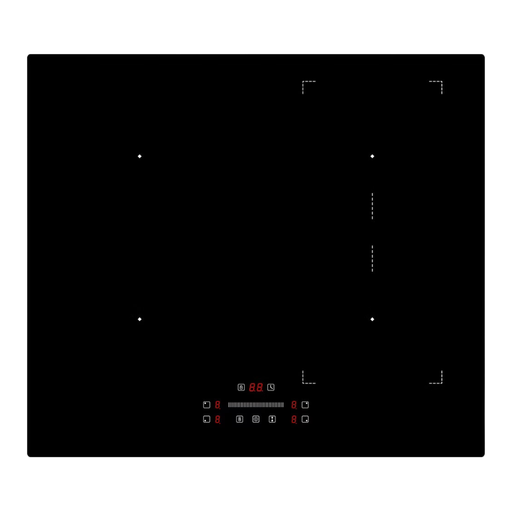 No image available
A hob with multiple zones for anyone who wants to use other pans while blanching.
The product name lists four cooking zones. This is a built-in hob with a cable but no plug, so check that the installation and connection are suitable for your kitchen.
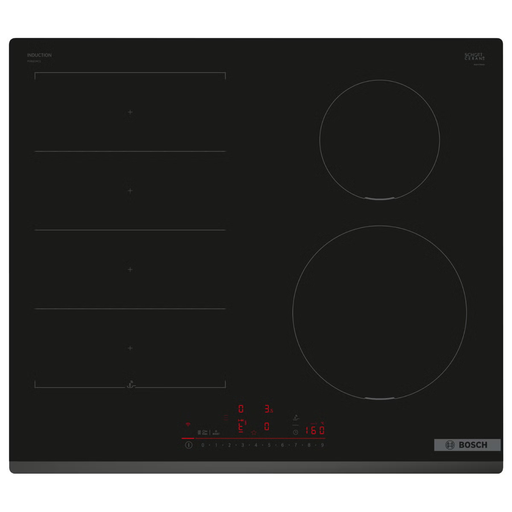 No image available
A model with multiple cooking zones for anyone who wants to use other pans alongside their blanching pan.
The product name lists a width of 60 cm and four cooking zones. Check that the dimensions and connection are compatible with your kitchen.
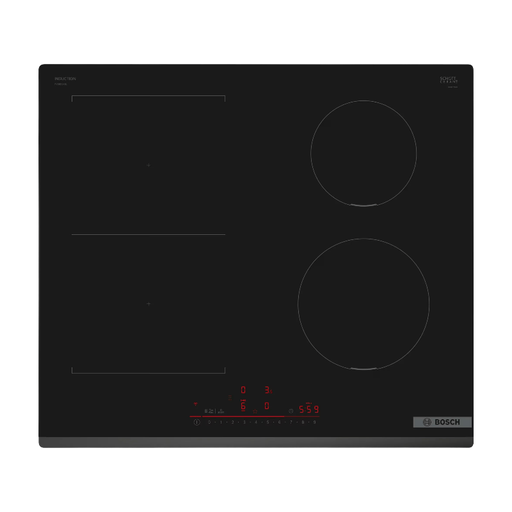 No image available
A hob with multiple zones for anyone who wants to use several pans while blanching.
The product name lists a width of 60 cm and four cooking zones. Check the installation space and electrical connection before making your choice.
According to the Netherlands Nutrition Centre, you should briefly boil vegetables in boiling water, then cool them quickly in iced water. You can then freeze them in portions. The Netherlands Nutrition Centre recommends a fridge temperature of 4 °C and a freezer temperature of −18 °C.
No, it depends on the exact model and connection. ETNA lists a 1-phase option for the KIF360ZT, but recommends a 2-phase connection to make full use of the zones. The Consumers’ Association describes connecting a built-in hob as a complicated job.
According to ACM ConsuWijzer, the seller is responsible if a product doesn’t meet the standards you could reasonably expect during normal use. Depending on the circumstances, the seller must put this right free of charge through repair, replacement or a refund. A commercial manufacturer’s warranty doesn’t replace this right.
An induction hob covered by the Low Voltage Directive must carry the CE mark. The Netherlands Food and Consumer Product Safety Authority states that the Directive applies to electrical equipment with a rated AC voltage of 50–1000 V. Check the product information for the specific model; the CE mark alone isn’t proof of tested cooking performance.