Who is this buying guide for?

Host with lots of breakfast dishes

Wants to load plenty of bowls and other crockery with ease after a shared meal. The layout of the racks can tell you more than the place-setting capacity alone; the Consumers’ Association (Consumentenbond) highlights capacity and ease of use as key considerations.

Buyer with limited kitchen space

Wants to know which type and size will fit the available space first, and may be happy with a smaller load per cycle. The Consumers’ Association recommends comparing the appliance dimensions with the cabinet opening.

Buyer who uses the dishwasher often

Wants to weigh up energy and water use against programme duration, even if a quick programme can sometimes be handy after a shared breakfast. Milieu Centraal recommends running the dishwasher when it is full and using the eco programme.

What should you look for when choosing?

Standard size, freestanding

Suitable for: a space for a freestanding appliance and regular loads of dishes in one cycle.

Bear in mind: measure the external dimensions. A freestanding model won’t necessarily fit in a built-in cabinet opening or behind a continuous plinth.

Standard size, built-in

Suitable for: an existing kitchen with a suitable cabinet opening and space for an integrated door panel.

Bear in mind: check the door panel, plinth and hinge system as well as the cabinet opening.

Slimline or compact

Suitable for: a kitchen where a standard-size model won’t fit, or a household where a smaller dishwasher is often full.

Bear in mind: a shared meal with lots of wide bowls may need more than one cycle. Check the rack layout and capacity.

What to consider What to check before buying Who should pay particular attention?
Usable space for bowls Check the adjustable upper rack and fold-down tines. Make sure your bowls fit without blocking the spray arms. If I want to wash lots of wide bowls together after a shared breakfast, the rack layout matters more than the place-setting capacity alone. Around 36% of consumers put space for bowls first.
Size and installation Measure the width, height and depth. For built-in models, also check the cabinet opening, door panel, plinth and hinges. If the kitchen has limited space or an existing cabinet opening, I want to make sure the appliance will physically fit before anything else. Around 29% of consumers make installation their top priority.
Energy and water use with regular use Compare consumption on the same eco basis: kWh per 100 eco cycles and litres of water per eco cycle. Check the programme duration too. If I use the machine often, I want to weigh up its energy and water use against how long the programme takes. Around 21% of consumers prioritise daily running costs.
How soon you need clean crockery Check how long a quick programme takes and what it is designed for; don’t compare its consumption directly with the eco programme. If I need clean crockery again soon after breakfast, programme duration can be important. Around 14% of consumers prioritise having clean dishes quickly.

Common pitfalls

  • Assuming the place-setting capacity guarantees all your bowls will fit

    A place setting describes the crockery for one person, not the exact shape and dimensions of your bowls. Wide bowls can block other dishes.

    Check the rack height and fold-down tines, and make sure the spray arms can rotate freely. An awkward layout could mean an extra cycle or hand-washing after a shared meal.

  • Assuming a freestanding model is a straightforward replacement for a built-in one

    Freestanding appliances can be taller or deeper, and won’t necessarily fit behind a continuous kitchen plinth.

    Measure the cabinet opening and check the appliance dimensions, door, plinth and hinge system before buying.

    If the dimensions don’t match, you may need to adjust the installation or kitchen door panel.

  • Assuming a quick or half-load cycle is equivalent to a full eco cycle

    According to Milieu Centraal, the eco programme is designed to use less energy and water. The Consumers’ Association notes that a half-load cycle uses only a little less water and energy than a full load.

    Compare energy label figures on the same eco basis, and choose a programme suited to the load and how dirty the dishes are.

Brands to compare

Inventum

Offers freestanding models in different sizes. The VVW6036AB is a standard-size model worth considering if you have room for a freestanding appliance.

  • Inventum lists 14 place settings, an adjustable upper rack and fold-down tines for the VVW6036AB.
  • Those specifications don’t guarantee that your wide bowls will fit; check the rack layout with your own crockery.

ETNA

The VW540A is an example of a standard-size built-in model for a kitchen with a suitable cabinet opening.

  • ETNA lists 14 place settings, an adjustable upper rack and a noise level of 40 dB for this model.
  • The stated dimensions and features don’t tell you whether the model will suit your door panel, cabinet opening and crockery; check each separately.

Bosch

The SMV4HVX14E is a fully integrated 60 cm model for comparing rack layouts and built-in dimensions.

  • Bosch lists Vario Flex racks and appliance dimensions of 815 × 598 × 550 mm.
  • Check the required cabinet opening dimensions and whether your bowls will fit in the racks; the specifications don’t guarantee washing or drying results for your crockery.

Miele

The G 5632 SC Active S is a freestanding model you can compare for its rack layout and programmes, among other things.

  • Miele lists QuickPowerWash, AutoOpen and a noise level of 45 dB for this model.
  • These specifications alone don’t tell you how quickly or quietly the appliance will run in your home compared with other models.

Dishwashers at Joybuy

This selection of dishwashers at Joybuy includes standard-size freestanding and built-in models for anyone who wants to wash several place settings after a shared meal.
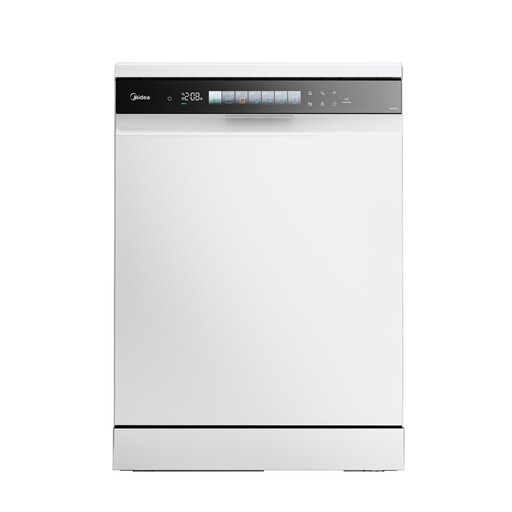
Midea MDWEF1433GW-W freestanding dishwasher

Midea MDWEF1433GW-W freestanding dishwasher

Its freestanding design and stated capacity make this model worth considering if you’re looking for a freestanding dishwasher for a shared meal.

14 place settings; energy rating B; 9,8 litres per cycle; 9 programmes, including Quick Wash and Night.

View at Joybuy
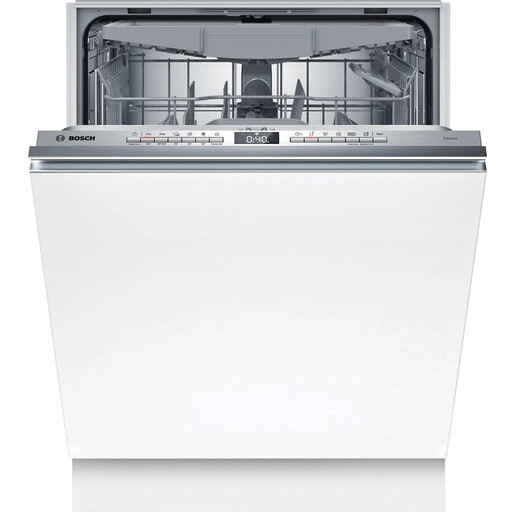
Bosch SMV4HVX03E integrated dishwasher, 13 place settings

Bosch SMV4HVX03E integrated dishwasher, 13 place settings

A built-in model to consider if you have a suitable cabinet opening and want an integrated design.

13 place settings; cutlery drawer; six programmes, including Quick; energy rating D and 85 kWh per 100 cycles. The stated duration of the standard programme is 270 minutes.

View at Joybuy
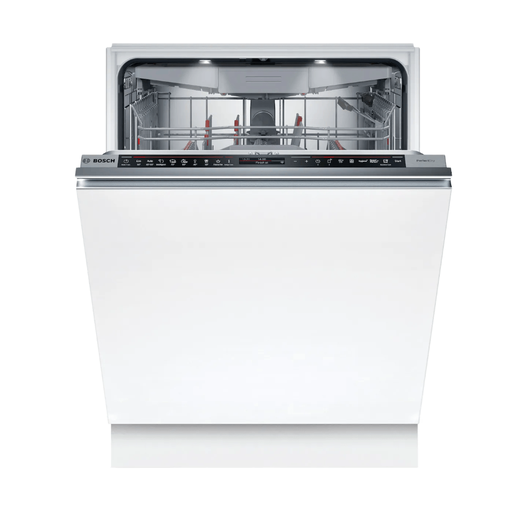
Bosch SMD8TCX04E integrated dishwasher, 14 place settings

Bosch SMD8TCX04E integrated dishwasher, 14 place settings

This built-in model is worth considering if you have a suitable cabinet opening and need room for several place settings.

14 place settings; MaxFlex Pro racks; energy rating A; 54 kWh per 100 cycles and 9,5 litres per cycle. The stated duration of the standard programme is 295 minutes.

View at Joybuy
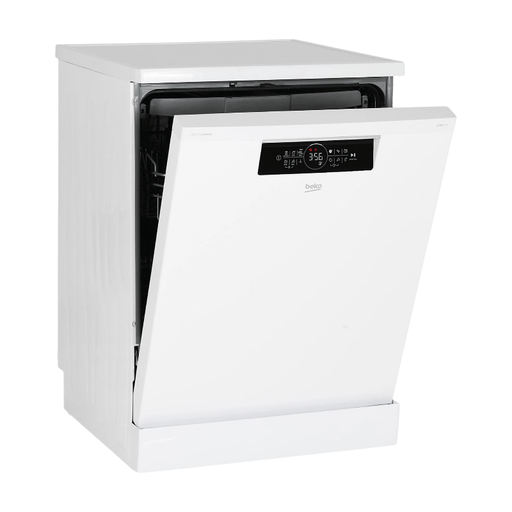
Beko BDFN36641WD freestanding dishwasher

Beko BDFN36641WD freestanding dishwasher

The freestanding design could suit you if you have space for a separate appliance and want to load plenty of place settings at once.

16 place settings; adjustable upper rack and cutlery drawer; energy rating C; 77 kWh per 100 cycles and 9,5 litres per cycle. Fast Plus is one of the listed programme features.

View at Joybuy
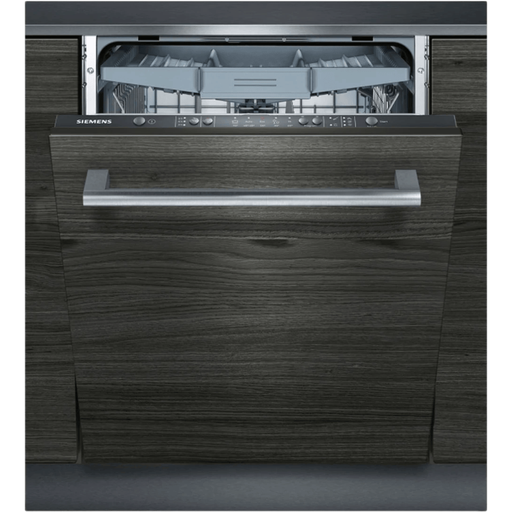
Siemens SN615X03EE fully integrated dishwasher, 60 cm, 13 place settings

Siemens SN615X03EE fully integrated dishwasher, 60 cm, 13 place settings

An integrated model to compare if your kitchen has a suitable built-in space and a separate quick programme is important to you.

13 place settings; cutlery drawer; five programmes; energy rating E, 94 kWh per 100 cycles and 9,5 litres per cycle. The product specifications also list AquaStop and a noise level of 46 dB.

View at Joybuy

Frequently asked questions

Should I rinse breakfast bowls before putting them in the dishwasher?

Usually not. Scrape off food scraps and position the bowls so the water can reach them; don’t stack them on top of each other.

Will a freestanding dishwasher automatically fit under the worktop?

No, it depends on the appliance dimensions and the space available. Some freestanding models have a removable top, but they can be taller or deeper than built-in models. Measure the appliance, cabinet opening and plinth separately.

How should I compare the energy use of dishwashers?

Compare the energy label figures on the same basis: energy use per 100 eco cycles and water use per eco cycle. The figures on the label relate to the eco programme; check the programme duration too, to see whether it fits your schedule.

Is a quick programme suitable after a shared breakfast?

It can be useful if you need the crockery sooner, but a quick programme isn’t automatically the most energy-efficient choice. Check the stated duration and make sure the programme suits the load and how dirty the dishes are.

What can I do if food residue remains or the dishwasher smells?

Remove larger food scraps and clean the filter and spray arms as instructed in the manual. The Consumers’ Association also recommends running a hot programme regularly to help prevent grease build-up, especially if you often use short or low-temperature programmes.
