
Vandaag of morgen in huis

Kwaliteit gegarandeerd

Welkomstaanbiedingen ontgrendelen: GRATIS bezorging | Tot 80% korting | Gratis 30 dagen JoyPlus-proefperiode
Download de app
A dishwasher can save time, but not every model is suitable for every Dutch kitchen. A standard freestanding dishwasher requires space, an integrated dishwasher must fit the aperture precisely and a countertop dishwasher often has a smaller capacity. If you focus only on the price or an eye-catching programme, you may run into practical problems later.
Pay particular attention to these three pitfalls:
A 12-place-setting dishwasher is usually suitable for a couple or average-sized household. For a larger family or regular entertaining, a 14-place-setting dishwasher may be more practical. However, check that you collect enough crockery to fill the machine efficiently. An oversized dishwasher that runs half-empty makes less effective use of its capacity.
A standard model is generally around 60 cm wide. A compact dishwasher or countertop dishwasher is more suitable for flats, student accommodation, holiday homes and kitchens with limited space. With these models, pay attention to the diameter of plates and the height of glasses. Capacity is sometimes stated in place settings, but the layout determines how many pans and large dishes will actually fit inside.
Since the European revision of the energy label, the scale runs from A to G. Do not just look at the letter; also check:
An eco programme often takes longer because it uses lower temperatures and less water. That does not automatically mean a short programme is cheaper. Compare the figures on the product label and check whether the consumption relates to the eco programme.
An energy-efficient dishwasher may be worthwhile if you run it frequently. With occasional use, the purchase price, capacity and installation requirements may matter more than a small difference in consumption.
The noise level is stated in dB(A). A difference of a few decibels can be noticeable in an open-plan kitchen or flat. Models rated at around 40–44 dB are often considered relatively quiet, but the layout of your home and the type of flooring affect how the noise is experienced.
Also consider the drying performance. Features such as automatic door opening or extra drying can help leave less moisture on your crockery. According to manufacturers’ product information, these features may improve drying results; the outcome depends partly on the load, materials and programme.
With a freestanding dishwasher, the connections are usually easier to access. An integrated dishwasher requires accurate measurements and a suitable front panel. With a fully integrated model, the front panel is sometimes not supplied. Also check that the machine is connected to an earthed socket, and do not use an extension lead if the manual prohibits it.

Why it suits this profile: This countertop model is designed for small kitchens and households of around two to three people. The built-in water tank allows it to be used without a permanent water connection, provided the waste water is discharged correctly.
The dimensions of 42 × 43.5 × 43.5 cm are clearly stated. There are also two water-supply options: the built-in 5-litre tank or a connection to the tap.
Energy class D, six programmes and extra features such as extra drying and delayed start. The manufacturer also states that the steam function reaches up to 98 °C; check the manual for correct use.
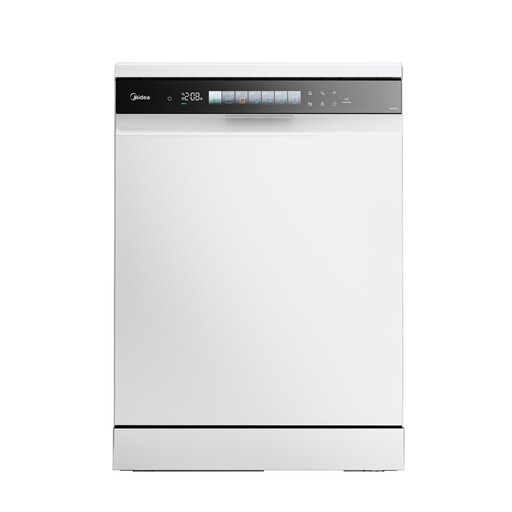
Why it suits this profile: This model combines generous capacity with features suited to an open-plan kitchen and a household that runs the dishwasher regularly.
The product specifications state 14 place settings, energy class B and 40 dB, with 38 dB in the night programme. This allows you to compare capacity, consumption and noise in concrete terms.
Nine programmes, automatic door opening, app control and a stated water consumption of 9.8 litres per cycle. Claims about Ion DishFresh come from Midea’s product information.
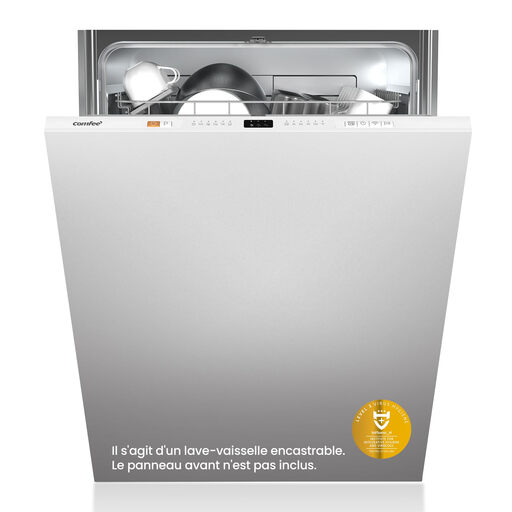
Why it suits this profile: A fully integrated model is well suited to a fitted kitchen layout with space for 12 place settings and a need for multiple programmes.
The adjustable upper basket, half-load function and stated niche height of 820–870 mm make it suitable for different kitchen layouts. Please note: according to the product information, the front panel is not included.
Eight programmes, extra drying, a 30-minute quick programme and a 70 °C hygiene programme. The stated hygiene performance is a claim from Comfee’s product description and is not a medical guarantee.
We have put together a complete, up-to-date list of products that fully meet these strict selection criteria and the applicable European safety regulations.
A standard model generally requires a cold-water connection, a waste outlet and an earthed socket. Check the length of the hoses and the position of the waste outlet in advance. A model with a water reservoir can be filled manually, but it must still be able to drain safely. Always follow the installation instructions and have permanent connections fitted in accordance with the applicable safety regulations.
Its lifespan depends on how often it is used, water hardness, maintenance and the quality of its components. Clean the filter regularly, remove dirt from the spray arms and use dishwasher salt when instructed to do so in the manual. Do not run the machine consistently overloaded, and use only detergent intended for dishwashers.
Running costs include electricity, water, detergent, salt and rinse aid. Use the energy label to compare consumption per 100 cycles. Multiply this by the number of washes per year and your current electricity tariff. Running a full load and using the eco programme can help limit consumption per place setting, provided the load and programme are suitable for the dishes.
