
Vandaag of morgen in huis

Kwaliteit gegarandeerd

Welkomstaanbiedingen ontgrendelen: GRATIS bezorging | Tot 80% korting | Gratis 30 dagen JoyPlus-proefperiode
Download de app
If you do serious work on your car, motorcycle, or bicycle, you know that precision makes all the difference. A bolt that is too loose can be dangerous, while an overtightened bolt can damage expensive components. A digital torque wrench seems like the perfect solution, but the market is flooded with models that overpromise and underdeliver.
Many users fall into the same traps: they buy a wrench that looks good on paper but is unreliable or cumbersome in practice. Before you invest, it's crucial to know where the real weak spots are. These are the three most common mistakes.
electronic torque wrench then loses its value.torque wrench for your bicycle with a range up to 25 Nm, but later try to use it to tighten your car's wheel nuts, which require over 120 Nm. Or the other way around: a heavy-duty 1/2 inch torque wrench is far too coarse and inaccurate for the delicate work on a carbon road bike.To avoid a bad purchase, there are a few technical specifications you must check. These determine whether the tool is suitable for your jobs.
bicycle torque wrench, especially for carbon parts, you need a low range (e.g., 2-25 Nm). For a car torque wrench, you're looking at a much higher range (e.g., 40-200 Nm or more). For the highest precision, choose a wrench where your required values fall roughly in the middle of its range.professional torque wrench has a certified accuracy. A deviation of ±2% to ±3% is considered a good standard. Check if this accuracy is bidirectional (for both clockwise and counter-clockwise threads), although you will primarily use a torque wrench for tightening.An accurate torque wrench is only useful if you know when you've reached the set torque. Modern digital models offer superior solutions for this.
Look for models with a triple alarm system: sound, light, and vibration. The vibration feature in the handle is particularly valuable, as you will always feel it, regardless of ambient noise or light conditions.
Additionally, many digital wrenches offer convenient work modes:
Not every torque wrench is suitable for every user. Below are some options tailored to specific profiles and based on their objective specifications.
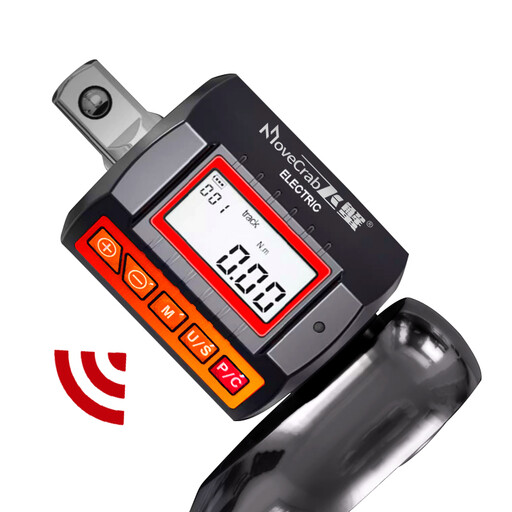
Why This Fits Their Persona: Ideal for the DIYer who already owns a good ratchet set. This torque adapter transforms your existing tool into a precise digital torque wrench. Its wide range is suitable for most automotive jobs, from engine components to wheel nuts.
This solves the 'mismatch' trap. Instead of buying multiple wrenches, this adapter offers a wide and flexible range. The clear sound and light alarms provide reliable feedback.
Wide torque range: 6-200 Nm. Accuracy: ±2% clockwise. Extras: Includes adapters for 3/8" and 1/4", data storage for 1000 readings.
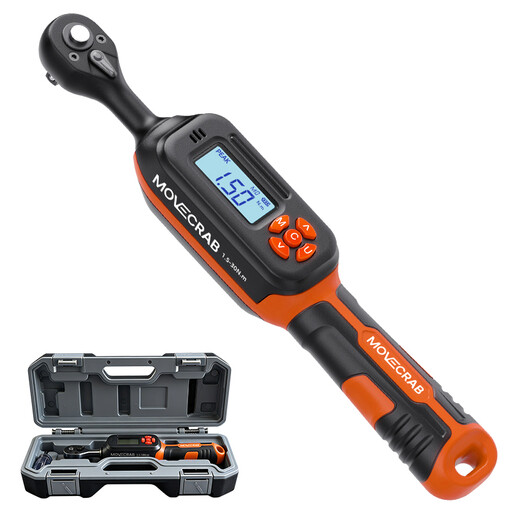
Why This Fits Their Persona: Specifically designed for precision work on modern bicycles. The low torque range and 1/4" drive are perfect for delicate components like carbon handlebars, seat posts, and derailleurs, where too much force is disastrous.
The triple feedback (vibration, sound, light) ensures you never miss reaching the target torque, eliminating the trap of unclear signals. The high accuracy of ±2% is crucial for expensive, fragile materials.
Specialised range: 1.5-30 Nm. Triple alarm: Vibration, sound, and light. Compact: 1/4" drive for tight spaces.
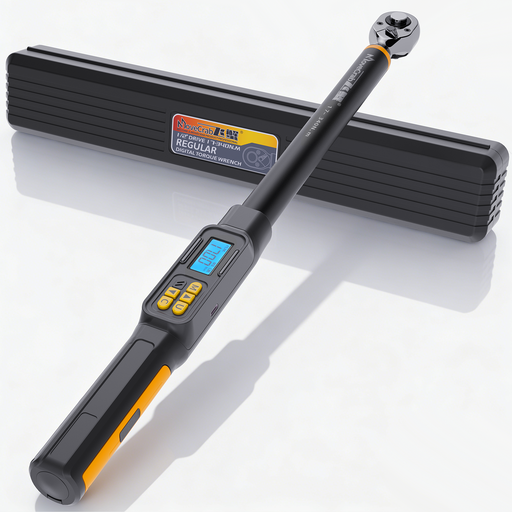
Why This Fits Their Persona: This is a workhorse for the professional garage. Its very high torque range and robust 1/2 inch torque wrench drive are built for daily, intensive use on the toughest jobs, such as on wheel suspension and engine blocks.
This model is designed for the heaviest jobs and avoids the pitfall of using a lighter model that fails quickly. The triple feedback is powerful enough to be noticed in a noisy workshop.
Very high torque range: 17-340 Nm. Robust: 1/2" drive for heavy-duty work. Efficient: Preset mode for 10 values and 500 data point storage.
We have compiled a complete, up-to-date list of products that meet these strict selection criteria and comply with current safety regulations.
For professional and frequent use, an annual calibration is recommended to guarantee accuracy. For the serious hobbyist, a check every 2-3 years, or after the wrench has been dropped, is usually sufficient. Digital models are generally more stable than mechanical 'click' wrenches, but periodic checks remain important for precision work.
A digital torque wrench is a complete, standalone tool with a built-in ratchet and sensor. A torque adapter is a compact digital measuring device that you place between your existing (non-digital) ratchet and a socket. It is a cost-effective way to add digital precision to your toolbox without having to buy a completely new wrench.
Generally, no. A torque wrench is a precision instrument designed to tighten bolts to a specific torque. Using the wrench to break loose stubborn bolts with great force can damage the internal mechanism and permanently disrupt the calibration. Always use a standard ratchet or a breaker bar for loosening.
