
Vandaag of morgen in huis

Kwaliteit gegarandeerd

Welkomstaanbiedingen ontgrendelen: GRATIS bezorging | Tot 80% korting | Gratis 30 dagen JoyPlus-proefperiode
Download de app
A digital torque wrench helps you tighten bolts and nuts to the specified torque. This matters when working on wheel bolts, brake components, engines, bike parts and machinery. However, not every electronic torque wrench is suitable for every job.
Many buyers focus mainly on a wide torque range or a prominent display. Practical details can then be overlooked, such as the drive size, the lowest measurement value and how the alarm works. Use these checks to avoid buying a torque wrench that doesn’t fit your sockets or the jobs you need to do.
A torque wrench with a high maximum value may seem versatile, but check its lower limit too. Bike parts and small bolts often require a low torque value. A wrench that only starts at a relatively high number of newton metres may not be suitable.
Also check the accuracy and the direction in which it applies. Some models, for example, specify ±2% when tightening clockwise, while the tolerance may differ when used anti-clockwise. According to the product specifications for the models available, you shouldn’t mistake these values for a universal guarantee for every working situation.
A torque wrench with an alarm may use a beep, LED indicator or vibration when it reaches the set value. This is useful in a dark garage or a noisy workshop. However, the alarm won’t automatically prevent incorrect use.
Set the correct torque in advance and pull slowly and steadily. Stop as soon as you hear or feel the signal. Continuing to pull for too long can still overload the bolt, component or wrench.
An impact wrench is designed to loosen or tighten bolts quickly using pulsing force. A digital torque wrench is designed for controlled final tightening. So don’t use a cordless or pneumatic impact wrench as a substitute for an accurate torque wrench.
When fitting a wheel, for example, you can use an impact wrench or hand tool to initially tighten the bolts. Then check the specified final torque with a suitable digital torque wrench.
The drive size determines which sockets and accessories will fit. A 3/8-inch digital torque wrench is a common size for car and motorbike maintenance, as well as general repairs. A 1/4-inch version may be more convenient for smaller bike parts and precision work. A 1/2-inch drive is more common for heavier-duty applications.
Also check whether the wrench has a fixed ratchet head or comes with interchangeable heads. An adjustable open-end head can be useful for pipes and nuts that a standard socket won’t fit over.
Most models display values in Nm, but some also show ft.lb, in.lb and kgf.cm. This is useful when a manual or manufacturer uses a different unit. Always check that the measurement range suits the jobs you need to do:
For example, a model with a range of 4.2 to 85 Nm is suitable for different jobs than one with a range of 6.8 to 135 Nm. Don’t choose based solely on the highest value.
A torque wrench with a display should remain easy to read while you’re tightening. Track mode shows the current value, while peak mode can store the highest value measured. Preset modes are useful if you regularly switch between set values.
According to the product information, some MoveCrab models store up to 500 measurements and offer several presets. Another digital adapter specifies memory for up to 1,000 values. Treat this as a practical feature, not proof that the wrench is suitable for every professional application.
Also consider maintenance. Store a digital torque wrench somewhere dry, keep it away from moisture and don’t leave it in direct sunlight or high temperatures for long periods. For models with an adjustable mechanical scale, it’s often recommended that you reset the wrench to its lowest value after use. Always follow the instructions for the specific model.
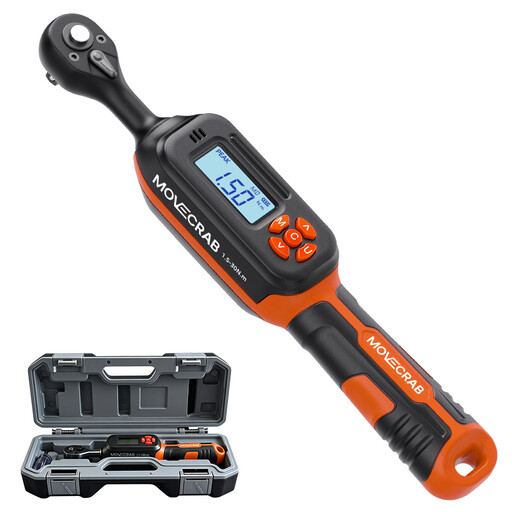
Why it suits this profile: The 3/8-inch drive and 4.2–85 Nm range make it suitable for a variety of jobs on bikes, motorbikes, cars and around the home. The digital display keeps operation straightforward.
The product specifications list three alerts: vibration, sound and an LED light. That means you’re not relying on a beep alone.
According to the product description, it has 10 preset values, track and peak modes, and memory for up to 500 measurements.
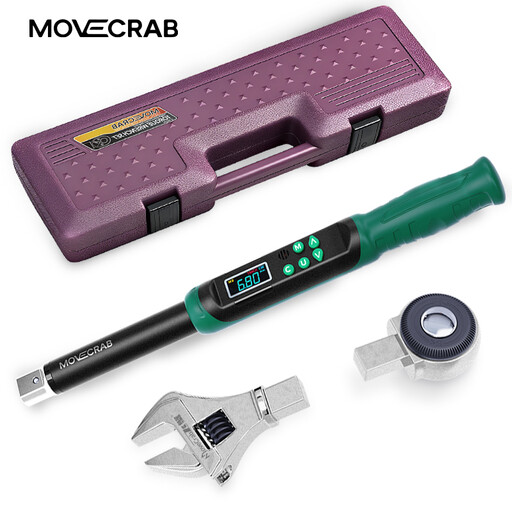
Why it suits this profile: This version combines a ratchet head with an adjustable open-end head. That gives you more flexibility for automotive, machinery and maintenance work.
The interchangeable heads mean you don’t have to buy a separate wrench for every application.
The specified range is 6.8–135 Nm. The wrench supports four units and, according to the product information, offers six preset values.
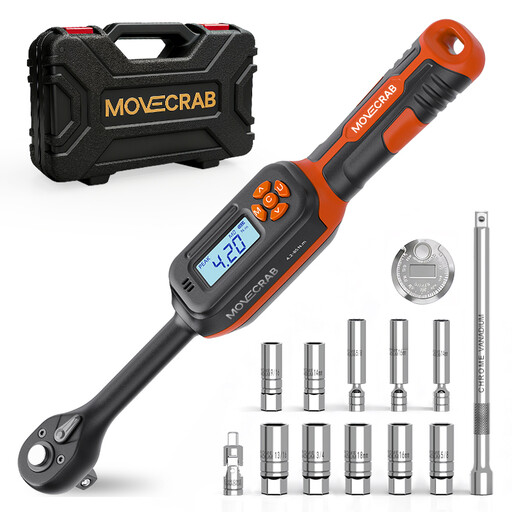
Why it suits this profile: The 14-piece set is designed for spark plugs and maintenance on cars, motorbikes and machinery. The included sockets and extensions save you having to track down separate accessories.
The set makes the drive size and included accessories clear from the outset. This helps you avoid ending up with a wrench but no suitable spark plug sockets.
The product specifications list a range of 4.2–85 Nm, four measurement units, 10 preset modes and memory for up to 500 values.
We’ve put together a complete, up-to-date list of products that meet these strict selection criteria and the applicable European safety regulations.
For a bike, the lower end of the measurement range is particularly important. A 1/4-inch version with low Nm values may be more practical than a heavy-duty torque wrench designed for car maintenance. Always check the values for the stem, seatpost, brake calliper and other components in your bike manual.
Its service life depends on the load, storage, maintenance and specified calibration schedule. Store the wrench somewhere dry, avoid dropping it and don’t exceed its maximum range. If you use it intensively, it’s best to follow the manufacturer’s calibration instructions.
In addition to the purchase price, you may need to factor in batteries, suitable sockets and any calibration costs. A set with accessories may work out cheaper if you need those items anyway. So compare not just the price of the wrench, but also what’s included and what it’s designed for.
