
Vandaag of morgen in huis

Kwaliteit gegarandeerd

Welkomstaanbiedingen ontgrendelen: GRATIS bezorging | Tot 80% korting | Gratis 30 dagen JoyPlus-proefperiode
Download de app
A microwave seems simple enough: choose a model, put it on the worktop and heat up your meal. But many people end up disappointed because they had the wrong expectations. When buying a microwave, it’s easy to focus only on wattage and price. That doesn’t tell you enough about the space available, the controls, installation or features.
As Joybuy Product Recommendation Officer, I compare the key specifications of popular models with practical buying criteria. This makes it easier to find a solo microwave, freestanding microwave or built-in microwave that suits your kitchen and how you use it.
A 700-watt or 800-watt microwave usually refers to its microwave output power. The appliance’s power input may be higher. For example, the ETNA SMV720 is listed as having 700 watts of microwave power, while its electrical connection rating is 1050 watts.
Higher microwave power can be useful for heating food more quickly, but it isn’t always necessary. For soup, leftovers and simple meals, 700 watts is often enough. If you regularly heat larger portions, you may benefit from 800 or 900 watts.
A 20-litre microwave is compact, but the size of the interior determines whether your plates and dishes will fit. So check the diameter of the turntable, or the size of the available flat base.
A turntable measuring 24.5 to 25.5 cm will suit many standard plates, but not every large dish. A 25 to 28-litre model offers more space. According to its product details, the Samsung MC28H5015CS/EN has a capacity of 28 litres and a 32 cm turntable.
A built-in microwave needs to fit the exact housing dimensions and ventilation requirements. The Siemens BF525LMB1 is designed for a housing that is 38,2 cm high, 59,4 cm wide and 29,7 cm deep. Have it installed according to the instructions and, where required, by a qualified installer.
A freestanding model gives you more flexibility over where you place it, but it still needs clear space and ventilation. Don’t wedge an appliance between the sides of cupboards, and never block the ventilation openings.
For one person, a student room or a small kitchen, a compact 20-litre microwave is often a practical choice. As well as the width, measure the depth and height of the worktop space. Also consider the door, which opens to the left, and allow enough room to open it.
For families or larger dishes, 25 to 28 litres may be more convenient. However, a larger capacity usually means a bigger appliance. Compare the external dimensions with the space you have available.
A 700-watt microwave is suitable for basic use: reheating, simple cooking and defrosting. An 800-watt microwave offers a little more capacity for everyday use. Check how many power levels it has, too. Five levels make manual operation straightforward, while digital models may offer eleven levels for finer adjustments.
A microwave with a defrost function is useful if you regularly defrost bread, meat alternatives or frozen portions. Check whether it uses a timer or adjusts the defrosting according to weight. The brand’s product information is the best guide, but actual cooking results also depend on the amount and shape of the food, as well as its starting temperature.
A solo microwave uses microwaves for heating, cooking and defrosting. This type is usually simple to operate and takes up relatively little space.
A microwave with a grill can brown food on top. For example, the Sharp YC-MG01E-W is listed as having 800 watts of microwave power and 1000 watts of grill power. Only use the grill function with the accessories supplied or other suitable accessories, and take care around hot surfaces.
A combination microwave combines microwave cooking with features such as a grill or oven functions. The Samsung MC28H5015CS/EN is listed as a combination microwave, with 900 watts of microwave power and 1500 watts of grill power. It can save space, but the appliance is generally larger and takes longer to get to grips with because it has more settings.
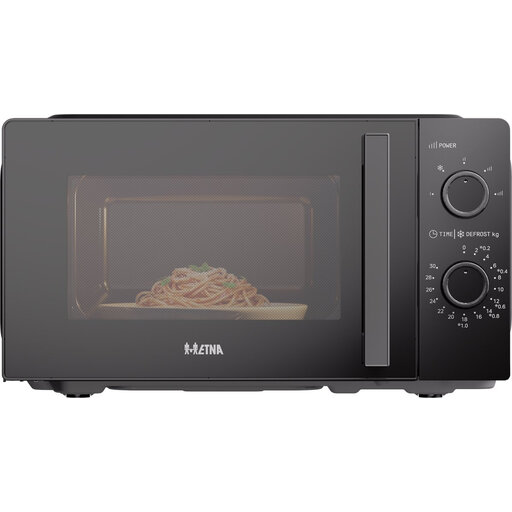
Why it suits this profile: This freestanding microwave has simple dial controls and a capacity of 20 litres. It’s a good fit for students, first-time buyers and households that mainly want to reheat and defrost food.
The product information lists 700 watts, five power levels and a 24,5 cm turntable. You won’t be paying for features you may never use.
20-litre capacity, five power levels, mechanical timer and LED lighting; black casing.
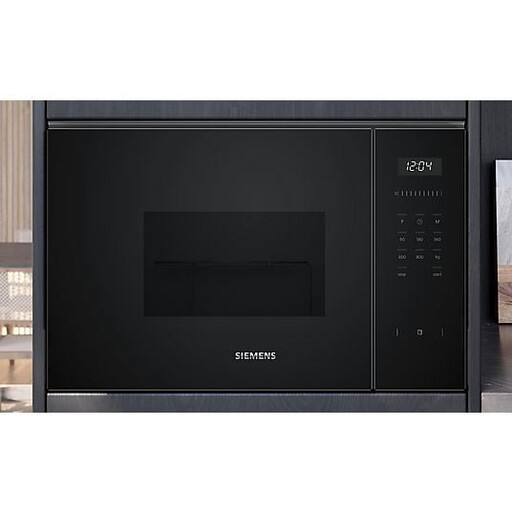
Why it suits this profile: A good choice if you want a sleek black kitchen front and a permanent built-in solution.
The required housing height, width and depth are specified. Check these measurements before buying and plan the installation according to the instructions.
800 watts of microwave power, 20-litre capacity, black finish and defrost function.
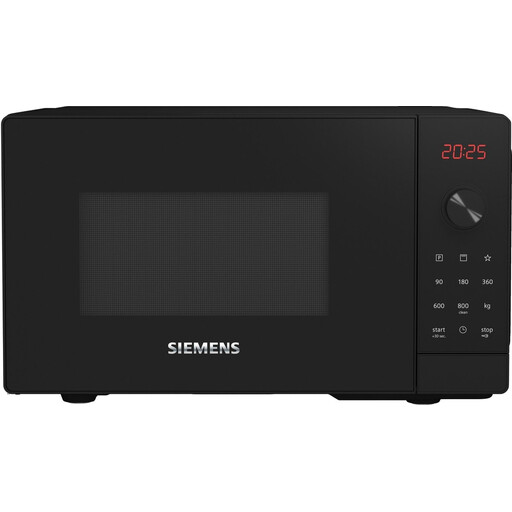
Why it suits this profile: A good fit for households that want a grill function, automatic programmes and a quick-start option, as well as the ability to heat and defrost food.
Its features are clearly listed: five power levels, eight automatic programmes and a separate grill. That makes it easier to decide whether you really need these extra options.
25-litre capacity, 800 watts of microwave power, 1000 watts of grill power and a child lock.
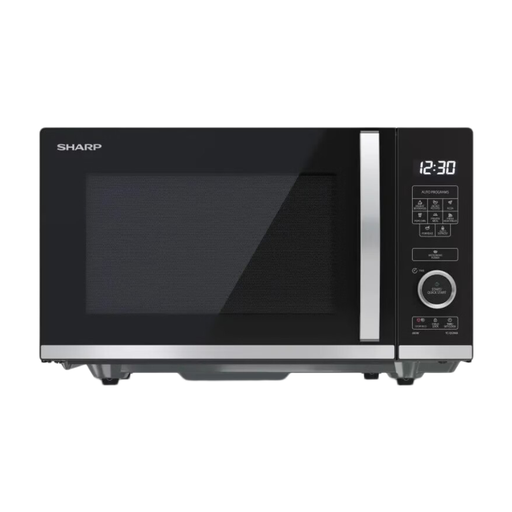
Why it suits this profile: This model has no turntable. That can be useful for rectangular dishes or if you’d find a flat base easier to clean.
The flat interior base means you don’t have to rely solely on a turntable’s diameter. Do check the stated flat-base dimensions of 26,2 by 26,2 cm.
20-litre capacity, 800 watts of power, ten power levels and a black finish.
Before using the microwave, check the instructions, plug and door seal. Only use crockery labelled as microwave-safe. Don’t put metal, aluminium foil or crockery with metallic edges in the microwave. Don’t heat sealed jars, bottles or containers: pressure can build up and cause the packaging to burst.
Also bear the following points in mind:
We’ve put together a complete, up-to-date list of products that meet these strict selection criteria and the applicable European safety requirements.
For reheating, defrosting and simple cooking, 700 watts is often enough. Follow the cooking times on food packaging and adjust them if necessary. An 800- or 900-watt model may be more practical for larger portions or when speed matters.
How long it lasts depends on how often you use it, how well you maintain it and the condition of the door, seal and ventilation. Regular cleaning helps prevent food residue from building up. Stop using the appliance if the door, cable or seal is damaged, and contact the seller or manufacturer.
Energy use depends on the appliance’s power input and how long you use it for. The microwave power shown on the product label isn’t always the same as its total electricity consumption. So compare the technical specifications and don’t run the appliance for longer than necessary. This helps reduce unnecessary energy use.
