
Vandaag of morgen in huis

Kwaliteit gegarandeerd

Welkomstaanbiedingen ontgrendelen: GRATIS bezorging | Tot 80% korting | Gratis 30 dagen JoyPlus-proefperiode
Download de app
A small kitchen, a busy life, or simply a need for convenience? A good microwave is an essential appliance, not a luxury. But the sheer number of options can be overwhelming. Should you opt for a simple model to quickly heat a meal, or are you looking for a versatile appliance that can also grill and bake?
As a Joybuy Product Recommendation Officer, I'm here to help you make the right choice. In this guide, we'll lay out the facts, free from marketing jargon, so you can find the microwave that truly fits your needs.
Before you choose a model, it's helpful to consider three key features. These will determine how you use the appliance in your daily life.
Functionality is the first and most important choice.
A microwave's capacity is measured in litres. For a household of 1 to 2 people, a 20-litre microwave is typically more than enough. It can accommodate a standard dinner plate and most microwave-safe dishes. Larger models (25 litres or more) are particularly useful for families or if you frequently prepare large casseroles in a combi model. Most models in this segment are freestanding microwaves, meaning you can place them flexibly on a countertop or in an open cabinet.
Traditional microwaves use a glass turntable to heat food evenly. A modern alternative is the microwave without a turntable, also known as a 'flatbed' microwave. In these models, microwave energy is distributed by a rotating antenna beneath the floor of the oven. The advantage? You get more usable interior space, allowing rectangular or square dishes to fit easily. Plus, a flat bottom is much easier to clean.
Based on specifications and functionality, we've highlighted a few popular choices for you.
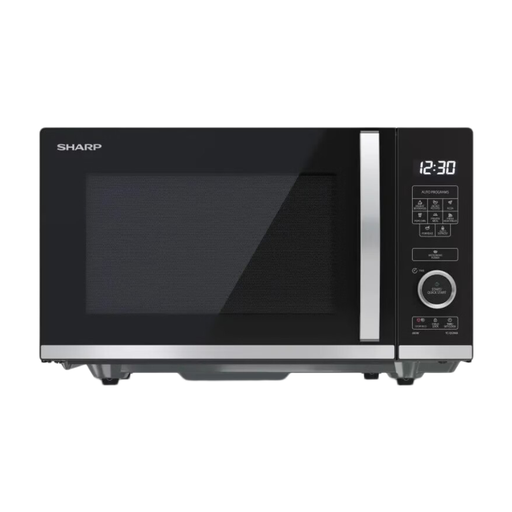
Why It Stands Out This model from Sharp addresses a common inconvenience: the turntable. Thanks to its 'flatbed' design, it has a completely flat interior. This not only makes cleaning significantly easier but also gives you the freedom to use dishes of various shapes.
Key Features
Who Is It For? Anyone looking for maximum convenience. It's ideal for students, singles, or couples who frequently heat up meals and dislike cleaning a turntable and its components.
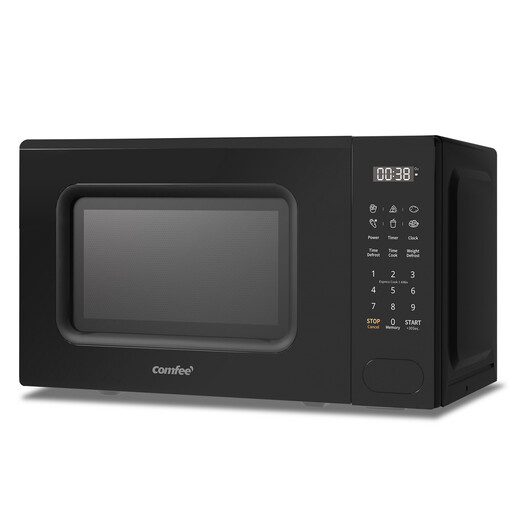
Why It Stands Out The COMFEE microwave proves that a compact size and extensive features can go hand in hand. This model is designed for kitchens where every centimetre counts, without compromising on user-friendliness, thanks to its handy pre-programmed menus.
Key Features
Who Is It For? For the user seeking an affordable and functional microwave for a small space. An excellent choice for a dorm room, a first apartment, or as a secondary appliance in a utility room.
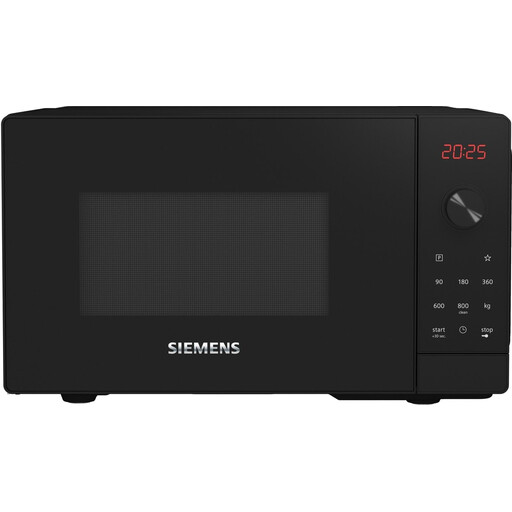
Why It Stands Out This combi microwave from Siemens is a compact powerhouse that combines the functions of a microwave, grill, and oven. It's an all-in-one solution for those who love to cook and bake but don't have the space for multiple appliances.
Key Features
Who Is It For? For the home cook with a small kitchen. If you want to do more than just heat and defrost, and enjoy making casseroles, pizzas, or a grilled chicken, this combi microwave offers the functionality of an oven in a compact size.
The models mentioned above all feature a sleek, modern colour. A black microwave fits into almost any interior design. Curious about other models in this popular finish? Explore our full range.
Discover more black microwaves
A solo microwave is intended for basic functions: heating, defrosting, and cooking with microwaves. A combi microwave can do all that, but it also has a built-in grill and a convection oven function, allowing you to bake and roast as well.
For a solo microwave, a power output between 700 and 900 watts is standard and sufficient for most tasks. A higher wattage generally means food heats up faster. Combi microwaves often have different power ratings for their microwave, grill, and oven functions.
Yes, this is one of the major advantages of a microwave without a turntable (flatbed). Since the base doesn't rotate, you can utilise the entire space, and square or rectangular dishes will fit without any issues. In a model with a turntable, the diagonal of the dish must be shorter than the diameter of the plate to allow it to rotate freely.
