
Bakers catering for a large group
You’d ideally like to make enough bread in a single batch. Compare the loaf weights and tin sizes specified by the manufacturer for the exact machine; Inventum and Tefal, for example, list different loaf sizes.


Start by working out how much bread you need for your guests, then decide how you want the raisins to be added. A larger loaf tin may suit a single larger batch; a dispenser saves you having to add them by hand, while an add-in signal means you’ll need to step in at the right moment. Before you buy, also check the programme and the markings on the exact model.
You’d ideally like to make enough bread in a single batch. Compare the loaf weights and tin sizes specified by the manufacturer for the exact machine; Inventum and Tefal, for example, list different loaf sizes.
You don’t want to have to respond to a signal while the dough is being kneaded. Compare a raisin or nut dispenser with a programme that requires you to add the raisins yourself. Panasonic lists dispensers for the SD-R2530 and SD-YR2550, while Inventum lists an add-in signal for certain BM125 programmes.
If a guest has coeliac disease, you’ll need to consider the ingredients and preparation separately. The Voedingscentrum explains that ordinary bread made with gluten-containing grains is not suitable; the Dutch Coeliac Society also highlights the risk of cross-contamination in the kitchen.
First, decide how much bread you want to make for your guests. Then choose between automatic dispensing and adding the raisins yourself when prompted, and check that the programme and timer suit your recipe.
| What to consider | What to look for when buying | Who is this important for? |
|---|---|---|
| Adding the raisins | Check whether the exact model has a raisin dispenser or gives an add-in signal during a programme. Panasonic lists dispensers for the SD-R2530 and SD-YR2550; Inventum mentions a signal for certain BM125 programmes. | If you don’t want to be on hand to add raisins while the dough is being kneaded, automatic dispensing may be a priority. Consumers with this as their main requirement account for around 31% of consumers considering this choice. |
| Amount per batch | Compare the stated loaf weights and tin sizes with the amount you need. For the BM125, Inventum lists 900 or 1200 grams in the large tin, or two 450-gram loaves. | If you’d rather make enough bread for your guests in one go, compare the capacity with the amount you need first. Consumers who mainly want to make enough bread in one batch account for around 25% of consumers considering this choice. |
| Timer and programme | Check the timer and whether the programme you want suits your recipe and the way you add the raisins. Inventum and Princess list a timer of up to 13 hours; Tefal lists a timer of up to 15 hours for the PF240E. | If the bread needs to be ready at a particular time, you’ll want to be able to plan the baking in advance without overlooking your choice of recipe. Consumers who mainly want to plan when to serve the bread account for around 19% of consumers considering this choice. |
| Controls and cleaning | Check which tins and kneading paddles come with the model, and follow the cleaning instructions. Princess lists a removable tin for the 152009; Inventum describes two tins for the BM125. | If you want the machine to be easy to use and clean after baking, check the tin and the instructions for your exact model. Consumers who mainly value practical use and maintenance account for around 13% of consumers considering this choice. |
| Guests’ dietary requirements | Ask about any dietary requirements, check all the ingredients and prevent cross-contamination when using the tin and utensils, preparing the bread and serving it. A special programme alone doesn’t automatically make the ingredients or equipment suitable. | If a guest has coeliac disease, for example, you’ll also need to consider gluten in the ingredients and the possibility of cross-contamination in the kitchen. Consumers who prioritise their guests’ dietary requirements account for around 12% of consumers considering this choice. |
Some Inventum BM125 programmes give you a signal when you can add extra ingredients; this is not an automatic raisin dispenser. Panasonic does list a raisin or nut dispenser for the SD-R2530 and SD-YR2550 models reviewed.
Check the manual for the exact model and the programme you’ve chosen to see how and when to add the raisins.
The total number of programmes on its own won’t tell you whether there’s one to suit your recipe or how the raisins are added.
First decide how much bread you want and how you want to add the raisins. Then check the sweet bread programme and the manual for the exact model.
If someone has coeliac disease, the ingredients and the risk of cross-contamination during preparation also matter.
Make sure the ingredients, tin, utensils and preparation method meet your guest’s dietary requirements. A gluten-free programme alone isn’t enough.
The BM125 is worth considering if you want to compare making one larger loaf with making two smaller ones.
The SD-R2530 and SD-YR2550 are worth comparing if automatic raisin dispensing is important to you.
The 152009 is a smaller option to include when comparing loaf sizes and programmes.
The Pain & Délice PF240E is worth comparing if you’re looking for different loaf sizes and a sweet bread programme.
These product options are relevant if you want to compare loaf weight and timing for a family gathering; one model also lists a raisin dispenser.
 No image available
Compare this machine if you want to match the loaf weight and start time to your plans for the gathering.
Tefal lists loaf sizes of 500, 750 and 1000 grams, a timer of up to 15 hours, 12 baking programmes and three crust-colour settings.
No image available
Compare this model if its stated maximum loaf size suits the amount of bread you need.
Tefal lists loaf weights from 750 grams to 1.5 kg, 16 automatic programmes, a display and a delayed-start timer.
 No image available
Compare this machine if you want raisins to be added automatically and need to check whether a loaf weighing up to 1 kg is right for you.
The product description lists an automatic raisin dispenser, three weight settings up to a maximum of 1000 grams, 20 programmes and a removable non-stick baking pan.
 No image available
Compare the stated loaf weight with the amount you want to bake for your guests.
Tefal lists a loaf weight of up to 1 kg, a delayed-start timer, a display and a keep-warm function.
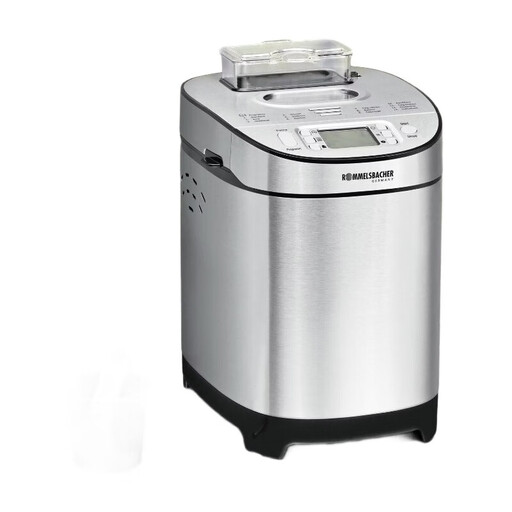 No image available
Compare this option if loaf sizes of 700 or 900 grams suit the amount you want to make.
The product description lists automatic dispensing of ingredients, 13 programmes, three browning settings and a keep-warm function for up to 60 minutes. It doesn’t specifically confirm that raisins are dispensed automatically.
That depends on the recipe, the programme and how the machine adds extra ingredients. Panasonic lists a dispenser for the models reviewed; with certain Inventum BM125 programmes, you add the ingredients yourself when prompted. Check the manual before setting a delayed start.
The Voedingscentrum advises storing opened raisin bread in a kitchen cupboard for 4–7 days or in the freezer for 1–3 months. Check the bread for signs of spoilage too.
Ordinary bread made with gluten-containing grains isn’t suitable for someone with coeliac disease. Check the ingredients and prevent cross-contamination during preparation and serving; a gluten-free programme alone isn’t enough.
In the Netherlands, the cooling-off period and the legal guarantee are separate rights. According to ACM ConsuWijzer, the cooling-off period for an online purchase lasts until 14 days after delivery. If a product used normally doesn’t meet what you could reasonably expect, the seller is responsible for providing an appropriate solution free of charge.
Yes. Electric bread makers offered for sale on the Dutch market must have CE marking. The NVWA gives kitchen appliances as an example of electrical equipment; check the marking on the exact model you’re buying.