
Photographing the whole family
You want to fit everyone into the available frame and keep several faces in focus. In this case, the space available and the aperture matter more than maximum background blur.


For a school project involving both group photos and individual portraits, a suitable zoom lens is a flexible choice when space is limited. For individual portraits in low light, a fast prime lens could be a good fit, but its fixed angle of view may be too narrow indoors to fit the whole family in the frame. Also check your camera’s mount and sensor size.
You want to fit everyone into the available frame and keep several faces in focus. In this case, the space available and the aperture matter more than maximum background blur.
You also take photos of individual family members and are weighing up the benefits of a wider maximum aperture against a shallower depth of field.
You’re looking for a lens that fits your camera’s mount and gives you an angle of view that works for your setup.
Best suited to: switching between a group setup and a tighter crop with one lens.
Trade-off: its maximum aperture of f/2.8 is smaller than f/1.8, and you’ll need to choose the right mount version.
Best suited to: a fixed angle of view on a compatible camera, while still including some of the surroundings.
Trade-off: you can’t zoom, so you’ll need to change your position to get a different crop.
Best suited to: taking mainly individual portraits with a compatible Canon EOS R camera.
Trade-off: its fixed angle of view may be too narrow for a group photo indoors; you may need a smaller aperture when photographing several faces.
| Consideration | What to look for | Who should consider this? |
|---|---|---|
| Fitting the whole family in the frame and keeping them in focus | Compare the angle of view for your sensor size with the available distance, and check that everyone’s faces are in focus. | If space is limited and I want to fit everyone in the frame, I focus mainly on framing and sharpness. Around 29% of consumers say family framing is their main concern. |
| Compatible camera mount | Check the exact camera model, mount and sensor size for the version you want to buy. | If I want to keep using my current camera, I want to avoid ordering a version that won’t fit. Around 29% of consumers prioritise compatibility. |
| Taking photos in low light | Compare the maximum aperture and consider whether you’ll mainly be photographing one person or several people at once. | If I take individual portraits indoors, I weigh up a wider maximum aperture against the depth of field I need. Around 18% of consumers prioritise low-light photography. |
| Individual portrait with a blurred background | Consider how many individual portraits the project requires and how much distance you have from your subject. | If I mainly want to photograph one family member, I look for an angle of view that suits that crop. Around 12% of consumers prioritise individual portraits. |
| Avoiding an unnecessary extra purchase | Try a test setup with your current lens first and work out what you’re missing. | If my current lens already fits the family in the frame, I don’t want to buy an unnecessary lens for a single school project. Around 12% of consumers prioritise avoiding an extra purchase. |
A group portrait needs different framing from a portrait of one person. An angle of view that doesn’t work in a small room could limit your options.
Try the group setup with your current lens first, then compare the angle of view for your camera’s sensor size.
A wider maximum aperture can help in low light, but opening the aperture wide also gives you a shallower depth of field. This means not everyone’s face may be in focus.
Check that everyone is in focus and adjust the aperture to suit the setup.
A lens range may come in different mounts. The wrong version may not fit the camera you’re buying the lens for.
Before ordering, check the camera model, mount and full product version.
The features mentioned apply to the specific lens ranges and versions below, rather than being a general assessment of each brand.
The 18–50mm F2.8 DC DN | Contemporary is an APS-C zoom for anyone who wants to take family photos and tighter shots with one lens. Sigma lists separate versions for mounts including Canon RF, Fujifilm X and Sony E.
The NIKKOR Z DX 24mm f/1.7 is a prime lens for a Nikon Z DX camera. Nikon states that its angle of view is equivalent to 36mm on full-frame.
The FUJINON XF23mmF2 R WR is a prime lens for the Fujifilm X system. Fujifilm lists an equivalent focal length of 35mm.
The FE 35mm F1.8 (SEL35F18F) is a full-frame Sony E-mount lens that Sony says can also be used on APS-C bodies.
The RF 50mm F1.8 STM is a prime lens for compatible EOS R cameras. Canon lists low-light portrait photography as one of its uses.
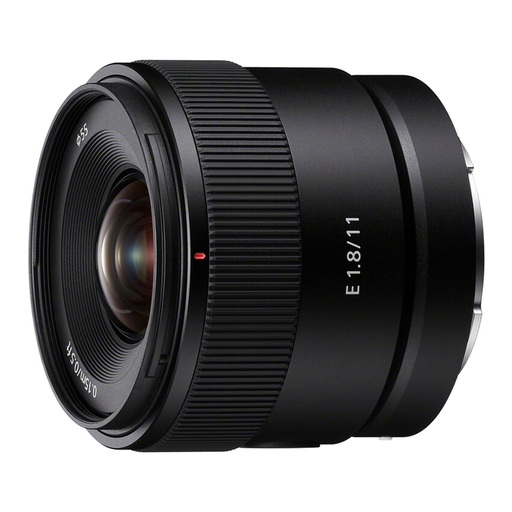
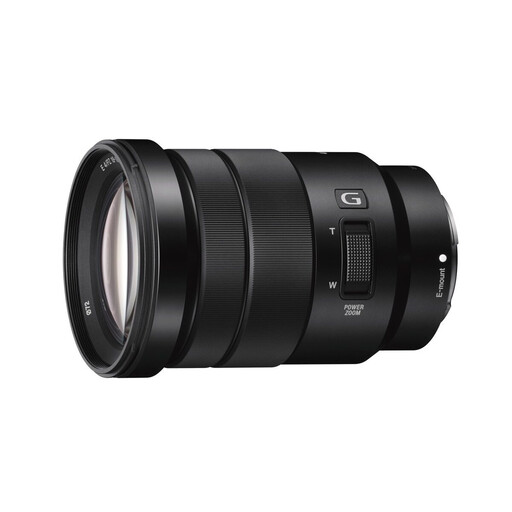
This selection features Sony E lenses for different portrait situations: a fixed 11mm wide-angle lens for a group setup in a tight space, an 18–105mm zoom and a fixed 50mm lens for individual portraits.
 No image available
The fixed wide-angle lens could suit a family setup where you need a wide frame in a limited space.
Sony E mount; fixed 11mm focal length; maximum aperture of f/1.8; APS-C.
Do not point the lens at the sun or a strong light source.
 No image available
The zoom range lets you switch between wider family framing and a tighter shot of one person.
Sony E mount; 18–105mm zoom range; maximum aperture of f/4.
In low light, f/4 lets in less light than a wider aperture.
Do not point the lens at the sun or a strong light source.
 No image available
The fixed 50mm focal length and maximum aperture of f/1.8 are well suited to individual portraits, but may be too narrow for a group photo indoors.
Sony E mount; fixed 50mm focal length; maximum aperture of f/1.8.
Do not point the lens at the sun or a strong light source.
No, not automatically. A wider aperture can help in low light, but it reduces the depth of field. Check that everyone’s faces are in focus and adjust the aperture to suit the setup. Canon describes f/8 as the cautious choice made by one of the group photographers it interviewed, not as a required setting.
Check your camera’s exact mount and sensor size, then compare them with the version you want to buy. For example, the Sigma 18–50mm is available with different mounts, including Sony E, Canon RF and Fujifilm X.
Put the correct lens caps back on when you’re not taking photos, and check the care instructions for your lens. Nikon describes its lens caps as protecting against dust, smudges and scratches; check which cap fits your lens.
When you buy from a business online, you generally have a 14-day cooling-off period; according to the Dutch government, the same distance-selling rules don’t apply to online purchases from private sellers. In the Netherlands, products are also covered by a legal guarantee, but there is no fixed statutory guarantee period.
Not without the necessary consent. According to the Dutch Data Protection Authority, the school needs consent to take and publish identifiable images from the pupil themselves if they are aged 16 or over, and from their parents if they are under 16.