
Vandaag of morgen in huis

Kwaliteit gegarandeerd

Welkomstaanbiedingen ontgrendelen: GRATIS bezorging | Tot 80% korting | Gratis 30 dagen JoyPlus-proefperiode
Download de app
A crate of zero sugar soft drinks might seem easy to choose: look for “zero”, select a 24-pack and order. Yet packaging and product names can hide important differences. A sugar-free soft drink may contain caffeine, for example, while a sparkling drink with a zesty lemon flavour might still contain sugar. Multipacks are also not always practical if you have limited storage space or want to alternate between different flavours.
That’s why the Joybuy Product Recommendation Officer is here to help you translate marketing terms into verifiable product information. Pay particular attention to these three common pitfalls:
Look on the label for carbohydrates of which sugars and energy per 100 ml. Products labelled “zero sugar” typically show 0 grams of sugar, but they may contain sweeteners. This is an important difference if you want to compare ingredients.
For example, Coca-Cola Zero Sugar Caffeine Free Cola lists 0 grams of sugar and 0.3 kcal per 100 ml. Pepsi Zero Sugar Cola also lists 0 grams of sugar and around 0.4 kcal per 100 ml. The ingredient lists mention aspartame and acesulfame-K, among others. Both product descriptions also note a source of phenylalanine. So always check the packaging if you are sensitive to a particular ingredient or follow a dietary restriction.
Also watch out for products that sound like a sugar-free soft drink but aren’t. Beypazari Limonlu Soda contains 6.5 grams of sugar per 100 ml according to the product information. Fanta Strawberry Lemonade contains 12.4 grams of sugar per 100 ml. These drinks may suit a different taste preference, but they don’t fall into the same category as sugar-free soft drinks.
If you want a drink for the evening, for children, or for an office where different preferences come together, choose caffeine-free soft drinks deliberately. Don’t just check the front of the packaging; also look at the ingredients or additional information.
Coca-Cola Zero Sugar Caffeine Free explicitly states that the drink contains no caffeine. Sprite Zero Sugar Lemon-Lime is also described as caffeine-free in the product information, although the ingredient list does mention sweeteners. Pepsi Zero Sugar, Pepsi Zero Cream Soda and Pepsi Zero Strawberry & Cream Soda all contain caffeine according to their product information.
The term diet soft drink is often used in practice for low-calorie or sugar-free varieties. However, the exact composition varies from product to product. So always compare the nutrition table rather than just the name.
A 330 ml can is handy for an office fridge, a birthday party or a store cupboard. A bulk pack of soft drinks is mainly practical if you regularly serve the same drink. A 24-pack contains many servings, but takes up more space and may be less suitable if you want to try several flavours.
For smaller households, packs of 6 or 12 are sometimes more manageable. Think of Schweppes Lemon Zero in a pack of 6 x 330 ml or Fanta Strawberry Lemonade with 12 cans of 355 ml. Also check whether the packaging consists of cans, bottles or cartons, and whether chilled storage is needed after opening.
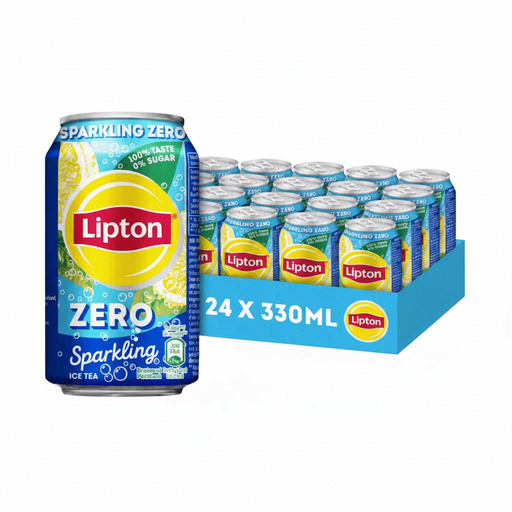
Why this fits the profile: A 24-pack of 330ml cans provides a steady supply for home, visitors or the office. The sparkling iced tea is an alternative to cola.
The product information states 0% sugar and a low-calorie composition. Check the current packaging for ingredients and nutritional values.
24 cans of 330 ml; sparkling iced tea with no sugar according to the product description.

Why this fits the profile: Ideal for anyone who wants a familiar cola taste combined with a bulk pack and a caffeine-free option.
The product name and description mention both zero sugar and caffeine free. Per 100 ml, 0 grams of sugar is listed.
24 x 330 ml; 0.3 kcal and 0 grams of sugar per 100 ml according to the product information.

Why this fits the profile: For shoppers who want to offer coconut water with no added sugar alongside soft drinks, for example after sport or during an active day.
The description states 100% coconut water and no added sugar. That is different from being automatically sugar-free; check the nutrition table.
12 x 330 ml; 2% real coconut pieces according to the product description; serve chilled.
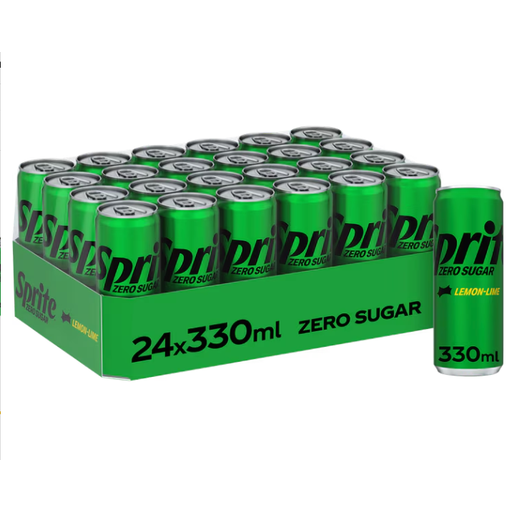
Why this fits the profile: A 24-pack of lemon-lime soft drink is practical for a party, shared lunch or a store cupboard with multiple users.
The product information mentions a caffeine-free lemon-lime drink and 0 grams of sugar per 100 ml. Check the packaging for the current composition.
24 cans of 330 ml; zesty lemon-lime flavour; suitable for serving chilled.
We’ve put together a full, up-to-date list of products that fully meet these strict selection criteria and comply with current European safety regulations.
No. Many cola zero varieties contain caffeine. Choose a product that explicitly states caffeine free or cafeïnevrij, such as Coca-Cola Zero Sugar Caffeine Free. Also check the ingredient list.
Not always. “Diet” usually refers to a reduced amount of energy or sugar, whereas “zero sugar” typically lists 0 grams of sugar. The exact values differ by brand and flavour. So compare the nutritional values per 100 ml.
Once opened, carbonation quickly loses its fizz. Seal a bottle well and store it chilled. It’s best to drink an opened can straight away. Always follow the storage advice on the packaging.
Besides cola zero and lemon-lime soft drinks, you can choose sugar-free iced tea, caffeine-free carbonated drinks, coconut water or a non-alcoholic drink. With coconut water, pay attention to the difference between no added sugar and 0 grams of sugar.
