
Vandaag of morgen in huis

Kwaliteit gegarandeerd

Welkomstaanbiedingen ontgrendelen: GRATIS bezorging | Tot 80% korting | Gratis 30 dagen JoyPlus-proefperiode
Download de app
Would you like to enjoy the classic cola flavour without the sugar? Then you will quickly come across zero-sugar cola, sugar-free cola or cola without sugar. The choice ranges from small cans for drinking on the go to large multipacks for the home. However, the packaging can sometimes look more alike than the contents actually are.
The main differences usually come down to caffeine, sweeteners, pack size, number of items and nutritional values. Use the checks below to avoid buying a multipack that does not suit the way you plan to use it.
The words zero sugar refer to the sugar content, not the caffeine content. Many varieties, including Coca-Cola Zero Sugar and Pepsi Zero Sugar, contain caffeine according to the product information. If you want to drink soft drinks later in the day or deliberately avoid caffeine, you should therefore look specifically for caffeine-free cola.
Always check the ingredients list. Does it mention “caffeine”, “cafeïne” or a similar term? If so, it is not a caffeine-free variety, even if the packaging clearly says “zero sugar”.
Zero cola and low-calorie cola generally contain little energy, but the exact value can vary from product to product. The available product information, for example, lists approximately 0.3 to 1 kcal per 100 ml. The amount remains small in a 330 ml can, but comparing the labels helps you avoid false expectations.
Also pay attention to the difference between sugar and carbohydrates. Some drinks list a very small amount of carbohydrates or sugar per 100 ml. So check the full nutritional table rather than just the front of the packaging.
A cola multipack containing 24 cans may seem appealing for a household or party, but it takes up more storage space and costs more upfront. A 250 ml pack is handy for a standard portion, while a 500 ml bottle of cola is better suited to taking with you and resealing after opening.
So compare the total volume:
This makes it easier to see which pack suits your consumption and available storage space.
If you only want to avoid sugar, there are many caffeinated varieties to choose from. If you also want to avoid caffeine, look for a product explicitly labelled as caffeine-free. The sweeteners also vary. The product information for several varieties lists aspartame (E951) and acesulfame K (E950). Some products also contain other sweeteners or natural flavourings.
Aspartame is a source of phenylalanine, as stated in the product information. If you have an allergy, intolerance or specific dietary requirement, always check the label on the packaging. Product information may change.
Use the value per 100 ml as a consistent basis for comparison. Check at least:
A product containing 0 g of sugar may still contain sweeteners. This is typical of many sugar-free soft drinks and says nothing about your personal taste preferences. Diet cola and zero cola may also differ in recipe and flavour, even when both provide little energy.
330 ml cola cans are practical for parties, home use and serving chilled. Each portion is sealed individually, but cannot be resealed once opened. A 500 ml cola bottle usually has a resealable cap and is better suited to drinking on the go.
Smaller sizes such as 150 ml or 250 ml can be useful when you want to limit portions or serve several flavours. When ordering online, always check whether the stated quantity refers to, for example, 8, 12 or 24 items. Some offers combine multiple trays.
Why it suits this profile: The pack of four 250 ml cans is a straightforward way to try sugar-free cola without immediately ordering a large supply.
The quantity and size are clearly stated: 4 x 250 ml. The product information lists 1 kcal and 0.1 g of sugar per 100 ml; check this on the label when the product arrives.
Small multipack, 250 ml can size and an explicitly stated sugar-free product positioning.
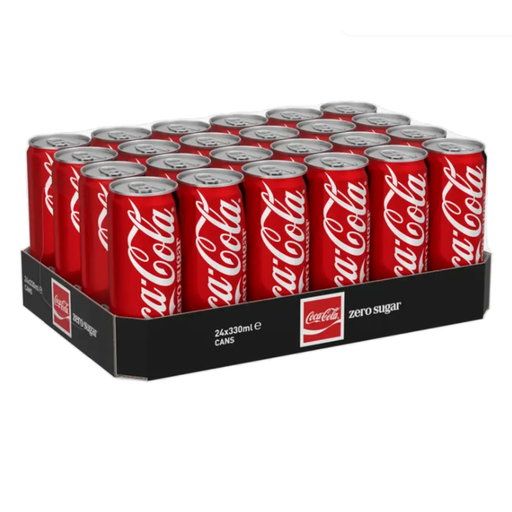
Why it suits this profile: This large tray of 24 330 ml cans is ideal for households that want to have a well-known cola brand ready at home, for visitors or for a party.
The product page states both the size and the total quantity. According to the listed product specification, the nutritional value is 0 kcal and 0 g of sugar per 100 ml.
24 individual 330 ml cans, sugar-free positioning and suitable for serving chilled.

Why it suits this profile: For regular cola drinkers who are deliberately looking for a caffeine-free variety, without sugar and in a multipack.
The product name explicitly says caffeine-free. This means you do not have to rely solely on the term zero sugar; however, always check the current packaging.
24 330 ml cans, 0 g of sugar and 0.3 kcal per 100 ml according to the available product specifications.
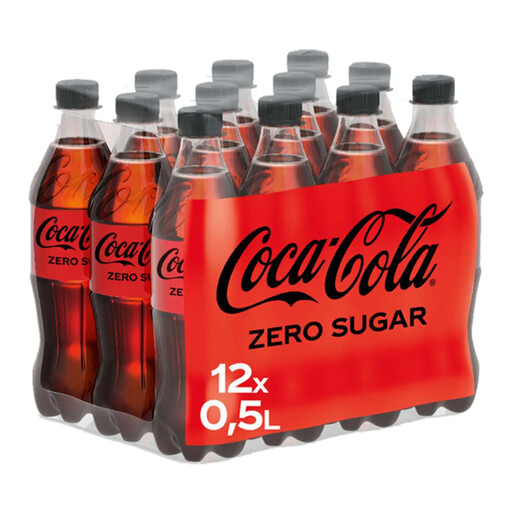
Why it suits this profile: The resealable 500 ml PET bottles are practical for travelling, work, sporting activities or a fridge that is regularly restocked.
The size is not hidden behind a general multipack claim: the specification clearly states 12 bottles of 500 ml. The bottle can be resealed after opening.
12 500 ml PET bottles, 0 g of sugar and approximately 0.3 kcal per 100 ml according to the product information.
We have compiled a complete, up-to-date list of products that fully meet these strict selection criteria and the applicable European safety regulations.
No, not necessarily. Both varieties may contain little or no sugar, but the recipe, sweeteners and flavour may differ. So check the nutritional table and ingredients list rather than relying solely on the product name.
It varies from product to product. According to the product information provided, Coca-Cola Zero Sugar and Pepsi Zero Sugar contain caffeine. A product with “caffeine-free” or “cafeïnevrij” in its name is specifically intended to be a caffeine-free variety. Always check the current label.
Follow the storage instructions on the packaging. The product information generally states that an opened container should be stored in the fridge and consumed within the specified period. Close a PET bottle securely and check its smell, taste and appearance before drinking. The official best-before information is printed on the packaging.
