
Vandaag of morgen in huis

Kwaliteit gegarandeerd

Welkomstaanbiedingen ontgrendelen: GRATIS bezorging | Tot 80% korting | Gratis 30 dagen JoyPlus-proefperiode
Download de app
Anyone looking for zero-sugar cola usually wants the familiar cola taste without sugar and with few calories. Yet many products on the shelf appear more alike than they really are. The differences often come down to caffeine, sweeteners, pack size and how much drink you actually need.
This buying guide helps you compare sugar-free cola, cola without sugar and low-calorie cola in practical terms. That way, you can avoid buying too much, choosing a caffeinated option when you do not want one, or picking up a flavoured variety that does not suit the occasion.
The terms zero-sugar cola, “zero” and “light” mainly refer to sugar and energy. They do not indicate whether the drink contains caffeine. Many varieties do contain caffeine, including several packs of Coca-Cola Zero Sugar and Pepsi Zero Sugar.
Would you like to drink cola without caffeine in the evening or at various times throughout the day? Then check the product name and ingredients list carefully. A variety labelled “caffeine free” or “caffeine-free” is a more logical choice than standard zero cola.
A cola multipack containing 24 cans may offer good value per serving, but it takes up space and is less flexible if you are not yet familiar with the flavour. 1.5-litre bottles are practical for a family or party, while cans and small bottles are better suited to individual servings.
Also check the total volume. Six 1.5-litre bottles contain 9 litres in total. That is a different purchase from 24 330 ml cans, which contain 7.92 litres altogether.
Sugar-free cola is generally sweetened with a combination of sweeteners. The products listed include aspartame (E951), acesulfame-K (E950), cyclamate and sucralose. Check the ingredients if you want to avoid particular sweeteners.
Products containing aspartame state that they contain a source of phenylalanine. This is shown, for example, on the labels of various First Choice, Coca-Cola and Pepsi varieties. Always read the current packaging, as recipes and labelling may change.
Do not just look at the front of the packaging; check the nutrition table. Several of the zero-cola products mentioned list 0 grams of sugar per 100 ml and approximately 0 to 1 kcal per 100 ml. First Choice Cola Zero, for example, lists 0.1 grams of sugar and 1 kcal per 100 ml, so check that the product name and nutritional values match exactly.
“Zero-calorie cola” is often used in searches, but in practice the nutritional value on the label may be 0.3, 0.4 or 1 kcal per 100 ml, for example. Compare the figures rather than relying solely on the marketing term.
If you are looking for a classic cola taste, you can choose from well-known brands such as Coca-Cola Zero Sugar and Pepsi Zero Sugar, as well as supermarket brands and other varieties. The flavour does not depend solely on sugar: acids, flavourings, colourings and sweeteners work together to create the overall profile.
For a caffeine-free option, First Choice Cola Caffeine-Free Light is worth considering. Coca-Cola Zero Sugar Caffeine Free comes in a larger can pack and contains neither sugar nor caffeine. With flavoured varieties such as cherry or cream soda, check that you are deliberately choosing a different flavour profile.
Store soft drinks according to the instructions on the packaging, generally in a cool, dry place away from direct sunlight and excessive heat. Once opened, a bottle should be kept refrigerated and used within the stated period.
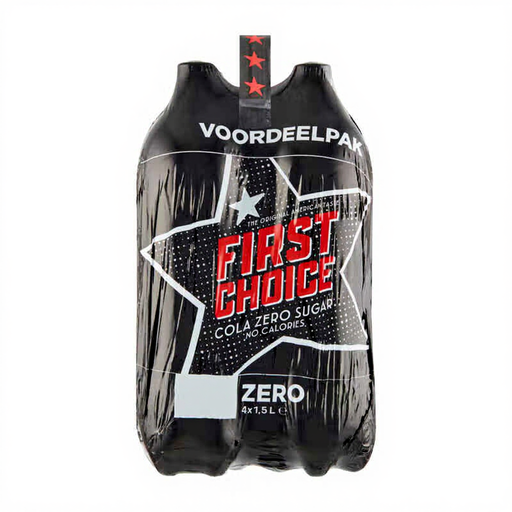
Why it suits this profile: The pack of 4 x 250 ml is a manageable option for anyone who wants to try sugar-free cola without immediately buying a large stock.
The smaller multipack reduces the risk of ending up with an impractical amount in stock. The nutritional information lists 1 kcal and 0.1 grams of sugar per 100 ml; always check this on the delivered packaging.
250 ml per can, zero-sugar positioning and compact storage. The ingredients list E951 and E950, as well as caffeine.
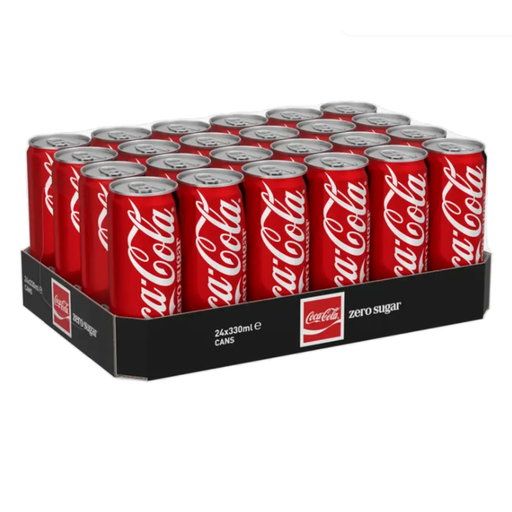
Why it suits this profile: A good choice for anyone who values a well-known brand, consistent can servings and a generous supply for home or visitors.
The product information clearly states 24 cans of 330 ml and 0 grams of sugar per 100 ml. This makes it easy to estimate the total amount in advance.
24 x 330 ml, 0 kcal according to the nutritional information provided, and suitable for vegetarian and vegan consumers according to the product description.

Why it suits this profile: Designed for households, offices or event organisers who need a large number of cans and specifically want caffeine-free cola.
The product name states both zero sugar and caffeine free. This makes the choice clearer than with standard diet cola or zero cola, where the caffeine content has to be checked separately.
24 cans of 330 ml, 0 grams of sugar and 0.3 kcal per 100 ml according to the product information. The ingredients list aspartame and acesulfame-K.
For a birthday, barbecue or event, cola cans are easy to hand out. A tray of Coca-Cola Zero Sugar or Pepsi Zero Sugar contains 24 cans of 330 ml. Pepsi Zero Sugar lists 0.4 kcal per 100 ml and 0 grams of sugar per 100 ml.
For everyday use with several people, cola bottles are more efficient. Coca-Cola Zero Sugar in 4 x 1.5 litres is designed for mealtimes and parties. g’woon Cola Zero and g’woon Diet Cola are also available in 6 x 1.5 litres. With larger packs, check whether you can refrigerate the bottle after opening and finish it within the stated period.
If you want to control serving sizes more precisely, 500 ml bottles such as Coca-Cola Zero Sugar Cola 12 x 500 ml are a useful middle ground. For a different flavour, options include Coca-Cola Zero Sugar Cherry and Pepsi Zero Cream Soda. According to the nutritional information provided, these products are sugar-free, but their flavourings give them a different profile from classic cola.
We have put together a complete, up-to-date list of products that fully meet these strict selection criteria and the applicable European safety regulations.
Not exactly. Diet cola and zero-sugar cola are generally both sweetened without ordinary sugar, but their recipes, sweeteners and flavours may differ. Always check the ingredients and nutritional values of the specific product.
No. Many standard zero and diet varieties contain caffeine. Caffeine-free products are also available, such as First Choice Cola Caffeine-Free Light and Coca-Cola Zero Sugar Caffeine Free. Always check the product name and ingredients list.
That depends on the price, volume and packaging. Calculate the price per litre or per can. A 24-pack is practical for regular use, while a 4-pack or 6-pack may be a wiser choice if you want to try a brand or flavour first.
