
Vandaag of morgen in huis

Kwaliteit gegarandeerd

Welkomstaanbiedingen ontgrendelen: GRATIS bezorging | Tot 80% korting | Gratis 30 dagen JoyPlus-proefperiode
Download de app
If you are looking for zero-sugar cola, you will usually want to keep the familiar cola flavour without the sugar and with few calories. However, products can differ considerably in caffeine content, sweeteners, packaging and price per litre. A small pack can be convenient for drinking on the go, while a multipack of cans or bottles may offer better value for a family or party.
When comparing products, do not just look for words such as “zero”, “light” or “classic taste”. Always check the nutritional information and ingredients on the product page and packaging. This helps you avoid buying a sugar-free cola that still contains caffeine, has an unusual fruit flavour or is not suitable for the occasion.
Most varieties of Coca-Cola Zero Sugar, Pepsi Zero Sugar and other sugar-free colas contain caffeine. So, if you are looking for a drink for the evening or want to avoid caffeine, search specifically for caffeine-free cola. First Choice Cola Caffeine-Free Light and Coca-Cola Zero Sugar Caffeine Free state this explicitly in their product information.
Also check the ingredients list. If it mentions “caffeine”, “caffeine flavouring” or a similar term, the product contains caffeine. If you are unsure, the packaging should be treated as the definitive source.
A cola offer may look appealing, but the number of millilitres can vary significantly. A tray with 24 cans of 330 ml contains 7.92 litres. A pack with 12 bottles of 500 ml contains 6 litres. So, compare the price per litre, not just the total price.
Large bottles are often practical for home use, but they lose their fizz more quickly after opening. Cans and small PET bottles make it easier to manage individual portions, but they may involve relatively more packaging per litre.
Pepsi Strawberry & Cream and Pepsi Peach are sugar-free soft drinks with a distinct fruit or dessert flavour. They may be appealing if you want to try something different, but they are not a direct substitute for classic cola. Check the flavour description before ordering a large cola multipack.
For sugar-free cola, the nutritional value per 100 ml should be a key consideration. The range includes various products with 0 grams of sugar per 100 ml and around 0 to 1 kcal per 100 ml. Small differences may arise from rounding or the recipe used.
Pay attention to the following:
Products containing aspartame generally carry the mandatory warning “contains a source of phenylalanine”. This is stated, for example, on Coca-Cola Zero Sugar and Pepsi Zero Sugar. Read the label if this information is important to you.
Not every product page states the amount of caffeine in milligrams. However, you can often tell from the ingredients list whether caffeine is present. For a caffeine-free option, these two products are clearly described:
According to the available product information, the regular Coca-Cola Zero Sugar, Pepsi Zero Sugar, Coca-Cola Light and Fritz! Superzero Cola do contain caffeine. Fritz! Superzero is also described as a cola with a high caffeine content. This makes it more suitable for occasions when you are deliberately choosing a caffeinated drink.
Choose the packaging based on how quickly you drink cola:
Store unopened soft drinks in a cool, dry place away from direct sunlight. Once opened, a bottle should be kept refrigerated and used within the stated period. Check the best-before information on the packaging, as this may vary by batch.
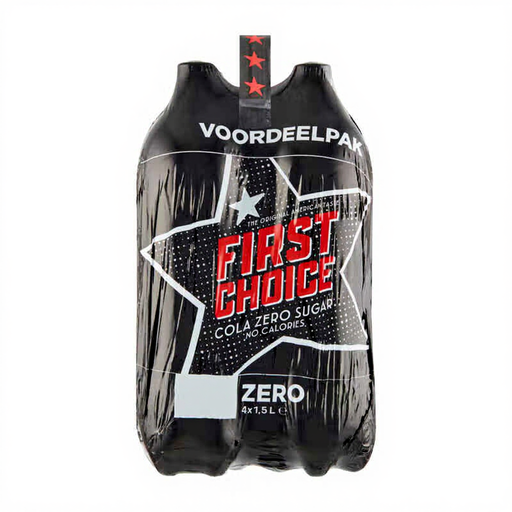
Why it suits this profile: A compact pack of four 250 ml cans, ideal for trying sugar-free cola in a smaller quantity first.
The product information states 1 kcal and 0.1 g of sugar per 100 ml. Check the current packaging if you expect exactly 0 g of sugar.
Four 250 ml servings, without a large stockpile, and with caffeine according to the ingredients list.

Why it suits this profile: Suitable for anyone looking for a recognisable brand, can format and caffeine-free cola in one stock pack.
The product details explicitly state both zero sugar and caffeine-free. This means you do not have to rely solely on the name “Zero Sugar”.
24 cans of 330 ml, 0 g of sugar and 0.3 kcal per 100 ml according to the product information.
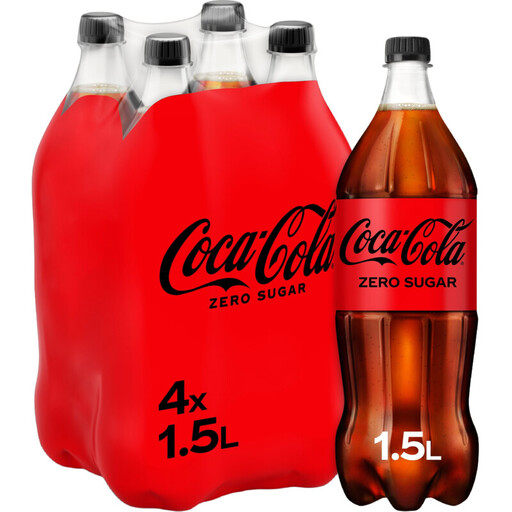
Why it suits this profile: The total volume of 6 litres is practical for families, dinners and parties where several glasses will be served.
The packaging states 4 x 1.5 litres and 0 g of sugar per 100 ml. This makes the total quantity clear before you buy.
Large PET bottles, zero sugar and approximately 0.3 kcal per 100 ml according to the product details.
We have compiled a complete, up-to-date list of products that fully meet these strict selection criteria and the applicable European safety regulations.
No, the name and recipe may differ. According to the available product information, Coca-Cola Zero Sugar and Coca-Cola Light are both sugar-free, but they may have a different flavour balance and combination of ingredients. So, compare the ingredients list and nutritional value rather than looking only at the front of the packaging.
Choose a product that explicitly says “caffeine-free” or “cafeïnevrij”. The range includes clear options such as First Choice Cola Caffeine-Free Light and Coca-Cola Zero Sugar Caffeine Free Cola. Always check the current packaging before drinking, as product information may change.
That depends on the price, volume and any cola offer. Calculate the price per litre by dividing the total price by the total number of litres. Large bottles may offer better value for home use, while cans are convenient for portion control, storage and serving. With opened bottles, also bear in mind that the fizz will disappear more quickly.
