
Vandaag of morgen in huis

Kwaliteit gegarandeerd

Welkomstaanbiedingen ontgrendelen: GRATIS bezorging | Tot 80% korting | Gratis 30 dagen JoyPlus-proefperiode
Download de app
When you want to buy zero-sugar cola, you’re usually looking for two things: no sugar and a taste close to regular cola. But sugar-free colas can differ considerably in their sweeteners, caffeine content, size and packaging. Choosing the wrong one could leave you with a multipack that doesn’t suit your needs, cans that are too large to take with you, or a caffeinated version when you’re specifically looking for caffeine-free cola.
This practical guide will help you tell marketing claims apart from product information you can check.
A drink’s label may say it contains no sugar, even though sweeteners have been added. So check the full ingredients list. The variants available include aspartame, acesulfame-K, sucralose and steviol glycosides.
A product labelled “zero” or “sugar-free cola” isn’t necessarily free from all sweeteners. If you want to avoid aspartame, compare the ingredients lists for each product or browse the aspartame-free range.
A cola multipack with 24 cans might be handy for a household or event, but it takes up a lot of space and is less flexible if you don’t drink much fizzy pop. 1.5-litre PET bottles are practical for serving at the table, while 150 ml or 250 ml packs offer a set portion.
Don’t just work out the price of the box. Consider the total volume, use-by date, storage space and whether you can reseal the pack after opening.
Many Coca-Cola Zero, Pepsi Zero and other cola variants contain caffeine. This is usually listed in the ingredients or product information. If you’re specifically looking for caffeine-free cola, check that “caffeine free” is stated clearly.
Compare the nutritional values per 100 ml, not just per can. For example, the selected Coca-Cola Zero Sugar variants list 0 g of sugar and around 0.3 kcal per 100 ml. Fritz! Superzero Cola lists 0 g of sugar and 1 kcal per 100 ml. Pepsi Zero Cream Soda lists 0 g of sugar and around 0.5 kcal per 100 ml.
Small differences in calories matter most if you drink several glasses or cans a day. The term zero-calorie cola is sometimes used as a rounded figure in product information; the exact nutritional table on the packaging is what counts.
Check whether the drink contains aspartame. Products containing aspartame usually also state that they are a source of phenylalanine. This is noted, for example, for Coca-Cola Zero Sugar and Fritz! Superzero Cola in the product information provided.
Also look out for differences between variants of the same brand. Coca-Cola Zero Caffeine Free, for example, lists aspartame and acesulfame-K, but no caffeine in its ingredients. So always check the product page and packaging for the specific pack you’re considering.
Choose a size to suit how you’ll use it:
A glass bottle, such as the one used for Fritz! Superzero Cola, may suit you if you’re after a different serving experience. According to the product information, this drink comes in a 330 ml glass bottle and is best served chilled at 4–6 °C. This is verifiable packaging and serving information, not a guarantee that you’ll prefer the taste.
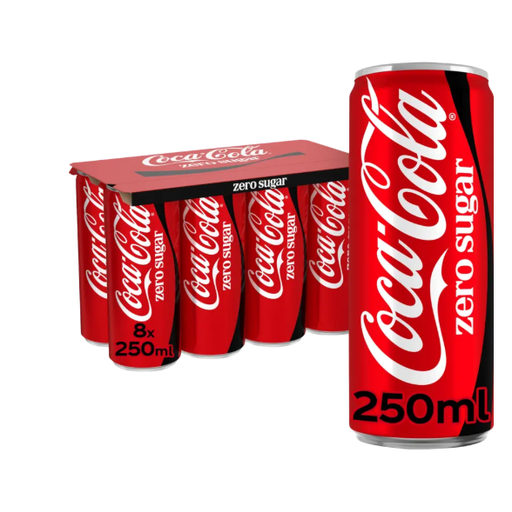
Why it suits this type of buyer: The 8-pack of 250 ml cans gives you a manageable amount for home without committing to a large stock-up. According to the product information, each 100 ml contains 0 g of sugar and 0.3 kcal.
The fixed 250 ml size means you won’t have a large bottle to store after opening. Check the ingredients list if you want to avoid certain sweeteners.
8 x 250 ml, 0 g of sugar per 100 ml and a familiar can size.
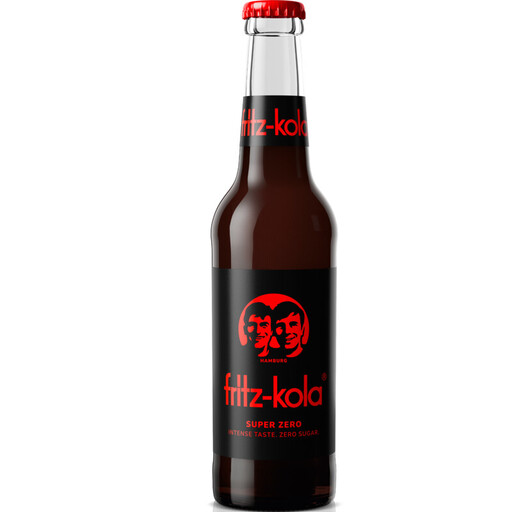
Why it suits this type of buyer: The 330 ml glass bottle is designed for individual servings. According to the product description, the drink contains 0 g of sugar and should be served chilled at 4–6 °C.
The pack makes it clear exactly how much you’re buying: one 330 ml bottle. That way, you don’t have to pay for a large multipack when you’re just trying a variant.
Glass bottle, 330 ml and, according to the product information, 0 g of sugar.

Why it suits this type of buyer: This pack is for people who serve cola regularly and specifically want a caffeine-free option. It contains 24 cans of 330 ml each.
The product description explicitly says “caffeine free”, so you don’t have to rely on the general name ‘cola zero’ alone.
24 x 330 ml, sugar-free and, according to the product information, caffeine-free.
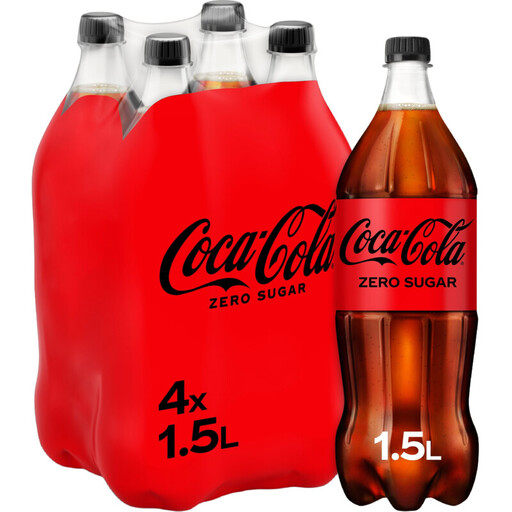
Why it suits this type of buyer: Four 1.5-litre PET bottles are ideal for sharing around a table. According to the product information, the bottles can be resealed after opening and stored in the fridge.
The size works well for sharing. You avoid buying individual small cans, but you’ll need enough fridge and storage space.
4 x 1.5 litres, resealable PET bottles and, according to the product information, 0 g of sugar per 100 ml.
We’ve put together a full, up-to-date list of products that meet these strict selection criteria and current European safety regulations.
The product information provided lists 0 g of sugar per 100 ml for several variants. Always check the current packaging, as recipes and labels can change. Also, “sugar-free” doesn’t mean the drink contains no sweeteners.
That depends on the price per litre and how you’ll use them. Divide the total price by the total number of millilitres. Cans are handy for set portions; 1.5-litre PET bottles are often more practical for several people. Remember to factor in refrigeration and any drink left over after opening.
No. Many Coca-Cola Zero and Pepsi Zero variants contain caffeine. Only choose caffeine-free cola if this is clearly stated in the product name, ingredients list or product description. Coca-Cola Zero Sugar Caffeine Free variants are labelled more clearly than regular cola zero.
