
If you’re making smoothies for a group
You want enough yoghurt for several smoothies, so you compare the capacity per batch. The specifications for Steba and Rommelsbacher show why capacity per batch matters.


For smoothies at a shared celebration, choose a yoghurt maker based on how much yoghurt you need at a time: a larger container suits one shared base, while individual pots make it easy to keep portions separate. However, pots mean more filling, washing-up and fridge space. Plan ahead for both fermentation and chilling, as a timer won’t cool the yoghurt. The Netherlands Nutrition Centre advises storing dairy products at 4 °C.
You want enough yoghurt for several smoothies, so you compare the capacity per batch. The specifications for Steba and Rommelsbacher show why capacity per batch matters.
You want the yoghurt to be ready in good time. A timer can help you plan, but the yoghurt still needs to be chilled after it’s made.
You want to keep portions or ingredients separate, so check how many containers or pots are included, whether there are suitable recipes and whether you have clean kitchen utensils.
For a shared meal, your choice mainly comes down to the quantity per batch, preparation time, keeping different varieties separate and the extra work involved with individual pots.
| What to consider | What to look for | Who should pay particular attention? |
|---|---|---|
| Quantity per batch | Compare the amount of yoghurt you need with the capacity per batch, not the combined capacity of separate or spare containers. | If I want to make one base for the group, I need enough yoghurt without having to plan an extra batch. Around 36% of consumers mainly prioritise having enough for the group. |
| Fermentation and chilling | Check the model’s timer and automatic shut-off, then allow time and space in the fridge to chill the yoghurt. | If I want to finish preparing everything before the meal, I need to allow time for both making and chilling the yoghurt. Around 29% of consumers mainly prioritise being able to plan ahead. |
| Keeping different varieties separate | Check how many pots or containers are included and whether the recipe works with the ingredients you want to use. | If I’m making different smoothie varieties, I want to be able to keep portions or ingredients separate. Around 21% of consumers name this as their main buying priority. |
| Washing and storing the pots | Check how many pots are included, which parts the manufacturer says are dishwasher-safe and how much fridge space you’ll need. | If I want to minimise extra washing-up and storage after cooking, I’ll consider how many separate parts are included. Around 14% of consumers mainly prioritise this convenience. |
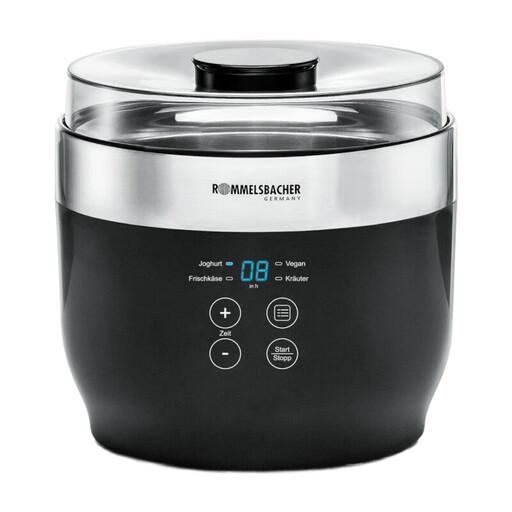
For the Rommelsbacher JG 80, Rommelsbacher lists two containers, each with a capacity of 1.2 litres, but the capacity is 1.2 litres per batch.
Compare the capacity per batch with the amount of yoghurt you need for the meal.
The automatic shut-off ends the set programme; the dairy product still needs to be chilled afterwards.
Make the yoghurt well before serving and clear some space in the fridge. The Netherlands Nutrition Centre advises storing dairy products at 4 °C.
Rommelsbacher explains that fermented plant-based drinks can remain runny. So, a programme name doesn’t guarantee the desired thickness for every drink or recipe.
Check the recipe for the ingredients you want to use and try a test batch before the celebration.
The JM 2 is designed for anyone who wants to make lots of individual portions.
The JG 80 is designed for making one larger yoghurt base, while the JG 40 is a smaller model with individual pots.
The JG 3518 is a smaller option for anyone who prioritises individual portions.
The Yogurteo YG231E32 combines individual pots with a timer.
The Ligne 459002 is a model with individual pots, each offering a relatively generous portion size.
This selection includes a smaller model with individual pots and a model that makes one 1.2-litre yoghurt base per batch. Choose according to whether you’d rather have individual portions or make a larger batch.
 No image available
A smaller model with individual pots to consider if you’d rather make yoghurt in separate portions than as one large base.
 No image available
Well suited to anyone who wants to make one larger yoghurt base for several smoothies; Rommelsbacher says the capacity is 1.2 litres per batch.
Two containers are included, but the stated capacity remains 1.2 litres per batch. Rommelsbacher lists four programmes; check plant-based recipes separately, as the result may remain runny.
First, compare the amount of yoghurt you need with the capacity per batch. Use the timer as instructed in your model’s manual, then make space in the fridge: the Netherlands Nutrition Centre advises storing dairy products at 4 °C.
The Netherlands Nutrition Centre advises always boiling raw farm milk before use. It also advises pregnant women, young children, older people and anyone with a weakened immune system not to drink raw milk. A yoghurt maker doesn’t check this for you.
Keep dairy products covered at 4 °C, use clean utensils and return the yoghurt to the fridge promptly after use. The Netherlands Nutrition Centre recommends keeping opened full-fat yoghurt in the fridge for 5–7 days and smoothies made with fruit and dairy for 3–7 days. This isn’t a guarantee of how long every homemade recipe will keep; consider the ingredients you’ve used and look out for signs of spoilage.
According to the Dutch government, electrical appliances placed on the EU market must meet the applicable safety requirements and carry a CE mark. Check the mark and product information for the specific appliance; a product listing alone doesn’t prove that an individual item meets those requirements. If there’s a fault, contact the seller about your statutory guarantee; a manufacturer’s guarantee doesn’t replace this right.