
Host making lots of smoothies
You want to prepare the amount you need in as few batches as possible. Compare the capacity per batch with the number of guests and the space in your fridge.


First, work out how much yoghurt you’ll need for the smoothies you expect to make, and how many batches you can prepare and chill in advance. A large tub is ideal for one base you can pour from; individual pots are handy if you want to keep portions or ingredients separate. For either option, check the capacity per batch and the space available in your fridge. A drinking yoghurt programme won’t mix the yoghurt with the fruit for your smoothie.
You want to prepare the amount you need in as few batches as possible. Compare the capacity per batch with the number of guests and the space in your fridge.
You make the yoghurt in advance and need to be able to store all the tubs or pots, with their lids on, in the fridge.
You want to keep portions separate or try a different type of milk. Check the recipe and the instructions for the exact model before you do.
Best if: you want to pour one yoghurt base into several smoothies and can chill it in a lidded tub. Rommelsbacher lists a capacity of 1.2 litres of natural yoghurt per batch for the JG 80.
Consider: the two included tubs, each with a capacity of 1.2 litres, don’t mean the appliance makes 2.4 litres per batch.
Best if: you want to prepare portions or ingredients separately. Steba lists twelve 0.2-litre pots for the JM 2, making a total of 2.4 litres per batch.
Consider: all the pots need space in the fridge; if you’re making one jug of smoothies, you’ll need to combine their contents.
| What to consider | What should you check? | Who is this important for? |
|---|---|---|
| Amount per batch | Work out how much you need for your smoothies and compare it with the capacity per batch. Rommelsbacher lists 1.2 litres of natural yoghurt per batch for the JG 80; Steba lists 2.4 litres for the JM 2, divided between twelve pots. | If I’m making smoothies for a group, I want to know whether one batch will be enough and how many batches I’ll need to plan for. Around 36% of consumers put batch size first. |
| Chilling and storage | Check that all the lidded tubs or pots will fit in your fridge. The Voedingscentrum recommends setting your fridge to 4 °C and not leaving perishable food out of the fridge for more than two hours. | I want to prepare everything in advance, but only if I can store the yoghurt chilled in sealed containers. Around 29% of consumers prioritise chilled preparation. |
| Yoghurt for smoothies | Check whether the exact model has a drinking yoghurt programme and whether the yoghurt it makes is suitable for your recipe. Severin lists this feature for the JG 3521; Lagrange lists it for the 459002. | For a jug of smoothies, I want to be able to pour the yoghurt without opening lots of pots one by one. Around 21% of consumers prioritise a pourable yoghurt base. |
| Recipe variations | Check the instructions and recipe for your chosen ingredients and starter culture. A programme setting for a different type of milk doesn’t guarantee that every recipe will work. | If guests need different bases, I want to be able to prepare portions and ingredients separately. Around 14% of consumers say recipe variations are their main buying concern. |
Rommelsbacher lists two tubs of 1.2 litres each for the JG 80, but a capacity of 1.2 litres of natural yoghurt per batch. So the total capacity of the included tubs isn’t the same as the batch capacity.
Compare the amount you need with the capacity per batch.
An extra batch means more preparation time before the meal.
A large batch made up of lots of individual pots takes up space, and yoghurt is a perishable dairy product. The Voedingscentrum recommends keeping it chilled and not leaving perishable food out of the fridge for more than two hours.
Check in advance that the entire batch will fit in your fridge in sealed containers.
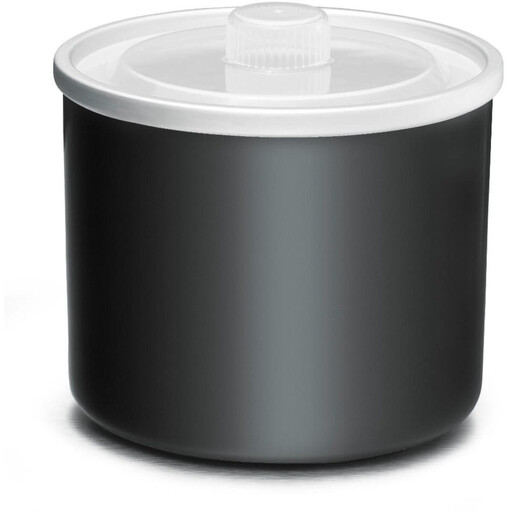
A Rommelsbacher product listing with JG 80 in the title may, according to the product details, describe the IB 05 accessory rather than the yoghurt maker.
Check the full model number, product description and exactly what’s included.
The JM 2 is a pot-based model for making a larger batch in individual portions.
The JG 80 is designed for making yoghurt in a larger tub and also has programmes for other preparations.
The pot-based models vary in the number of pots and their features, so compare the full model numbers.
The 459002 is a pot-based model with a listed drinking yoghurt function.
The Yogurteo YG231E32 is a model for making smaller individual portions.
These products are suited to preparing yoghurt in individual pots or in a larger tub for smoothies.
 No image available
Ideal if you want to prepare yoghurt in individual portions and set the machine in advance.
The product description lists eight 150 ml glass pots with lids, temperature control and an adjustable timer from 1–18 hours.
 No image available
This is an accessory, not a yoghurt maker. Before you buy, check that it’s compatible with the appliance you already own.
 No image available
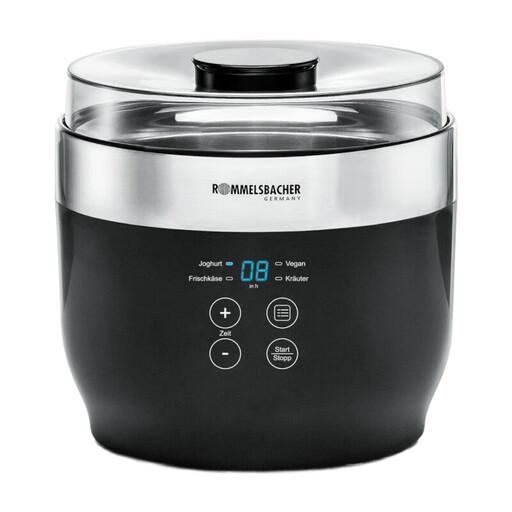
Ideal if you want to make and store one larger yoghurt base for several smoothies.
Rommelsbacher lists a capacity of 1.2 litres of natural yoghurt per batch and two tubs of 1.2 litres each. The two tubs don’t add up to 2.4 litres per batch.
The product description lists four programmes, including natural yoghurt and vegan or lactose-free yoghurt. Check the recipe and instructions for the ingredients you want to use.
Multiply the expected number of smoothies by the amount of yoghurt you want to use in each one. Then divide the amount you need by the capacity per batch of your chosen model, rounding the number of batches up. Remember to allow time and fridge space for every batch.
Yes. The Voedingscentrum recommends always boiling raw milk from a farm before use. Use clean utensils and follow the recipe and cooling instructions in your yoghurt maker’s manual, too.
The Voedingscentrum recommends keeping dairy chilled, setting your fridge to 4 °C and not leaving perishable products out of the fridge for more than two hours. It’s best to make small amounts of smoothie to serve straight away and return the rest of the yoghurt to the fridge.
Check whether pots for your exact model are available separately; Severin, for example, lists replacement pots for the JG 3518. In the Netherlands, the statutory guarantee is separate from any manufacturer’s guarantee. According to ACM ConsuWijzer, the statutory guarantee depends on what you could reasonably expect from the product and doesn’t automatically have a fixed duration of two years.
If you sell food or drink at a market or event, the NVWA says food safety rules apply, whether you’re a business or a private individual. The NVWA lists requirements including temperature control and allergen information. Selling smoothies isn’t implied by organising a community meal, so don’t automatically apply these sales rules to a private event where food is offered free of charge. Make sure you clearly tell guests which ingredients you’ve used.