Who is a yoghurt maker suitable for?

Smoothie enthusiast with limited worktop space

You want to make your own yoghurt, but need to know whether both the footprint and the height will fit. A model with one container and a tall model with individual jars need different spaces; the product details for Ariete and Rommelsbacher show the difference.

Planner who likes to prepare smoothie portions in advance

You want to prepare several portions ahead of time and keep them covered in the fridge. The number of jars and the space available in your fridge are important things to consider, as the product information from Severin and Rommelsbacher shows.

Choosing between convenience and extra features

You want to decide whether a timer, extra preparation options or a maker that doesn’t need to be plugged in suits your routine. The product information from Rommelsbacher and My.Yo describes different features and preparation methods.

What should you look for when buying?

First, measure the space on your worktop and in your fridge. Then consider whether you’d rather spoon yoghurt from one container, portion it out in advance or make it with extra features.

What to consider What should you look for? Who is this important for?
Worktop and storage space Compare the width, depth and height with the space available. Also allow for the room taken up by individual containers. I want to fit the yoghurt maker on a small worktop and make sure it will fit under a shelf too. Around 36% of consumers prioritise a suitable footprint and enough storage space.
Quantity and portions Compare the capacity per batch and the number of jars with how much you use and the space available in your fridge. I want to prepare smoothie portions in advance and store them covered, without choosing more jars than my fridge can hold. Around 29% of consumers give the quantity and portioning the highest priority.
Controls and extra preparations Decide whether you need a timer, a strainer or programmes for other preparations. I only want to give up time and storage space for features I’ll actually use. Around 21% of consumers focus mainly on the controls or extra preparation options.
Preparing yoghurt without a mains connection Check that you can boil water, place the maker somewhere safe and chill the yoghurt afterwards. I don’t want to use a plugged-in appliance during fermentation and don’t mind adding boiling water myself. Around 14% of consumers prioritise this non-electric method.

How to avoid common buying mistakes

  • Looking only at capacity

    A compact model with one container and a tall model with individual jars can take up very different amounts of worktop space. You’ll also need somewhere in the fridge for the yoghurt or jars once it’s ready.

    Measure the space where you’ll use the maker and the space in your fridge before choosing a model. Compare its stated width, depth and height with the room available.

  • Confusing ‘non-electric’ with ‘no preparation needed’

    According to the manufacturer, the My.Yo uses boiling water to start the preparation process; the brand’s instructions specify a waiting time of 12–14 hours.

    Choose this method only if you can boil water and leave the yoghurt to prepare according to the instructions.

  • Confusing the capacity with the combined capacity of all the containers

    Rommelsbacher states that the JG 80 has a capacity of 1.2 litres per yoghurt batch and comes with two glass containers, each with a capacity of 1.2 litres. So the two containers don’t mean that one batch makes 2.4 litres.

    Compare the capacity per batch and the container you’ll use, rather than adding together the capacities of the accessories supplied.

  • Assuming the manufacturer’s guarantee replaces your statutory rights

    The Dutch government states that there is no fixed statutory guarantee period in the Netherlands. If a product is faulty, the retailer is the point of contact for a solution.

    Compare any extra guarantee with the rights you already have; a commercial guarantee doesn’t replace your statutory rights.

Brands to compare

Ariete

The Yogurella 0621/10 has one container and a filter basket; the 0617/00 is a different model with individual jars.

  • Ariete’s product sheets state that the 0621/10 measures 17 × 17 × 19 cm and has 1-litre containers with a filter basket.
  • According to Ariete, the 0617/00 comes with seven glass jars and measures 19.5 × 19.5 × 22 cm.
  • Dimensions and accessories vary by model; don’t assume the 0621/10 comes with the jars supplied with the 0617/00, or vice versa.

Severin

The JG 3518 is designed for making yoghurt in individual jars; the JG 3520 comes with more jars.

  • Severin lists seven 150 ml jars and a footprint of 24 × 24 cm for the JG 3518.
  • According to Severin, the JG 3520 comes with fourteen 150 ml jars.
  • The number of jars supplied with the JG 3520 doesn’t tell you how many fit in the appliance at once. According to Severin, the JG 3518 doesn’t have a display.

Rommelsbacher

The JG 40 has individual jars and a timer; the JG 80 has one container, programmes and a strainer.

  • According to Rommelsbacher, the JG 40 has eight 150 ml jars, a timer of up to 18 hours and automatic shut-off. The stated footprint is 34.5 × 18.5 cm.
  • The manufacturer states that the JG 80 has four programmes and a footprint of 19.5 × 19.5 cm.
  • The extra JG 80 accessories are most useful if you’ll use them for the preparations they’re designed for. The stated capacity of 1.2 litres is for one batch, not the combined capacity of the containers supplied.

My.Yo

A non-electric maker for anyone who doesn’t want to use a plugged-in appliance during fermentation.

  • My.Yo describes making 1 litre of yoghurt by adding boiling water. The brand’s instructions specify 3/4 litre of boiling water and a waiting time of 12–14 hours.
  • You’ll need to boil the water yourself and leave the yoghurt to prepare. The description ‘compact’ doesn’t tell you whether it will fit in a particular space, so measure the room available.

Yoghurt makers at Joybuy

These electric yoghurt makers are for anyone who wants to make yoghurt for smoothies, with a choice of individual portion jars or extra preparation options.
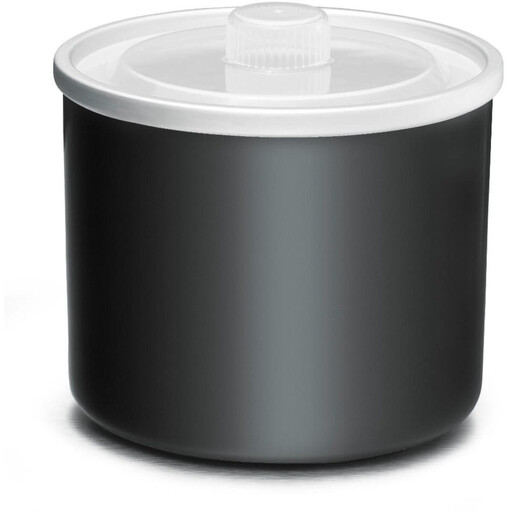
Rommelsbacher Home Yogurt & Cheese Maker JG 80

Rommelsbacher Home Yogurt & Cheese Maker JG 80

Ideal if you want to make more than just yoghurt and have room for the accessories supplied.

According to Rommelsbacher, the JG 80 has four programmes and comes with a strainer. The set includes two glass containers, each with a capacity of 1.2 litres; the stated capacity is 1.2 litres per batch. The footprint is 19.5 × 19.5 cm.

Joybuy

Rommelsbacher Yogurt Maker JG 40

Rommelsbacher Yogurt Maker JG 40

Ideal if you want to portion yoghurt for smoothies in advance and use an adjustable timer.

According to Rommelsbacher, the JG 40 has eight 150 ml glass jars and a timer of up to 18 hours. Its stated dimensions are 34.5 × 18.5 × 13.5 cm; it also has automatic shut-off.

Joybuy

Frequently asked questions

What measurements should I check before ordering a yoghurt maker?

Measure the width, depth and available height where you plan to use the appliance. According to Ariete, the Ariete Yogurella 0621/10 measures 17 × 17 × 19 cm; the Rommelsbacher JG 40 measures 34.5 × 18.5 × 13.5 cm according to the manufacturer. Also allow for space in the fridge for the prepared yoghurt or individual jars.

Can I use yoghurt in a smoothie straight after fermentation?

Follow the manufacturer’s instructions and chill the yoghurt once it’s ready. For example, My.Yo recommends putting the yoghurt in the fridge for a few more hours. The Netherlands Nutrition Centre advises returning yoghurt to a 4 °C fridge promptly after use and using a clean spoon.

Are smoothies made with homemade yoghurt automatically healthier?

No, making your own yoghurt doesn’t automatically make a smoothie healthier. The Netherlands Nutrition Centre notes that smoothies with yoghurt may count as sugary drinks and aren’t included in the Dutch Wheel of Five dietary guidelines. The yoghurt maker doesn’t determine how much fruit, sugar or other ingredients you add.

What can I do if my electric yoghurt maker breaks?

For a consumer purchase in the Netherlands, you’re entitled to a product that works properly; there is no fixed statutory guarantee period. According to the Dutch government, if a product is faulty, the retailer is the point of contact for a solution. Any extra guarantee offered doesn’t replace your statutory rights.

Is CE marking required for an electric yoghurt maker in the Netherlands?

Yes. According to the Netherlands Food and Consumer Product Safety Authority, CE marking is required for electrical products placed on the market. This doesn’t in itself mean that a specific item has been individually inspected; check the marking and product information for the one you’re considering. The same requirement doesn’t apply in the same way to a non-electric maker.
