
Breakfast maker with limited worktop space
Wants to check that the appliance will fit while it’s running, so compares the stated width and depth. Ariete and Rommelsbacher publish model dimensions that can help.


If you’re short on worktop space, start by checking the stated width and depth, then decide whether a single bowl or individual breakfast pots better suit your portions. A bowl can make serving easier, while pots are handy for portioning in advance. Also check the capacity, fridge space and room for accessories. The dimensions and features listed are manufacturer specifications, not the result of independent product testing.
Wants to check that the appliance will fit while it’s running, so compares the stated width and depth. Ariete and Rommelsbacher publish model dimensions that can help.
Wants to portion out several servings in advance and keep them chilled, so compares the number and capacity of the pots with the available fridge space. Severin, Rommelsbacher and Steba list pots for the relevant models.
Wants to choose between, for example, a bowl, straining or other programmes listed by the manufacturer. Checks which accessories and settings come with the exact model, as Ariete and Rommelsbacher specify for certain models.
First, measure the space where the appliance will sit while it’s running. Then decide whether you mainly want to chill individual portions, plan ahead or use different preparation methods.
| Consideration | What to look for when buying | Who is this important for? |
|---|---|---|
| Will the appliance fit on the worktop? | Measure the available space and compare it with the appliance dimensions, not the packaging. Ariete lists the Yogurella 0621/10 as 17 × 17 cm in length and width; Rommelsbacher lists the JG 40 as 34.5 × 18.5 cm. | If my appliance needs to sit on a cramped worktop while fermenting, I want to compare its width and depth in advance. Around 40% of consumers give worktop dimensions top priority. |
| How many individual breakfast portions can I make? | Compare the number of pots and the capacity of each one. Severin lists seven 150 ml pots for the JG 3518; Rommelsbacher lists eight 150 ml pots for the JG 40. | I want to be able to chill yoghurt in individual breakfast portions as soon as it’s ready, without having to serve it out each time. This is the top priority for around 30% of consumers. |
| Does the preparation time fit my routine? | Check whether the model has a timer and automatic shut-off. Rommelsbacher lists a timer of up to 18 hours and automatic shut-off for the JG 40; the yoghurt still needs to be chilled afterwards. | If I want to set the appliance in advance, I also need to plan for chilling the yoghurt afterwards. Around 20% of consumers prioritise being able to schedule preparation over the space needed and the number of pots. |
| Which preparation methods will I actually use? | Check which accessories come with the exact model. Ariete lists a straining sieve for the Yogurella 0621/10; Rommelsbacher lists a sieve and four programmes for the JG 80. | I only want extra programmes or a straining sieve if I’ll actually use them; loose accessories also need storage space. Around 10% of consumers give variety of preparation methods top priority. |
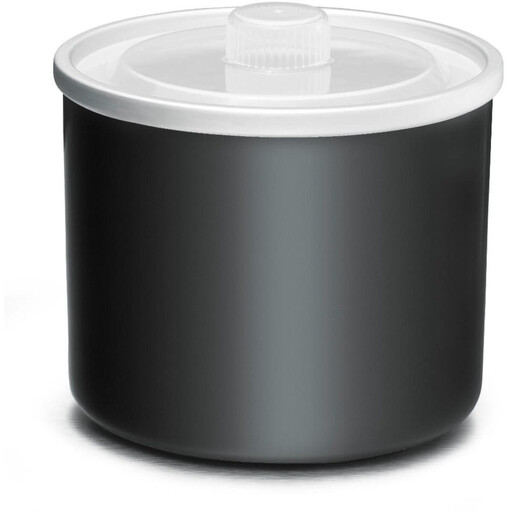
A Joybuy listing titled Rommelsbacher JG 80 also mentions an ice cream maker accessory and model IB 05 in the product description. The title alone therefore doesn’t make it clear which product is being offered.
On the specific product page, check that the model number, product category, specifications and package contents all match.
The stated wattage is not a measure of the energy used during a complete yoghurt-making cycle.
The actual electricity cost depends on the energy used during the cycle and your electricity tariff.
Only compare the cost per batch when energy use has been measured on the same basis and you know the applicable tariff.
Rommelsbacher lists two 1.2-litre containers for the JG 80, but gives the appliance capacity as 1.2 litres.
Check the stated appliance capacity separately from the number of included containers, and don’t assume that you can make two batches at once.
Ariete describes the Yogurella 0621/10 as a bowl-style model with a straining sieve and a stated length and width of 17 cm each.
Rommelsbacher describes the JG 80 as a model with containers, cups and several programmes, and the JG 40 as a model with individual pots and a timer.
Severin offers models with individual pots, among others; according to the manufacturer, the JG 3521 has five automatic programmes.
Steba describes the JM 3 as a yoghurt maker with individual pots, adjustable temperature and a timer.
This selection includes a model that offers a choice of containers and cups, and a model with individual pots. Compare the footprint, portion layout and storage space needed for accessories.
 No image available
An option for anyone looking for a relatively small footprint and the flexibility to switch between larger containers and small portion cups.
Rommelsbacher lists a footprint of 19.5 × 19.5 cm for the JG 80. The manufacturer specifies two 1.2-litre containers, four 125 ml cups and a sieve; the stated appliance capacity is 1.2 litres.
A Joybuy listing titled JG 80 also mentions an ice cream maker accessory and model IB 05 in the product description. Before buying, check that the product category, model name and contents match those in the specific listing.
 No image available
An option for anyone who wants to portion out individual breakfasts in advance and build a timer into their preparation routine.
Rommelsbacher lists eight 150 ml pots, a timer of up to 18 hours and automatic shut-off. The stated width and depth are 34.5 × 18.5 cm, so measure the available worktop space.
Compare the product dimensions with the available space where the appliance will sit while it’s running. Severin lists the product and packaging dimensions separately for the JG 3518; use the product dimensions when checking your worktop.
The Netherlands Nutrition Centre advises keeping fresh dairy products at 4 °C, not leaving dairy out of the fridge for long and using clean hands and utensils. The 5–7 day advice on the Bewaarwijzer page applies to opened full-fat yoghurt in general; it is not a guaranteed shelf life for every batch of homemade yoghurt.
According to the Dutch Government, there is no fixed statutory warranty period in the Netherlands. A product must meet what you can reasonably expect from it; if there’s a fault, contact the seller. A manufacturer’s warranty is in addition to these rights.
According to the Netherlands Food and Consumer Product Safety Authority, CE marking is required for electrical products; a separate inspection is not required for most consumer products. This does not confirm that a specific item meets the applicable requirements, so check the information in the specific listing.