
Small-batch maker
You want to portion your yoghurt straight into individual jars, so you’re looking at the capacity of each jar and how many are included.


For small portions, a yoghurt maker with individual 125 or 150 ml jars is a better fit than a model that only comes with larger containers. A timer or extra programmes are only useful if you’ll use them. Voedingscentrum recommends pasteurised milk as the safest option and advises boiling raw milk before use. Also check the CE marking and product information for the specific appliance.
You want to portion your yoghurt straight into individual jars, so you’re looking at the capacity of each jar and how many are included.
You’d like to pair the fruit you’ve bought with yoghurt, or you’re considering buying milk at the market. Voedingscentrum advises washing fruit and boiling raw milk before use.
You want to tailor the preparation time, quantity or options to what you’re making, and weigh these features against the size of the machine.
First compare the capacity of each jar and the number of portions. Then decide whether a timer, larger containers or extra preparation options really suit your routine.
| What to consider | What to look for | Who is this important for? |
|---|---|---|
| Portion size | Compare the capacity of each jar and the number included. Severin and Rommelsbacher list 150 ml jars; Rommelsbacher also offers 125 ml cups, while Steba has 200 ml jars. | If I want to have a small amount at a time, I want to be able to store it straight away in its own jar. Around 36% of consumers say portion size is their top priority. |
| Ingredients and storage | Voedingscentrum recommends pasteurised milk as the safest option and advises boiling raw milk before use. Keep prepared yoghurt chilled; Voedingscentrum recommends a fridge temperature of 4 °C. | If I buy milk or fruit at the market, I want to know how to handle the ingredients safely and keep the yoghurt chilled. Around 29% of consumers prioritise safe handling of ingredients. |
| Controls and preparation time | Check whether you want a timer or display. Rommelsbacher lists a 1–18-hour timer for the JG 40; according to the manufacturer, the Severin JG 3518 has no display. | If I want to plan the preparation or prefer to use fewer settings, I look at how easy it is to operate. Around 21% of consumers prioritise simple planning and controls. |
| Cleaning and replacements | Check the cleaning instructions and whether replacement jars are an exact fit for your model. Severin lists EG 3513 and EG 3514 jars for the JG 3518; Rommelsbacher lists the JG 8-jar set for the JG 40. | If a jar goes missing or breaks, I want to know which replacement will fit my appliance. Around 14% of consumers prioritise maintenance and compatible spare jars. |
Models vary in the number of containers and the capacity of each one. A larger total capacity doesn’t automatically mean the portions will suit your needs.
First compare the millilitres per jar, and only choose larger containers if you really want to make that amount.
Voedingscentrum warns that raw milk can contain bacteria that cause illness. Using a yoghurt maker does not replace the advice to heat the milk.
Voedingscentrum recommends pasteurised milk as the safest option and advises boiling raw milk before using it.
A matching model name on a sales listing does not, by itself, confirm that the specific appliance being offered meets the applicable product requirements.
Before buying, check the CE marking and product information for the actual appliance on offer.
The JG 3518 is designed for making yoghurt in individual glass jars.
The JG 40 is designed for individual portions; the JG 80 combines small cups with larger containers and other preparation options.
The JM 2 is designed for anyone who wants to make several larger portions at a time.
The Ligne 459002 is an option with several jars and programmable preparation.
These Joybuy picks are suited to individual portions, with an additional model that also comes with larger containers.
 No image available
A good fit if you want to make yoghurt in individual 150 ml jars.
Rommelsbacher lists eight glass jars with lids and an adjustable 1–18-hour timer.
Before buying, check the CE marking and product information for the item on offer.
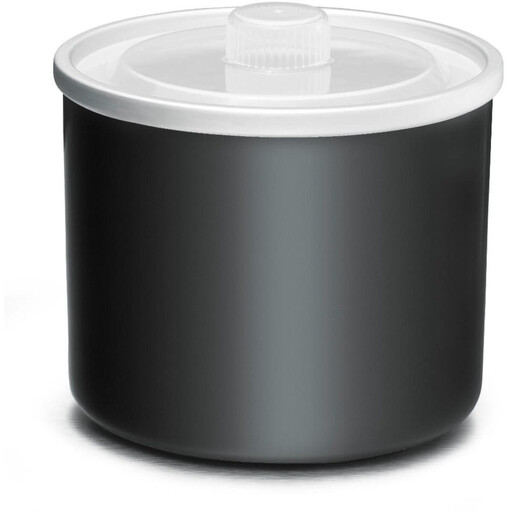 No image available
This model is a good fit if you want larger containers and other preparation options as well as small portions.
Rommelsbacher lists four 125 ml ceramic cups and two large 1.2-litre glass containers.
Before buying, check the CE marking and product information for the item on offer.
Follow the instructions for your appliance and the culture you’re using. The sources don’t confirm that every type of fruit is suitable for adding beforehand. Voedingscentrum describes mixing washed fruit into yoghurt that has already been made.
Voedingscentrum recommends pasteurised milk as the safest option and advises boiling raw milk before drinking it or using it in a dish. Don’t assume that a yoghurt maker replaces this step.
Keep the portions chilled and use clean cutlery. Voedingscentrum recommends a fridge temperature of 4 °C. Its advice of 5–7 days applies to an opened pack of full-fat yoghurt and doesn’t automatically indicate how long homemade yoghurt will keep.
According to Rijksoverheid, electrical appliances offered on the EU market must carry the required CE marking. Check the marking and product information for the specific appliance you want to buy.
If you buy as a consumer in the Netherlands and the product is faulty, contact the seller. According to Rijksoverheid, there is no fixed statutory guarantee period in the Netherlands; a manufacturer’s guarantee is in addition to your statutory rights.