Who is looking for a yoghurt maker for a small kitchen?

Breakfast maker with limited worktop space

You want to make yoghurt regularly, but need to be able to put the appliance away among your other kitchen items or store it elsewhere. So measure the width, depth and height, and allow space for tubs or pots. Ariete, Severin and Rommelsbacher provide dimensions for specific models.

Breakfast planner

You want chilled yoghurt ready in the morning, so you need to allow time for both fermentation and chilling. The preparation instructions from Yoghurt.nl and EasiYo show that the yoghurt needs to be chilled after it has set or fermented.

Portion and variety maker

You want to portion out breakfast servings in advance or make different recipes. The number of pots, the tubs included and the programmes available vary by model, so compare the exact version and allow for cleaning and storage.

What should you look for when choosing one?

Compact electric appliance with one tub

Best for: anyone short on worktop space who wants to portion the yoghurt into a tub or pots themselves. Ariete lists the Yogurella 0621/10 as measuring 17 × 17 cm across its base and 19 cm high.

The trade-off: you’ll need to portion the yoghurt yourself. A straining basket also means extra cleaning and an additional preparation step.

Electric appliance with individual portion pots

Best for: anyone who wants to portion yoghurt into individual servings for breakfast in advance. Severin lists seven 150 ml pots for the JG 3518; Rommelsbacher lists eight 150 ml pots for the JG 40.

The trade-off: check that the appliance’s shape will fit. The pots also take up space in the fridge or cupboard and need washing up.

Appliance with programmes for different recipes

Best for: anyone who wants to make more than just plain yoghurt. Severin lists five programmes for the JG 3521; Rommelsbacher lists four temperature programmes for the JG 80.

The trade-off: extra programmes don’t automatically mean the appliance is smaller or that the yoghurt will be ready to eat straight away. Check the dimensions and included parts for the exact model, too.

Non-electric maker for use with a specified mix

Best for: anyone who doesn’t want to use a plug socket and is happy to follow the method using EasiYo mix sachets.

The trade-off: the manufacturer specifies its own mix and preparation method. The yoghurt still needs chilling after it has set.

What to consider What should you check? Who should pay extra attention?
Worktop and storage space Measure the available width, depth and height, and allow space for pots or tubs. If I have limited worktop space, I want to know whether the appliance and its parts will fit somewhere. Around 36% of consumers put saving space first.
Chilling before breakfast Follow the preparation time for your chosen recipe, then allow for the recommended chilling time. If you want to eat your yoghurt at a set time for breakfast, you’ll need to plan for both fermentation and chilling. Around 29% of consumers prioritise timing.
Quantity and portions Compare the capacity of each pot or tub with the amount you want to make, and check whether the pots have lids. If I want to portion and store servings in advance, I mainly look at the number and capacity of the pots. Around 21% of consumers prioritise portion options.
Variety and cleaning Check which programmes and accessories come with the exact model, and how they should be cleaned. If you want to try different recipes, weigh up the extra options against the parts that need cleaning and storing. Around 14% of consumers look at this first.

Pitfalls to avoid

  • Measuring the width only

    Yoghurt makers vary in width, depth and height, and pots and tubs need space too. So even if the width is right, an appliance may still be awkward to position or difficult to store.

    Measure the entire available space and decide where you’ll keep the appliance and the filled portions after use.

  • Assuming automatic shut-off means the yoghurt is ready for breakfast

    A timer can end the set preparation cycle, but recipes may still call for chilling and extra setting time afterwards.

    Work backwards from breakfast and follow the preparation and chilling steps for your chosen recipe.

  • Assuming a non-electric maker works with any starter

    The EasiYo maker is designed for use with the manufacturer’s mix sachets and pot, not necessarily with every yoghurt starter.

    Before buying, check that the specified ingredients and method suit you. EasiYo mix sachets are needed for this method.

  • Using raw milk without heating it first

    The Voedingscentrum warns that raw milk may contain harmful bacteria. Fermentation is not a substitute for heating milk safely.

    The Voedingscentrum recommends pasteurised milk as the safest option and advises boiling raw milk before use.

Brands to compare

Ariete

Ariete offers models with different ways to make yoghurt: the Yogurella 0621/10 comes with tubs and a straining basket, while the Yogurella 0617/00 uses seven glass pots.

  • According to Ariete, the Yogurella 0621/10 has a base measuring 17 × 17 cm; the straining basket is designed for making strained yoghurt.
  • These dimensions and parts don’t necessarily apply to the 0617/00. Check the full model number.

Severin

According to Severin, the JG 3518 has seven individual portion pots, while the JG 3521 adds automatic programmes.

  • Severin lists seven 150 ml pots for the JG 3518 and five programmes for the JG 3521.
  • The models have different features and dimensions. Don’t assume the JG 3518 has the JG 3521’s programmes.

Rommelsbacher

The JG 40 is designed for individual portion pots in an elongated housing; according to the manufacturer, the JG 80 offers several preparation programmes and different tubs.

  • Rommelsbacher lists the JG 40 as 34.5 × 18.5 cm wide and deep, and says it comes with eight portion pots.
  • The JG 40 and JG 80 are different models with different space and usage requirements. Check the dimensions and accessories for each model.

Steba

According to Steba, the JM 2 is designed to make several individual portions at once.

  • Steba lists twelve 0.2-litre pots, with a total capacity of 2.4 litres.
  • The stated width and depth are 31 × 25 cm. Measure the available space if a small worktop is your main consideration.

EasiYo

EasiYo describes a non-electric maker used with its own mix sachets, boiling water and the pot supplied.

  • The method described doesn’t require a plug socket.
  • The manufacturer specifies EasiYo mix sachets and says the yoghurt needs chilling after it has set. Without suitable dimensions, it isn’t possible to compare the space it takes up with electric models.

Yoghurt makers at Joybuy

This selection of Joybuy products focuses on yoghurt makers with individual portion pots and appliances for making different recipes.

Rommelsbacher Yogurt Maker JG 40

Rommelsbacher Yogurt Maker JG 40

Ideal if you want to portion yoghurt into individual servings in advance and plan the fermentation time.

Rommelsbacher lists eight 150 ml glass pots with lids and a timer adjustable from 1 to 18 hours. Chill the yoghurt after fermentation, following the preparation instructions.

View at Joybuy
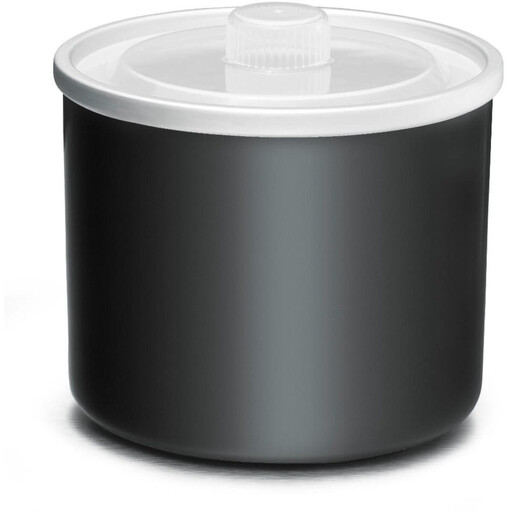
Rommelsbacher Home Yogurt & Cheese Maker JG 80

Rommelsbacher Home Yogurt & Cheese Maker JG 80

Ideal if you want to make different recipes and portion sizes.

Rommelsbacher lists four temperature programmes, four 125 ml ceramic portion pots, two 1.2-litre glass tubs and a strainer. The different parts need space for clean storage.

View at Joybuy

Frequently asked questions

Can I make yoghurt overnight so it’s ready for breakfast in the morning?

Remember to allow time for chilling after preparation, too. Yoghurt.nl’s instructions call for 12–15 hours of fermentation, followed by a few hours to set in the fridge. For its own mix, EasiYo recommends 8–12 hours to set, followed by chilling. Follow the instructions for your starter and appliance.

Where should I put the yoghurt maker while it’s in use, and what should I do afterwards?

Follow the instructions for positioning and cleaning your chosen appliance, and put the prepared yoghurt in the fridge as directed by the recipe you’re using. The Voedingscentrum advises putting yoghurt back in the fridge promptly after use, at 4 °C, and using a clean spoon.

Can I use raw milk because the appliance heats the milk?

Don’t treat the heat used during fermentation as a substitute for heating milk safely. The Voedingscentrum recommends pasteurised milk as the safest option and advises boiling raw milk before using it in a dish.

Am I always entitled to exactly two years’ warranty on a yoghurt maker in the Netherlands?

No. An exact two-year period doesn’t automatically apply to every purchase. According to ACM ConsuWijzer, a product should last as long as you can reasonably expect with normal use; if it breaks too soon, the seller must offer an appropriate solution free of charge. A manufacturer’s warranty doesn’t replace your statutory rights.

Can I return a yoghurt maker bought online if it doesn’t fit?

For online purchases, ACM ConsuWijzer says you generally have a statutory cooling-off period that ends 14 days after delivery. Check the applicable exceptions and returns policy. This is separate from your rights if the product is faulty.
