
Anyone who likes to plan ahead in the evening
You want to start making yoghurt in the evening and chill it in the morning before guests arrive. So pay particular attention to the timer, the automatic shut-off and when you can move the pots.


Choose based on the quantity you need and how you want to serve it: individual pots are ideal for pre-portioned servings, while a large bowl works well if you’d rather serve it yourself. For an overnight batch, a timer with automatic shut-off helps you schedule when it finishes, but you’ll still need to chill the yoghurt yourself afterwards. So plan the programme around when you can put the yoghurt in the fridge.
You want to start making yoghurt in the evening and chill it in the morning before guests arrive. So pay particular attention to the timer, the automatic shut-off and when you can move the pots.
You want to know in advance whether one batch will make enough yoghurt, and whether individual pots or a larger bowl would work better for serving. Compare the total capacity and the size of each portion.
You may want to make more than just natural yoghurt. If so, check which programmes the manufacturer lists for the specific model and which ingredients are suitable.
Start with how much yoghurt you need and how you want to serve it. Then check whether the programme finishes at a time when you can chill the yoghurt. Extra programmes are mainly worth considering if you want to make other recipes too.
| What to consider | What should you check? | Who is this important for? |
|---|---|---|
| Finishing time and chilling | Check whether the model has a timer and automatic shut-off, and when you can chill the yoghurt afterwards. | If I start in the evening, I want to know when it will finish and have time to put the yoghurt in the fridge. Around 36% of consumers prioritise choosing the right finishing time and chilling the yoghurt. |
| Enough for your guests | Work out how much you’ll need for your guests and compare it with the number and capacity of the pots, or the bowl’s batch capacity. | When I have guests, I want to know in advance whether there’ll be enough yoghurt and whether I’d rather serve it in individual portions or from one bowl. Around 29% of consumers make having enough portions for guests their top priority. |
| Preparation and serving style | Check whether the instructions include a programme and guidance for the type of yoghurt and ingredients you want to use. | If I want to make different types of yoghurt, I look for programmes suited to those recipes. Around 21% of consumers prioritise being able to make a variety of recipes. |
| Cleaning and storage | Check the cleaning instructions for each part and consider how much space you’ll need in the fridge. | If I use it regularly, I want to be able to clean, chill and reuse the pots easily. Around 14% of consumers prioritise maintenance and reusability. |
When the appliance switches off, it doesn’t chill the yoghurt. You’ll still need to put it in the fridge afterwards.
Plan the finishing time so you can end the preparation and chill the yoghurt afterwards.
The total number of pots supplied with an appliance doesn’t automatically tell you how many fit in it at once. For the Severin JG 3520, the manufacturer lists fourteen pots, but this doesn’t confirm how many can be used per batch.
Check how many pots can be used at once, then work out how much you’ll need for your guests. You may need to make an extra batch.
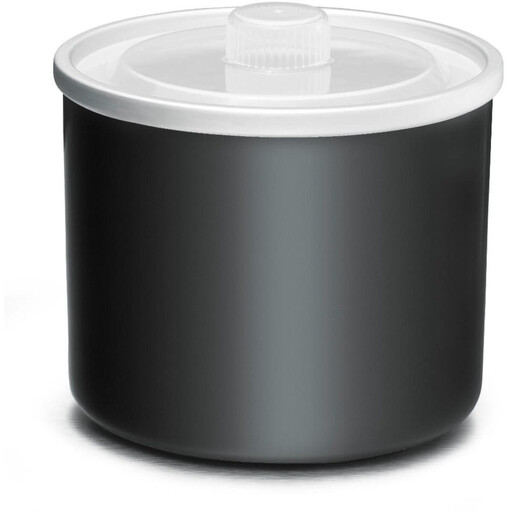
The Joybuy Netherlands listing with JG 80 in the title identifies the model in its specifications as IB 05, a freezer basket. So the title doesn’t confirm that the listing is for the JG 80 yoghurt maker.
Before choosing, compare the brand, full model number and product specifications.
The Yogurteo YG231E32 is designed for making yoghurt in individual pots.
The JM 2 is designed for a larger batch divided between individual pots.
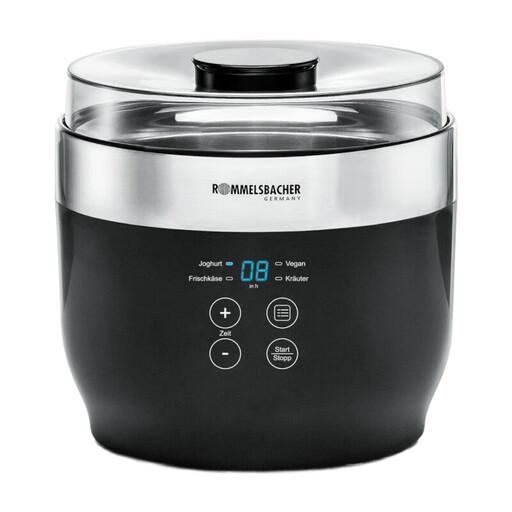
The JG 80 Jona is designed for making natural yoghurt in a larger batch and offers several programmes.
The Ligne 459002 is designed for nine larger glass portions.
The JG 3518 is a model with individual portion pots and simple controls.
This selection includes yoghurt makers with individual portion pots or a larger batch capacity. For the Rommelsbacher listing with JG 80 / IB 05, take extra care to check which model is described in the product specifications.
 No image available
This listing isn’t a confirmed choice for making yoghurt: the title names the JG 80, but the specifications identify the model as IB 05, a freezer basket. Check the model identity before considering this product for making yoghurt.
 No image available
This model could suit you if you want to make yoghurt in individual pots and set the fermentation time.
Eight 150 ml glass pots; adjustable timer from 1–18 hours.
 No image available
This model could suit you if you want to make a larger batch of natural yoghurt and prefer to serve it yourself. Automatic shut-off doesn’t chill the yoghurt, so plan to chill it when the programme finishes.
The manufacturer lists 1.2 litres of natural yoghurt, four programmes and a timer of up to 24 hours with automatic shut-off.
Plan to chill the yoghurt when it’s ready: automatic shut-off doesn’t chill it. The Netherlands Nutrition Centre recommends keeping your fridge at 4 °C. This doesn’t specify how long a particular homemade batch can safely be left unrefrigerated afterwards, so don’t rely on a set waiting time.
It depends on how many guests you have and the portion size you want to serve. Moulinex lists seven 160 ml pots for the YG231E32, giving a total stated pot capacity of 1.12 litres. Compare this with how much your group will need.
The Netherlands Nutrition Centre says pasteurised milk is the safest choice. It advises boiling raw milk before drinking it or using it in a dish. Don’t assume that fermenting it in a yoghurt maker replaces this heating step.
If a product is faulty, the seller must provide a solution. According to the Government of the Netherlands, there is no fixed statutory warranty period in the Netherlands. If you’re considering an extended warranty, compare its terms with the rights you already have.
The Netherlands Food and Consumer Product Safety Authority (NVWA) says that electrical consumer products placed on the Dutch market must carry the CE marking; this doesn’t automatically mean that a separate inspection is required. Parts intended to come into contact with yoghurt are covered, when placed on the European market, by Regulation (EC) No 1935/2004 on food-contact materials, as described by the European Commission.