
Host serving a shared meal
Wants to make enough plain yoghurt for everyone before the meal, so compares the capacity per batch with the number of people eating.


Choose individual jars if you want to portion and seal the yoghurt in advance; a large bowl is a better fit if everyone will serve themselves from the same batch. Compare the usable capacity per batch with the number of people you’re serving, and consider fridge space, cleaning and the time needed to chill the yoghurt afterwards. Before buying, also check the model identity and the relevant product and food-contact information for the version you’ll receive.
Wants to make enough plain yoghurt for everyone before the meal, so compares the capacity per batch with the number of people eating.
Wants to plan the preparation in advance and takes account of a timer, automatic shut-off and the time needed to chill the yoghurt afterwards.
Wants to seal, store and serve yoghurt in individual portions, and considers the extra jars that need cleaning.
| What to consider | What to look for | Who is this important for? |
|---|---|---|
| Amount per batch | Compare the stated capacity per batch with the amount you need. For models with jars, also check how many there are and their capacity. | If I want to make enough yoghurt for several people in one go, I focus on the total usable capacity; around 36% of consumers prioritise making enough yoghurt per batch. |
| Planning around mealtimes | Check whether the model has a timer and automatic shut-off. Also allow separate time to chill the yoghurt once it’s made. | When I want to time preparation around an evening meal, I look for both a timer and time to chill the yoghurt; around 29% of consumers prioritise planning around mealtimes. |
| Portioning and cleaning | Check the lids supplied, the number of individual jars, the cleaning instructions and the space available in your fridge. | If I want to seal and store individual portions, I weigh up that convenience against cleaning several parts; around 21% of consumers choose mainly on the basis of portioning and cleaning. |
| Choosing your own settings | Compare a plain yoghurt programme with the option to set the time and temperature separately. | When I want to experiment with preparation, having my own settings matters more than extra programmes with no clear purpose; around 14% of consumers prioritise adjustable settings. |
For the Rommelsbacher JG 80, the manufacturer states a capacity of 1.2 litres of plain yoghurt per batch. The containers supplied do not make up one larger batch.
Compare the capacity per batch, rather than adding together the capacities of separate storage containers.
A timer ends the programme, but it doesn’t keep the yoghurt chilled. The Netherlands Nutrition Centre advises storing dairy products chilled at 4 °C.
Make room in the fridge and allow time to chill the yoghurt once it’s made.
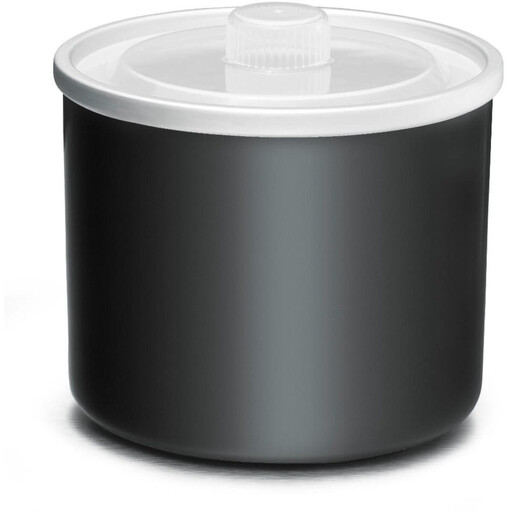
A Joybuy listing links the model name JG 80 to model IB 05, which is described in the product specifications as a freezer bowl for ice cream desserts.
Before buying, check the model code, appliance type and included parts on the product page.
According to the manufacturer, the JM 2 uses individual jars, while the JM 4 FERMENT uses a large yoghurt bowl and has a DIY programme.
According to the manufacturer, the JG 3518 has seven portion jars, each with a capacity of 150 ml.
According to the manufacturer, the JG 80 combines a batch container for plain yoghurt with smaller cups and other preparation programmes.
The Belgian manufacturer’s page describes the Yogurteo YG231E32 as having individual glass jars.
The manufacturer describes the Pure Plus LPPYM300WEU as an EU version with a 2-litre glass container and adjustable temperature.
This selection includes yoghurt makers for a shared batch or individual portions. Check the model code and product safety information for each version; one listing needs extra checking to confirm the appliance type.
 No image available
The product specifications name model IB 05, a freezer bowl for ice cream desserts; the Joybuy title mentions JG 80. Check the model code and appliance type before considering this product for making yoghurt.
 No image available
The individual jars are a good fit if you want to portion and seal the yoghurt in advance.
The description lists eight 150 ml glass jars and an adjustable timer of 1–18 hours.
Don’t immerse the heating base in water or any other liquid, and unplug the appliance before cleaning.
Before buying, check the information about CE marking and the food-contact parts included with the version supplied.
 No image available
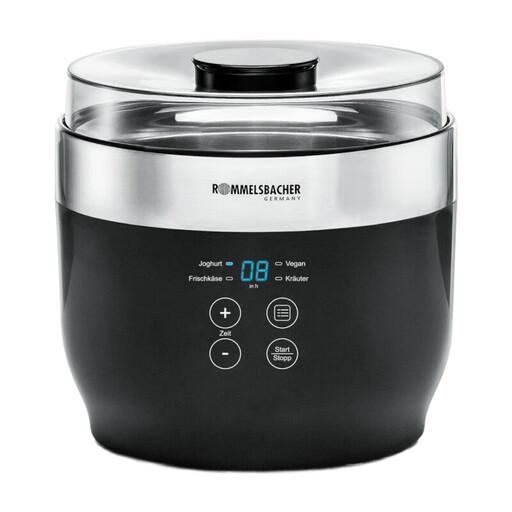
The manufacturer says the JG 80 is suitable for making a batch of plain yoghurt, with a stated capacity of 1.2 litres per batch.
The description lists an adjustable 24-hour timer and automatic shut-off. According to the manufacturer, the plain yoghurt programme runs at 42 °C.
Before buying, check the information about CE marking and the food-contact parts included with the version supplied.
No. Plan the preparation in advance and allow time to chill the yoghurt afterwards. A timer or automatic shut-off helps with planning, but it doesn’t chill the yoghurt. The Netherlands Nutrition Centre advises storing dairy products chilled at 4 °C.
Use clean hands, surfaces and utensils. According to the Netherlands Nutrition Centre, supermarket milk is pasteurised or sterilised; raw milk from a farm must be boiled before use. Also follow the preparation instructions for your chosen appliance.
Yes. The Netherlands Food and Consumer Product Safety Authority states that CE marking is compulsory for electrical products. A marking or product description alone doesn’t confirm that a specific version has been checked individually.
Yes. According to the Netherlands Food and Consumer Product Safety Authority, items intended to come into contact with food in the Netherlands must comply with the relevant Dutch and European rules. Some materials are subject to additional requirements.
No. According to the Dutch government, statutory warranty in the Netherlands has no fixed time limit: you’re entitled to a product that works as it should. The appropriate solution depends, among other things, on the fault and normal use; an additional manufacturer’s guarantee doesn’t replace those rights.