
Workshop host with a set breakfast schedule
Wants to prepare the yoghurt before serving and needs a plan for making and chilling it. The Netherlands Nutrition Centre advises putting yoghurt back in the fridge promptly after use.


Plan to make and chill the yoghurt before breakfast: a timer won’t make a batch ready to serve straight away. Individual pots are ideal for portions prepared in advance, while a larger container is handy if you want to serve a shared quantity; extra programmes are most useful if you’ll actually use them during the workshop.
Wants to prepare the yoghurt before serving and needs a plan for making and chilling it. The Netherlands Nutrition Centre advises putting yoghurt back in the fridge promptly after use.
Wants to store individual, sealable breakfast portions rather than serve them from one container during the workshop. Severin and Rommelsbacher describe models that come with portion pots.
Wants to demonstrate other recipes as well as plain yoghurt, and needs to distinguish ingredients and allergens for each one. Rommelsbacher describes the JG 80 as having different programmes and a strainer.
Start with when you’ll be serving the yoghurt, how many people are attending and how you want to portion it. Also make sure you have enough fridge space for the filled pots or containers.
| What to consider | What should you check? | Who is this important for? |
|---|---|---|
| Preparation time | Check the recipe time and when the appliance switches off in the manual; then allow time for chilling before serving. | If I want to have the yoghurt ready for a set breakfast time, I need to start making it well in advance. For around 28% of consumers, planning is the main consideration. |
| Amount per batch | Compare the amount you need with the stated capacity per preparation cycle, not just the combined capacity of all the containers supplied. | If I want to make enough yoghurt for the whole group in one batch, I need to know how much the appliance can actually make at a time. Around 22% of consumers are most concerned about making enough for a group. |
| Chilling and serving | Check that there’s room for the filled containers and that you can use clean pots and serving spoons. | If I’m serving yoghurt to participants, I want to be able to keep it chilled and serve it neatly. Hygienic storage and serving are a priority for around 22% of consumers. |
| Portioning in advance | Compare the number and capacity of the pots with the portions you need and the space available in your fridge. | If I don’t want to serve yoghurt from a large container during breakfast, portions prepared in advance are handy. Around 17% of consumers say portioning is their main buying consideration. |
| Extra recipes | Check which programmes and accessories come with the model and whether they suit the workshop recipes. | If I want to demonstrate different recipes, extra programmes or a strainer may be useful—but only if my recipes make use of them. Around 11% of consumers prioritise variety. |
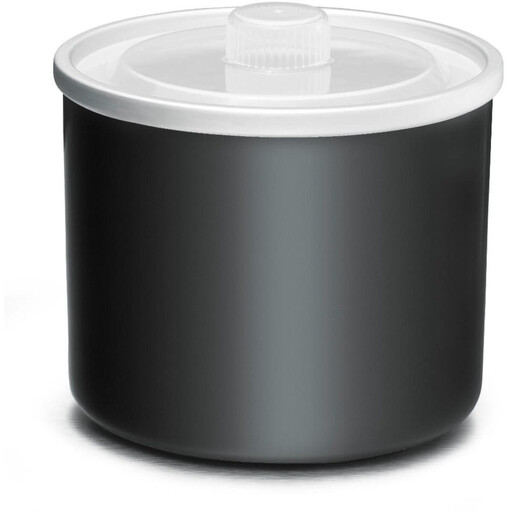
A Joybuy listing with JG 80 in the title describes an IB 05 ice-making accessory in the specifications. Relying on the title alone could therefore lead you to choose the wrong product.
Compare the model number, product category and included parts with the manufacturer’s information.
Rommelsbacher lists two 1.2-litre containers for the JG 80, but gives the yoghurt capacity per preparation as 1.2 litres.
Use the stated capacity per preparation cycle when planning. Allow for an extra cycle if the group needs more.
A programme for plant-based or lactose-free recipes doesn’t, by itself, tell you anything about a recipe’s ingredients, starter culture or toppings.
Check the ingredients and allergens for each recipe. If the workshop falls under the relevant rules for a food business, follow the information requirements that apply.
Using several individual pots also means more containers and lids to clean afterwards and store in the fridge.
As well as the batch size, plan for the space available in your fridge and how you’ll clean the parts after use.
The JG 40 is designed for individual portions in pots and has a timer; the JG 80 comes with containers, programmes and a strainer. They are different models with different features.
The JG 3518 comes with seven sealable pots for making individual portions. The separate JG 3521 has automatic programmes.
The JM 2 is designed for making a larger quantity in individual pots.
The Yogurella 0621/10 combines containers with a filter basket for draining yoghurt.
The AD 4476 is designed for individual portions in glass pots.
These product picks are for preparing yoghurt in advance for a workshop, with options for individual portions and a shared batch.
 No image available
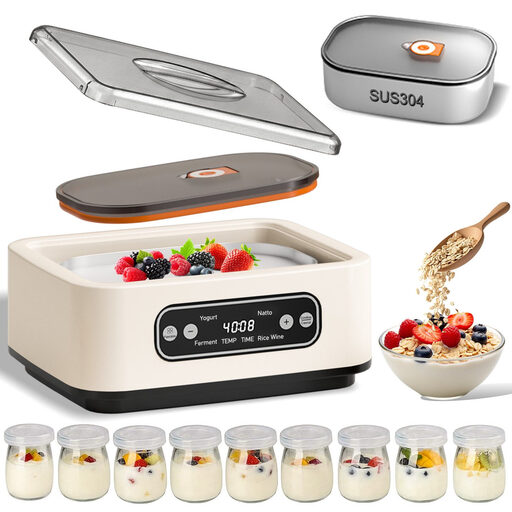
The nine pots are handy for portioning yoghurt in advance for participants.
The product name lists a 1.6 l SUS304 inner pot, temperature control and a timer, an OLED display, and nine borosilicate glass pots.
 No image available
Eight pots give you the option of preparing portions in advance for breakfast.
The product name lists eight pots with a combined capacity of 1,440 ml, digital temperature control, a 48-hour timer and a BPA-free designation.
 No image available
This model is suited to a workshop where you want to prepare a shared batch and portion it when serving.
Rommelsbacher lists four programmes, a strainer and a yoghurt capacity of 1.2 litres per preparation. The manufacturer also lists two 1.2-litre containers; this doesn’t guarantee a 2.4-litre batch.
 No image available
The individual pots are useful if you want to portion breakfast servings before the workshop.
Rommelsbacher lists eight 150 ml pots and an adjustable timer from 1–18 hours. The timer doesn’t replace the preparation and chilling time needed before serving.
No, plan to make and chill it before serving. A timer, such as the one on the Rommelsbacher JG 40, controls the set preparation time but won’t make the batch immediately ready for a chilled breakfast.
Use clean pots and serving spoons, and put the yoghurt back in the fridge promptly after use. The Netherlands Nutrition Centre recommends a fridge temperature of 4 °C for yoghurt and using a clean spoon. Advice on storing opened, packaged yoghurt doesn’t automatically guarantee the same shelf life for every homemade batch.
As well as the appliance, allow for ingredients and starter culture, and check that replacement pots fit the model. Severin lists replacement pots for the JG 3518; check with the retailer whether they’re available and what terms apply.
The word ‘workshop’ alone doesn’t determine this. The NVWA says that a food business selling or supplying food directly to consumers must register. First establish whether the specific organiser and activity fall within that definition. This information doesn’t mean that every private gathering has to be registered.
For a food business covered by the rules, the NVWA sets out requirements for hygienic preparation and storage. When offering unwrapped food to customers, information about any allergens present must be available. Whether these requirements apply to a workshop depends on how it is organised and how the food is supplied.