
Hosting a large breakfast gathering
You want to make enough individual portions in one batch. Also consider how much fridge space the filled pots will take up.


For a shared celebratory breakfast, choose mainly according to how much yoghurt you need and how you plan to serve it: individual pots make it easy to portion everything in advance, while a large bowl is ideal for serving at the table. Then compare the preparation time, whether there’s a straining sieve, and how much space you have to keep the yoghurt chilled.
You want to make enough individual portions in one batch. Also consider how much fridge space the filled pots will take up.
You want to make the yoghurt in advance and keep it chilled, so guests can help themselves. In this case, a larger bowl matters more than lots of individual pots.
You want the option of making plain yoghurt, strained yoghurt or other varieties suited to the appliance, as described in its instructions. Check the ingredients and programme instructions separately.
Ideal if: you want to portion everything in advance for a larger group. Steba says the JM 2 comes with twelve 0.2-litre pots.
Bear in mind: you’ll need room to keep the pots chilled after preparation.
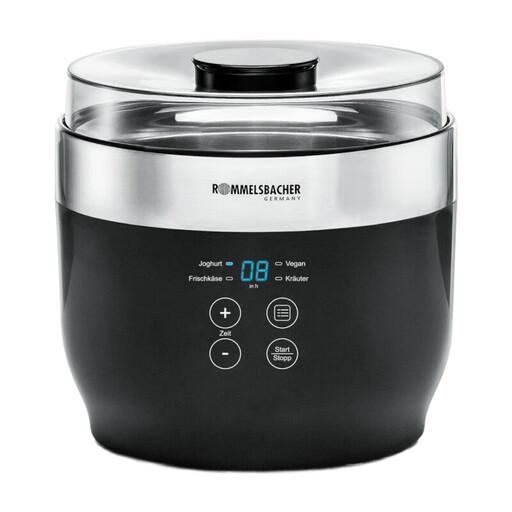
Ideal if: you want to serve yoghurt from a bowl at the table and have the option of straining it. Ariete lists a filter basket, while Rommelsbacher lists a bowl, sieve and programmes for the JG 80.
Bear in mind: straining requires an extra step; check that the bowl holds enough for your guests.
Ideal if: seven or eight pre-portioned servings are enough. Moulinex lists seven 160 ml pots; Severin lists seven 150 ml pots.
Bear in mind: you may need to make another batch for more guests.
| What to consider | What should you check? | Who should pay particular attention? |
|---|---|---|
| Capacity per batch | Compare the number of pots or bowl capacity with the number of portions you plan to make. | If I want to make enough for a large breakfast gathering in one go, capacity comes first. Around 30% of consumers prioritise capacity per batch. |
| Individual portions or one bowl | Check how many sealable pots there are, or the bowl capacity, and whether the filled yoghurt will fit in your fridge. | If I want to prepare individual portions in advance, I choose based on how I plan to serve them. Around 23% of consumers give serving style top priority. |
| Timing and chilling | Check the timer, automatic shut-off, recipe instructions and when you can put the yoghurt in the fridge. The Netherlands Nutrition Centre recommends storing dairy products at 4 °C. | If I want to time preparation around breakfast, I need to know when the appliance stops and when I can chill the yoghurt. Around 18% of consumers prioritise timing. |
| Preparation options | Check whether it comes with a sieve or the programmes you want, and whether the instructions suit the ingredients you plan to use. | If I want the option of serving plain or strained yoghurt, I look for the relevant parts and instructions. Around 11% of consumers give preparation options top priority. |
| CE marking | The Netherlands Food and Consumer Product Safety Authority states that CE marking is mandatory for electrical consumer products. Check the marking and product information for the specific appliance. | If I’m choosing an electrical appliance for breakfast, I want to be able to check the relevant product information. Around 18% of consumers prioritise this requirement. |
Seven 150 ml pots offer a different nominal portion capacity from twelve 0.2-litre pots. The number of guests and the space in your fridge also affect whether the capacity is right for you.
Work out how many portions you plan to make and check where you can keep the sealed yoghurt chilled.
A smaller capacity could mean having to plan an extra batch.
An appliance setting doesn’t determine which ingredients are in the milk or starter culture. The Netherlands Nutrition Centre also distinguishes between lactose intolerance and a milk protein allergy.
Check the ingredients for guests with relevant dietary restrictions, regardless of the appliance setting you choose.
According to the Dutch Government, there is no fixed statutory guarantee period in the Netherlands; if a product is faulty, the retailer is your point of contact. A manufacturer’s guarantee is separate.
Check what any additional guarantee covers before opting for it.
The JM 2 is an option for making lots of individual breakfast portions in advance.
The JG 40 is designed for individual portion pots, while the JG 80 combines a larger bowl with a sieve and programmes.
The Yogurteo YG231E32 is a good fit if seven pre-prepared portions are enough.
The JG 3518 is a straightforward option with seven individual portion pots.
The Yogurella 0621/10 is worth considering if a bowl and straining filter matter more to you than lots of individual portion pots.
This Joybuy selection includes two Rommelsbacher options: individual portions with the JG 40, or a larger bowl with a sieve and programmes with the JG 80.
 No image available
A good choice if you want to portion yoghurt into individual pots in advance. Rommelsbacher says eight 150 ml pots are included.
 No image available
A good choice if you want to serve from a larger bowl and use a straining sieve too. Rommelsbacher lists two 1.2-litre glass containers, a sieve and four programmes; straining requires an extra step.
Multiply the number of guests by the portion size you plan to serve, then compare the result with the pot or bowl capacity. Steba lists twelve 0.2-litre pots for the JM 2; Rommelsbacher lists a 1.2-litre bowl for the JG 80. Capacity doesn’t tell you how much each guest will actually eat.
Follow the appliance’s preparation instructions, then put the yoghurt in the fridge. The Netherlands Nutrition Centre recommends storing dairy products at 4 °C; use clean utensils.
Don’t assume so from the programme name. The Netherlands Nutrition Centre distinguishes between lactose intolerance and a milk protein allergy; if someone has an allergy, check the actual ingredients, including those in the starter culture.
The Netherlands Food and Consumer Product Safety Authority states that CE marking is mandatory for electrical consumer products. Check the marking and product information for the specific appliance: the general product requirement doesn’t prove that an individual unit meets it.
According to the Dutch Government, the retailer is responsible for putting things right if a product is faulty. There is no fixed statutory guarantee period in the Netherlands; a manufacturer’s guarantee is separate from your statutory rights. When buying online from a business, you’ll also usually have a 14-day cooling-off period.