
Families who serve themselves from one bowl
Want to make enough plain yoghurt in one batch for a family meal. Compare the batch capacity with how much you need at the table. Rommelsbacher and Steba list models with larger capacities.


For plain yoghurt to serve at a family meal, the choice mainly depends on how you want to serve it: a large bowl is ideal for everyone to help themselves, while lidded pots give you individual portions that can be chilled separately. Then compare the capacity per batch, the timer and the amount of washing up. A larger batch is only practical if you can also store the yoghurt in the fridge and use it.
Want to make enough plain yoghurt in one batch for a family meal. Compare the batch capacity with how much you need at the table. Rommelsbacher and Steba list models with larger capacities.
Want to divide yoghurt into lidded pots when family members eat at different times. Severin lists seven 150 ml pots for the JG 3518, and the Dutch Nutrition Centre recommends keeping dairy products chilled.
Often make the same plain yoghurt and want controls and a cleaning routine that suit regular use. You may not need extra programmes if you only want to make plain yoghurt.
First decide whether you’ll serve the yoghurt from one bowl or prefer to store it in individual portions. Then consider the capacity of each batch, along with the controls and cleaning routine that best suit your needs.
| What to consider | What should you check? | Who is this important for? |
|---|---|---|
| Capacity per batch | Compare the stated capacity with the amount you need and check how many pots or bowls fit in the appliance at once. | If I want to make yoghurt for one family meal, I want to know whether one batch will be enough. Around 40% of consumers prioritise the amount made per batch. |
| Individual portions | Check whether the pots have lids and add up their capacities. The number of pots supplied does not automatically tell you how many fit in the appliance at once. | If family members eat at different times, individual portions are handy for storing separately. Around 30% of consumers prioritise serving and storing yoghurt in individual portions. |
| Controls and timer | Check how to set the timer and whether the model switches off automatically. Consider extra programmes in light of what you actually want to make. | If I often make the same plain yoghurt, I want to be able to repeat the process easily. Around 20% of consumers value easy-to-use controls most. |
| Cleaning and fridge space | Count how many pots and lids you’ll need to wash after a batch, and think about where you can chill the finished yoghurt. | If I make yoghurt regularly, I want the washing up and fridge space required to fit into my routine. Around 10% of consumers give the most weight to cleaning and fridge space. |
The number of pots, their capacity and how many fit in the appliance at once are different things. With a small batch, you may need to make another one to have enough for a family meal.
Compare the capacity per batch with your needs and check how many pots fit in the appliance at once.
A fermentation programme is not a storage method. The Dutch Nutrition Centre recommends keeping chilled dairy products at 4 °C.
Use clean hands, utensils and pots, and put the finished yoghurt in the fridge at 4 °C as soon as possible.
A model with additional programmes may offer more ways to prepare food, but they won’t necessarily add any value if you only want to make plain yoghurt.
First choose between one shared bowl and individual pots, then compare the extra programmes.
The JG 3518 is designed for individual portions, while the JG 3521 offers additional programmes, according to Severin.
The JG 40 is designed for individual portions, while the JG 80 combines larger glass bowls with additional programmes.
The JM 2 is an example of a model with plenty of individual portion pots.
The Yogurteo YG231E32 is a portion-size model with a timer and automatic shut-off.
The Ligne 459002 is a portion-size model with larger pots.
These models are suited to making plain yoghurt for a family meal: choose a model with a large bowl for making a batch, or one with individual portion pots.
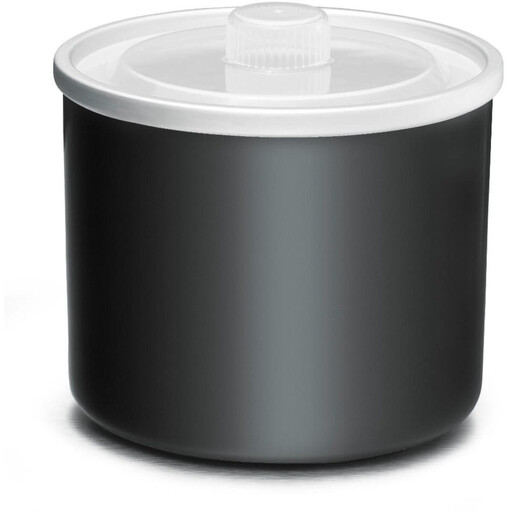 No image available
A good choice if you prefer to make yoghurt in a larger bowl for everyone to help themselves.
According to Rommelsbacher, it comes with two 1.2-litre glass bowls. The model has four programmes, including one for plain yoghurt at 42 °C.
 No image available
A good choice for families who prefer to divide yoghurt into individual portions for storage.
Rommelsbacher lists eight 150 ml pots and a timer of up to 18 hours with automatic shut-off.
Yoghurt is made by adding lactic acid bacteria to milk. According to the Dutch Nutrition Centre, products can only be called yoghurt if they contain Lactobacillus bulgaricus and Streptococcus thermophilus. Check the starter culture’s ingredients or instructions, and follow the appliance manual.
No. The Dutch Nutrition Centre recommends boiling raw milk from a farm before use. A yoghurt programme does not replace this step. You should also use clean hands, surfaces and utensils.
Put the yoghurt in the fridge at 4 °C as soon as it is ready, and use a clean spoon to serve it. The Dutch Nutrition Centre gives 5–7 days as the storage time for opened full-fat yoghurt; this is not a guaranteed storage period for every batch of homemade yoghurt.
For a typical online purchase, ACM ConsuWijzer says you usually have 14 days from delivery to change your mind; check whether an exception applies. If the product breaks too soon during normal use, the seller is responsible for providing a remedy under the statutory guarantee. A manufacturer’s guarantee or paid-for extended warranty does not replace this statutory right.