
Neighbourhood organiser
Wants to make enough yoghurt in advance and choose between serving it communally or in individual portions. Preparation capacity varies by model, as Rommelsbacher and Steba point out.


For breakfast or a neighbourhood get-together, your main consideration is how you’ll serve the yoghurt: individual pots are ideal for separate portions, while a larger preparation pot is handy if everyone will be serving themselves. Then compare the capacity per batch, the fridge space you’ll need, and the timer or programmes. A programme for plant-based or lactose-free yoghurt doesn’t automatically make a portion suitable for someone with a cow’s milk allergy. Before buying, also check the exact model identity and, where applicable, the CE marking.
Wants to make enough yoghurt in advance and choose between serving it communally or in individual portions. Preparation capacity varies by model, as Rommelsbacher and Steba point out.
Wants to prepare breakfast in sealed pots and checks the number of pots, their capacity and available fridge space. The Netherlands Nutrition Centre advises putting products that need to be kept chilled back in the fridge as soon as possible.
Wants to match the preparation time or programme to the recipe and keep ingredients for different guests separate. Rommelsbacher, Moulinex and the Netherlands Nutrition Centre offer information that can help with this.
First compare the capacity per batch with your serving plans, then consider portions, timings and ingredients.
| What to consider | What to look for | Who should give this more thought? |
|---|---|---|
| Quantity per batch | Compare the usable capacity per batch with the number of people eating and the portion size; allow for fridge space too. | If I’m making yoghurt for several neighbours, I want to know whether one batch will be enough and whether I’ll need to start earlier if it isn’t. Around 33% of consumers mainly prioritise making enough yoghurt per batch. |
| Individual portions | Check the number of pots, the capacity of each pot and whether lids are included. | If I want to divide breakfast into portions in advance, I look for pots that I can seal and store separately. Around 27% of consumers mainly prioritise individual portions. |
| Planning preparation | Check the timer and whether the exact model switches off automatically; follow the recipe instructions. | If I want to schedule preparation in advance, I want to know what timing settings the model offers. Around 20% of consumers mainly value scheduling and ease of use. |
| Ingredients and recipes | Check that the setting suits the recipe and look at the ingredients; keep allergens in mind. | If guests need different ingredients, I want to choose the right recipe and keep portions separate. Around 20% of consumers mainly consider ingredients and different recipes. |
The Rommelsbacher JG 80 comes with two containers, each with a capacity of 1.2 litres, but the manufacturer states that it makes a maximum of 1.2 litres of natural yoghurt per batch.
Compare the capacity per batch with your serving plans, and allow extra preparation time and fridge space if needed.
A lower capacity per batch may mean planning several batches and making more room in the fridge.
Lactose intolerance and a reaction to milk proteins are not the same thing. A programme name alone doesn’t tell you whether the ingredients are suitable for a guest with a cow’s milk allergy.
Check the ingredients and materials used for that portion separately, and make sure it doesn’t come into contact with milk ingredients.
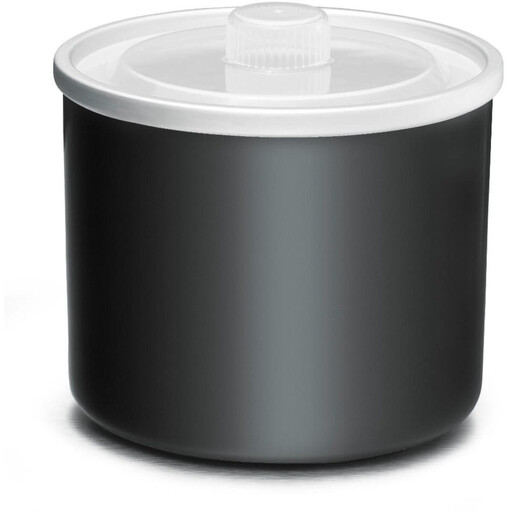
A Joybuy listing with JG 80 in the title names model IB 05 in the product description and categorises it as an accessory or spare part.
Before buying, check the model identity, product category and specifications. A similar-looking title doesn’t confirm that the item is a yoghurt maker.
If the title and item identity don’t match, you could receive an accessory instead of a yoghurt maker.
The JG 80 is designed for larger batches, while the JG 40 is for individual pots.
The JG 3518 is designed to make seven individual portions.
The JM 2 is designed for larger batches divided between glass pots.
The Yogurteo YG231E32 is designed to make seven portions and includes a timer.
The ELY120 is designed for twelve smaller portions and an adjustable preparation time.
These product options focus on yoghurt makers with individual pots or a larger preparation pot, for breakfast or sharing. Before buying, check the exact model identity and whether the CE marking applies to the specific appliance.
 No image available
The eight individual pots are ideal for preparing and serving separate portions.
Rommelsbacher lists eight 150 ml glass pots with lids and a timer adjustable from 1 to 18 hours.
Check whether the CE marking applies to the specific appliance and whether it is present.
 No image available
You can’t identify this listing as a yoghurt maker without checking: the Joybuy product details name the JG 80, while a product description on the same listing names model IB 05 and refers to accessories or spare parts.
Only buy once the exact model identity and product category have been confirmed on the product page. Also check whether the CE marking applies to the specific appliance and whether it is present.
Compare the number of people eating with the stated capacity per batch, rather than adding together the capacity of the storage pots supplied. Rommelsbacher states that the JG 80 makes up to 1.2 litres of natural yoghurt per batch; Steba specifies twelve 0.2-litre pots for the JM 2. Allow for your own portion sizes and serving plans.
Put yoghurt that needs to be kept chilled in the fridge as soon as possible. The Netherlands Nutrition Centre recommends a fridge temperature of 4 °C and using a clean spoon. Its advice to keep opened, packaged full-fat yoghurt for 5–7 days doesn’t automatically apply to homemade yoghurt served at a get-together.
No, you can’t tell from the programme name. A cow’s milk allergy is a reaction to milk proteins, while lactose intolerance relates to lactose. Check the ingredients and make sure the portion for someone with a cow’s milk allergy doesn’t come into contact with milk ingredients.
The Netherlands has a statutory guarantee, but there’s no fixed statutory guarantee period of two years. What you can expect from a product depends, among other things, on the product and the sales information. If a product is faulty, the retailer is your point of contact, as the Dutch government explains.
Rules for food sales or catering don’t automatically apply to a private get-together. The Netherlands Food and Consumer Product Safety Authority sets out separate obligations for anyone selling food from home or providing catering. According to EUR-Lex, electrical equipment within the applicable range of 50 to 1,000 volts AC must carry a CE marking before it is placed on the market.