You don’t need an appliance to make yoghurt dressing if you simply want to stir finely chopped herbs into the yoghurt; the Netherlands Nutrition Centre uses this method too. If you want to purée ingredients, choose between a stick blender and a suitable beaker, or a compact blender with its own jug or cup, depending on your portion size, storage space and cleaning preferences. A stated cup capacity doesn’t tell you whether the blades will reach a very small quantity.
Which option is right for you?
Making small batches of dressing
Want to purée herbs or other ingredients without using a large blender jug? First consider whether stirring will do the job; otherwise, compare the beaker of a stick blender with the cup of a mini blender. The Netherlands Nutrition Centre describes a yoghurt dressing made with finely chopped herbs stirred into the dressing.
Cooking with limited storage space
If you don’t want to leave an appliance on the worktop, compare the dimensions of the appliance and the accessories you want to store. Manufacturers provide dimensions and details of what’s included for specific models, for example; these don’t automatically apply to other versions.
Making a range of recipes
If you want to mix or purée other ingredients as well as making dressing, decide in advance which cups or attachments you’ll actually use. The Consumers’ Association describes mixing and puréeing as uses for a stick blender, and lists chopping and whisking as possible uses with additional accessories.
What should you look for when choosing?
Stirring by hand
Choose this if: you’re mixing finely chopped herbs with yoghurt and other liquid ingredients and don’t need a puréed texture.
Bear in mind: stirring won’t give you the same texture as puréeing the ingredients.
Stick blender
Choose this if: you want to purée ingredients in a suitable beaker and usually make modest quantities.
Bear in mind: you’ll need to store and clean the blending foot and beaker; blending in an open container requires care to avoid splashes.
Compact or personal blender
Choose this if: you’d rather purée ingredients in a jug or included blending cup and use it for other suitable recipes too.
Bear in mind: a compact blender still has a motor base and a jug or cup; check that the blades can reach your small portion.
| What to consider |
What should you check? |
Who is this important for? |
| Mixing small portions |
Check the shape of the cup and blades, the included accessories and any minimum fill level in the manual for the exact model. |
If I’m only making a small portion of dressing, I want to know whether the ingredients will reach the blades. Consumers who mainly make small portions account for around 36% of consumers with this buying need. |
| Worktop and storage space |
Compare the appliance’s dimensions and include any cups and attachments you want to store. |
If my kitchen has little worktop or cupboard space, I also want to be able to store the separate parts. This matters to around 29% of consumers who prioritise saving space. |
| Cleaning |
Read the cleaning instructions for each part; don’t assume the blade unit is dishwasher-safe too. |
After making a small batch, I want to know how many parts I’ll need to clean and how. Consumers who prioritise easy cleaning account for around 21%. |
| Other recipes |
Decide whether you also want to purée, chop, whisk or make smoothies, and check which accessories come with the exact version. |
If I want to use the appliance for other recipes too, I’ll look at the suitable accessories and cup. Consumers who prioritise versatility account for around 14%. |
Common buying mistakes
-
Buying an appliance for dressing you could simply stir
The Netherlands Nutrition Centre’s yoghurt and herb dressing recipe mixes finely chopped herbs straight into the yoghurt. If you don’t want puréed ingredients, an appliance may be unnecessary.
First decide whether you want to purée the herbs or whether stirring will give you the result you want.
An appliance also takes up storage space and needs cleaning after use.
-
Assuming cup capacity means it’s suitable for a tiny portion
The stated capacity of a personal blender doesn’t tell you how much dressing the blades will actually reach when making a small batch.
Before choosing one for very small portions, check the minimum fill level and usage instructions for the exact version.
-
Assuming every part is dishwasher-safe
Cleaning instructions may vary from one part to another. For the nutribullet NB603DG, for example, the manufacturer gives separate instructions for the cup and blade.
Follow the cleaning instructions for every part of the exact model.
If parts need to be washed by hand, you’ll spend extra time cleaning up after use.
-
Assuming the manufacturer’s warranty covers all your statutory rights
According to the Dutch Authority for Consumers and Markets’ Consumer Information service, your statutory rights in the Netherlands also depend on what you could reasonably expect from the product under normal use; they aren’t determined solely by the manufacturer’s warranty period.
Keep your proof of purchase and contact the seller if the product develops a fault prematurely.
Brands to consider
Philips
Philips describes the HR2510/90 as a mini blender for uses including sauces, and says it can be stored in a kitchen cupboard.
- The manufacturer says the parts are easy to clean and dishwasher-safe.
- Cup capacity doesn’t tell you what minimum quantity of dressing will mix well; check the manual for the exact version.
Braun
The MultiQuick 5 MQ50001M is a stick blender with a measuring beaker and variable speed control.
- Braun lists SplashControl and 21 speed settings for this model.
- Check the power rating for the exact version and whether the accessories you want, such as a whisk, are included in the set.
nutribullet
According to the manufacturer, the Original 600 NB603DG is a personal blender with a 700 ml cup.
- The manufacturer gives dimensions of 343 × 140 × 140 mm and separate cleaning instructions for the cup and blade.
- A 700 ml cup doesn’t prove that the blades will reach a very small portion of dressing.
Tefal
According to the manufacturer, the Blend Up BL19H4 is a compact blender supplied with two travel bottles, one of 400 ml and one of 700 ml.
- Tefal lists removable blades and dishwasher-safe bottles.
- The bottles also take up storage space; performance claims aren’t an independent test of how well it makes dressing.
Bosch
The CleverMixx MSM2610B is an example of a basic stick blender with a removable blending foot and measuring beaker for small quantities.
- The removable blending foot can be cleaned separately.
- Bosch says this exact model is no longer available, so use it as a point of comparison rather than a current buying option.
Products on Joybuy
This selection includes stick blenders and compact blenders for puréeing or mixing ingredients. Compare what’s included with the set and the space you have available, based on the portions you usually make.
 Image unavailable
Philips 3000 Series Mini Blender HR2510/90
For puréeing ingredients in a blender jug; bear in mind you’ll need space to store both the motor base and jug.
The product name lists a capacity of 0,6 l and a power rating of 350 W.
Joybuy
 Image unavailable
Aigostar Marden BL-250
A blender jug is an option if you want to mix ingredients in a fixed jug; compare its capacity with the portions you usually make.
The product name lists 250 W, 500 ml and a glass jug.
Joybuy
 Image unavailable
Royalty Line Hand Blender
For puréeing ingredients with a stick blender; check whether the set includes a suitable beaker for the portion you’re making.
The product name lists 800 W and stainless steel.
Joybuy
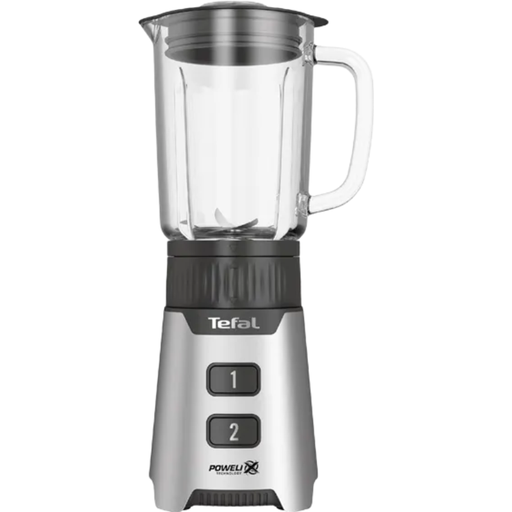 Image unavailable
Tefal BL16GE30 Mini Blender
A compact blender for puréeing ingredients; bear in mind you’ll need space to store the motor base and included bottle.
The product name lists 400 W and a capacity of 700 ml.
Joybuy
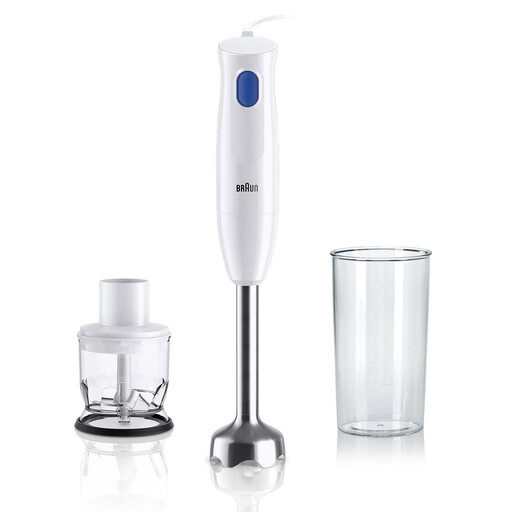 Image unavailable
Braun MultiQuick 1 MQ10.201MWH
A stick blender option for mixing sauces; the set described also includes a whisk and chopper, which will need extra storage space.
Joybuy
Frequently asked questions
Do you need a blender to make yoghurt dressing?
Not if you’re finely chopping the herbs and simply want to stir them into yoghurt and other liquid ingredients: the Netherlands Nutrition Centre describes this method for yoghurt and herb dressing. You only need an appliance if you want to purée the ingredients.
What should you check before blending a small quantity?
Check the cup, any minimum fill level and the usage instructions for the exact model. The stated cup capacity doesn’t prove that a much smaller portion will mix well.
Can every part go in the dishwasher after use?
No, you can’t assume that for the entire category. For the nutribullet NB603DG, the manufacturer says to put the cups on the top rack of the dishwasher and rinse the blade with soap and water; for another model, follow its own manual.
What warranty rights do you have in the Netherlands if the appliance breaks down too soon?
According to the Dutch Authority for Consumers and Markets’ Consumer Information service, a product must meet what you could reasonably expect under normal use. A limited manufacturer’s warranty doesn’t replace those statutory rights; contact the seller if the appliance develops a fault.
Is CE marking relevant for an electric blender?
The Dutch Food and Consumer Product Safety Authority says CE marking is compulsory for electrical products covered by the relevant regulations. Check the marking and usage information for the specific mains-powered model; a CE logo isn’t a practical test of its blending performance.


