
Vandaag of morgen in huis

Kwaliteit gegarandeerd

Welkomstaanbiedingen ontgrendelen: GRATIS bezorging | Tot 80% korting | Gratis 30 dagen JoyPlus-proefperiode
Download de app
A yoga mat seems simple: roll it out and get started. Yet many purchases disappoint. A mat may slide on a smooth floor, be too narrow for certain exercises or become permanently misshapen after just a few months. Terms such as “eco-friendly”, “extra grip” and “joint protection” also mean little on their own when the product specifications are missing.
As a Joybuy Product Recommendation Officer, I therefore focus mainly on verifiable details: material, dimensions, thickness, surface texture, care and portability. This helps you find a yoga mat suited to yoga, Pilates, fitness, HIIT or home workouts.
A non-slip yoga mat is not automatically suitable for every surface. Wood, laminate, tiles and concrete each have different levels of friction. Check whether the mat has a pattern on both the top and underside. A lined, wave or textured surface can help keep the mat in place, but the floor must also be clean, dry and level.
An extra-thick yoga mat feels more comfortable during exercises on your knees, back or hips. However, a very soft surface can feel less stable during standing poses. For yoga and Pilates, 6 mm is often a useful middle ground. For gentle floor exercises or users who want more cushioning, 10 to 12 mm may be the more logical choice.
According to the product descriptions from various brands, TPE is described as flexible, low-odour or environmentally friendly. These are product claims made by the seller, not a general guarantee for every user or situation. Always check the material, care instructions and information about the manufacturer or EU responsible person. A durable yoga mat will also remain usable for longer when you clean it correctly and avoid storing it in direct sunlight for extended periods.
A standard size of approximately 183 x 61 cm suits many yoga classes and home workouts. If you are taller or make large movements, an extra-wide yoga mat measuring 190 x 80 cm provides more room. Also check the rolled-up dimensions if you plan to store the mat in a cupboard, bike bag or car.
Thickness determines the balance between comfort and stability:
Do not just look for the words “non-slip”; look at the actual construction. A top layer with lines or texture and an underside with a wave profile is easier to assess than an unspecified non-slip claim.
Most mats in this selection can be cleaned with a damp cloth. Some product descriptions recommend hand washing, while others advise against soaking the mat or putting it in the washing machine. Allow a yoga mat to air-dry completely before rolling it up. A yoga mat with a carry strap is useful for the gym or studio; a foldable yoga mat takes up even less space when travelling.
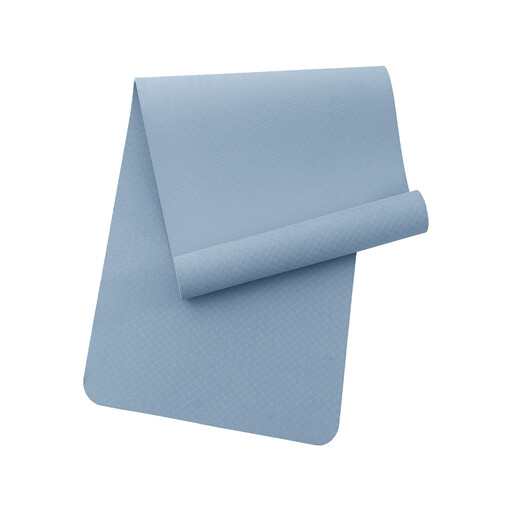
Why it suits this profile: Measuring 183 x 61 cm, with a thickness of 6 mm and a carry strap included, it is a practical combination for your first yoga classes, Pilates and home use.
The product description specifies a line pattern on top and a wave profile underneath, rather than making only a general non-slip claim.
TPE, 6 mm thickness, 183 x 61 cm and a carry strap; according to the product information, it is suitable for yoga, Pilates and fitness.

Why it suits this profile: The combination of natural cork and TPE appeals to users who care about their choice of materials and want a mat for yoga, fitness or hot yoga.
The product information specifically mentions a cork top layer, TPE underside and a thickness of 5 mm, so the mat is not relying on marketing language alone.
Cork/TPE construction, 5 mm thickness and dimensions of approximately 183 x 61 cm; clean with a damp cloth and mild soap.
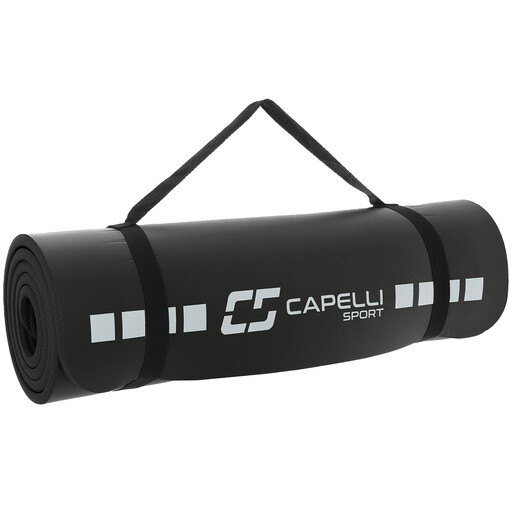
Why it suits this profile: For fitness, gymnastics and floor exercises where extra cushioning matters more than a thin profile.
The stated thickness of 1.2 cm makes it clear that this is a soft exercise mat, rather than a thin mat designed to maximise floor feedback.
NBR foam, 183 x 61 cm, textured surface and elastic carry strap; designed for fitness and gym training.
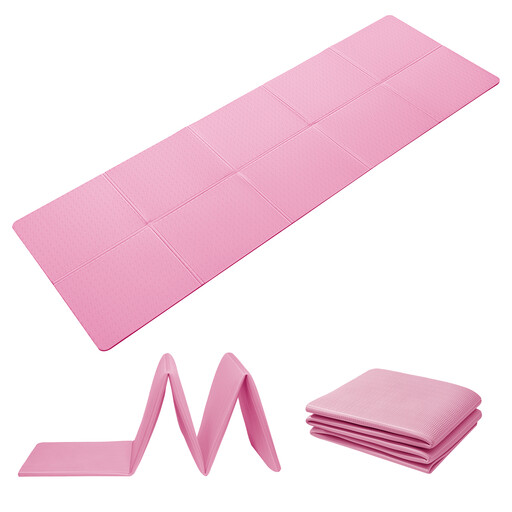
Why it suits this profile: According to the product information, the mat folds from 183 x 61 cm to 37 x 30 x 6 cm, making it easier to fit into luggage or a gym bag.
The stated folded dimensions make its portability easy to verify; according to the product description, both sides have a non-slip texture.
TPE, 6 mm thickness, foldable design and cleaning with a damp cloth; suitable for travelling, home use and the gym.
We have put together a complete, up-to-date list of products that fully meet these strict selection criteria and the applicable European safety regulations.
For general use, 6 mm is a practical choice. This thickness provides more cushioning than 3 mm without being as soft as some extra-thick models. If you mainly do floor exercises, you could consider 10 or 12 mm. For balance and standing poses, 3 to 5 mm may feel more comfortable.
Start by following the manufacturer’s instructions. In most cases, a damp cloth with mild soap if necessary is sufficient. Avoid harsh cleaning products, the washing machine and prolonged direct sunlight when advised against. Only roll the mat up once it is completely dry.
Its lifespan depends on how often it is used, the surface it is used on, your body weight, footwear and how well it is maintained. Tears, crumbling material, permanent dents or reduced grip are signs that it is time to replace the mat. Place it on a flat, clean surface and do not drag it across rough floors.
