
Vandaag of morgen in huis

Kwaliteit gegarandeerd

Welkomstaanbiedingen ontgrendelen: GRATIS bezorging | Tot 80% korting | Gratis 30 dagen JoyPlus-proefperiode
Download de app
A yoga mat seems simple enough: roll it out and get started. But the wrong choice can quickly become frustrating. A mat that slides during a plank, doesn’t give you enough room for Pilates or gets damaged after a few months won’t offer much value. So if you’re looking for a yoga mat for home and the gym in the UK, it’s worth looking beyond colour and price.
A raised, leaf or wave pattern can improve stability, but the surface underneath still matters. Dust, moisture and smooth laminate flooring can all reduce grip. Always place your non-slip yoga mat on a flat, clean surface, and check that it doesn’t move during dynamic exercises.
Also look at whether the mat has grip on one side or both. Some TPE mats have a textured surface on both the top and bottom. This can be handy for fitness, Pilates and exercises where you regularly turn the mat over.
A thick yoga mat feels more comfortable under your knees, hips and elbows, but may feel less stable for balance poses. A 3 or 4 mm mat is often easier to roll up and carry. A 6 mm yoga mat offers more cushioning, but takes up a little more space when stored or transported.
The right thickness depends on how you’ll use it. A thinner mat may be enough for gentle yoga and balance work. For Pilates, floor exercises, gymnastics or fitness, extra cushioning is often more practical.
A standard width of around 60 cm works for many yoga poses, but may feel restrictive during wider movements. If you’re tall or do a lot of Pilates, stretching and strength training, consider an extra-large yoga mat or an XXL yoga mat.
Always check both the length and width. A 190 × 80 cm mat gives you a different amount of room to move than a 190 × 100 cm model. If you plan to take your mat to a studio or gym, also check whether it comes with a carry strap.
Thickness alone doesn’t tell you everything about support. The density and elasticity of the material also affect how the mat feels. Don’t use a mat on an uneven or slippery floor if the product information advises against it.
A PVC yoga mat is generally sturdy and easy to wipe clean. The supplied product information describes the PVC mats as hard-wearing and featuring a textured surface. These are product specifications; the actual lifespan depends on use, storage and care.
TPE is a flexible thermoplastic material. Several TPE models in this selection have a double-textured surface and a carry strap. According to their product descriptions, they are elastic and suitable for yoga, Pilates, fitness and floor exercises. Always check the exact dimensions and weight before buying.
A cork yoga mat has a natural cork top layer. According to Capelli Sport’s product information, this model is made from natural cork with a TPE base and is designed for activities including hot yoga and fitness. The manufacturer states that grip may vary in damp conditions. Treat this as a product claim, not a guaranteed result for every user.
Wipe the mat after use with a damp cloth and mild soap, if allowed by the care instructions. Let it dry completely before rolling it up. Avoid harsh cleaning products, prolonged exposure to direct sunlight and heat sources. Check regularly for cracks, peeling layers or warping. A damaged mat may be less stable during exercise.
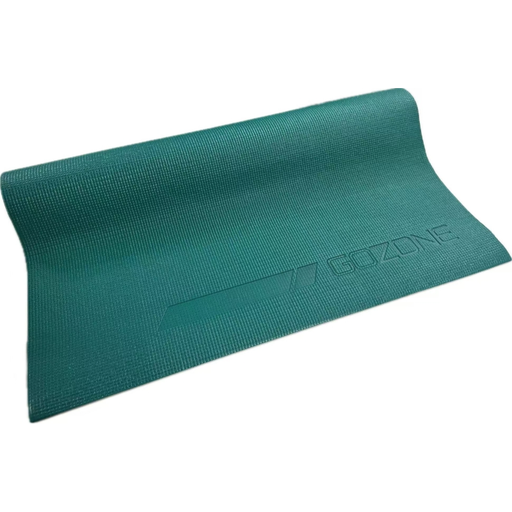
Why it suits this user: This 3 mm PVC mat is a straightforward choice if you’re starting out with yoga, stretching or light fitness and want a compact option for home or the gym.
The specifications list a textured surface and clear dimensions of 68 × 24 inches. This helps you work out how much space and cushioning you’ll get before you buy.
PVC, 3 mm thick, textured surface and suitable for yoga, Pilates and fitness.

Why it suits this user: This model combines a cork top layer with a TPE base and a thickness of 5 mm. It’s a good fit if you’re weighing up the material, cushioning and natural look.
The product information clearly specifies the material, base layer, thickness and care. That gives you a better idea of what you’re buying than a description relying on “premium” claims alone.
Natural cork, TPE base, 5 mm thick and measures 183 × 61 cm.

Why it suits this user: This wide TPE mat is designed for anyone who needs extra room for Pilates, gymnastics, stretching, strength training or exercises with bigger movements.
The mat measures 190 × 100 cm, and its product description says it has a textured surface on both sides. This makes it less likely that you’ll only realise during a workout that the mat is too narrow.
XXL size, 6 mm thick, TPE material, double-textured surface and a carry strap.
We’ve put together a full, up-to-date list of products that meet these strict selection criteria and the applicable European safety regulations.
A 5 or 6 mm mat is often practical for Pilates, thanks to the extra cushioning for exercises involving your back, knees and hips. Make sure it’s long and wide enough, too. An XXL model that’s 190 cm long gives you more room for full movements than a standard mat.
Wipe the mat with a damp cloth after every workout. Only use mild soap if the product instructions allow it. Let the mat air-dry completely before rolling it up. Avoid using a washing machine, harsh cleaning products or leaving it in direct sunlight for long periods if the manufacturer advises against this.
That depends on how often you use it, the surface you use it on, how you clean it and how you store it. Look out for peeling layers, cracks, lasting deformation and reduced grip. If you can see signs of wear, it’s safer to replace your exercise mat than to keep training on an unstable one.
