
Vandaag of morgen in huis

Kwaliteit gegarandeerd

Welkomstaanbiedingen ontgrendelen: GRATIS bezorging | Tot 80% korting | Gratis 30 dagen JoyPlus-proefperiode
Download de app
A yoga mat may seem like a simple product at first glance. However, mats vary considerably in grip, size, thickness, material and portability. An inexpensive purchase can therefore prove impractical: the mat may slide across the floor, curl up at the edges or provide too little comfort during Pilates and stretching.
Pay particular attention to these common pitfalls:
Thickness determines how your body feels in relation to the floor. A 6 mm yoga mat is a versatile choice for yoga, Pilates, stretching and general workouts. This thickness provides more cushioning than a thin mat while keeping you reasonably close to the floor.
A 10 mm yoga mat has a softer surface and may suit users who appreciate extra cushioning during exercises on their knees, elbows or back. Bear in mind that greater thickness can affect stability during standing poses.
A 3 mm mat is thinner and often lightweight and compact. This can be useful when travelling or for exercises where you want to maintain plenty of contact with the floor. For intensive floor exercises, a 10 to 12 mm fitness mat may provide greater comfort.
Pay attention to the unit of measurement in the product information. A mat measuring 0.6 cm is 6 mm; 1.0 cm is 10 mm and 1.2 cm is 12 mm.
Many models are made from TPE, a thermoplastic elastomer. According to the product descriptions from the brands mentioned, TPE is flexible, lightweight and easy to clean with a damp cloth. Always check the actual product specifications and care instructions for each model.
A cork yoga mat has a cork top layer and often a TPE underside. Miss Lulu’s product description states that the cork surface can absorb moisture. This may be appealing for workouts where your hands and feet become damp more quickly. However, the mat must be allowed to air properly after use.
PVC is also used, for example in a thinner Pilates mat. A textured surface can provide extra texture, but grip also depends on the floor, maintenance and amount of moisture.
A size of 183 × 61 cm is suitable for many standard yoga and Pilates exercises. If you need more space, consider an extra-wide yoga mat measuring 190 × 80 cm. Check beforehand that the mat fits fully on the available floor space.
A dual texture can be practical: one pattern on the top for contact with your hands and feet and another pattern on the underside for contact with the floor. This does not guarantee that a mat will not move on every type of surface. Always use the mat on a flat, clean floor and follow the safety instructions.
A yoga mat with a carrying strap is easy to roll up and take to the gym. A foldable yoga mat takes up less space in a rucksack or suitcase, but may retain fold lines. Choose based on your storage space and how often you travel, rather than simply relying on the word “portable”.
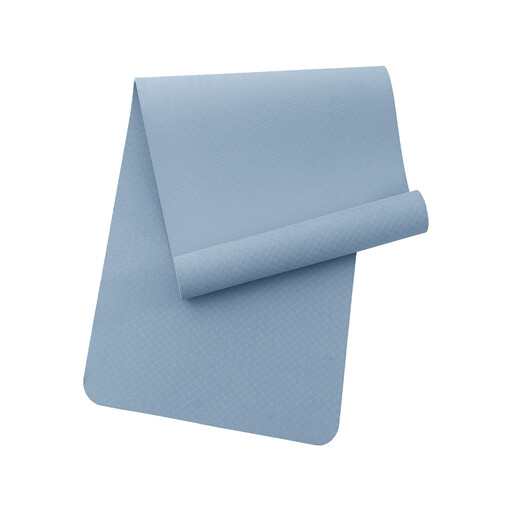
Why it suits this profile: The combination of 6 mm thickness, 183 × 61 cm dimensions and a carrying strap makes this a practical first mat for home, Pilates or the gym.
The product information mentions grip lines on the top and a wave pattern on the underside. This means you do not have to rely solely on a marketing label such as “non-slip”.
TPE material, 6 mm thickness, carrying strap and care with a damp cloth according to the product description.

Why it suits this profile: The combination of a cork top layer, TPE underside and polyester mesh is aimed at users who take the material construction and moisture management into account.
The product information specifies more than just “non-slip”, listing the cork, TPE and intermediate layer separately. This makes the construction easier to assess.
Cork on the top, TPE on the underside, 6 mm thickness and dimensions of 183 × 61 cm.
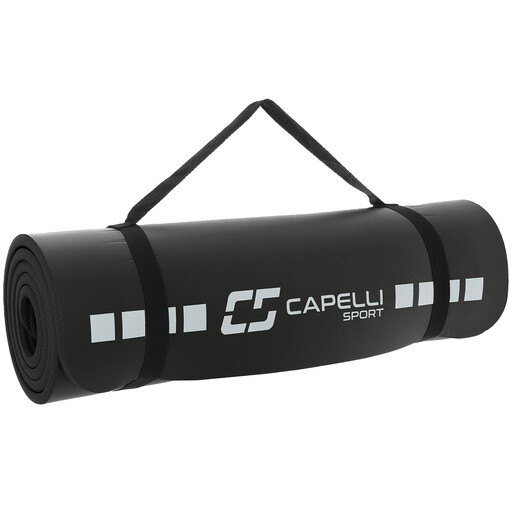
Why it suits this profile: This thicker exercise mat is intended for fitness and floor exercises where extra cushioning may be more important than thin, direct contact with the floor.
The thickness is clearly stated as 1.2 cm. This makes the mat easier to compare with a 6 mm yoga mat or thinner Pilates mat.
NBR foam, 1.2 cm thickness, textured surface and an elastic carrying strap included.
We have compiled a complete, up-to-date list of products that fully meet these strict selection criteria and the applicable European safety regulations.
A 6 mm yoga mat is a practical starting point for yoga, Pilates and stretching. If you mainly do lying-down or kneeling exercises and want a softer surface, you could consider a 10 mm or 12 mm fitness mat. A thinner mat may provide greater stability for balancing poses.
In most cases, wiping it with a damp cloth is sufficient. Allow the mat to air-dry completely before rolling it up or storing it. Always check the specific care instructions: several models in this overview must not be machine-washed or submerged for long periods.
Its lifespan depends on how often you train, the floor, cleaning and the material. Look out for crumbling foam, smooth patches, cracks and an underside that no longer makes proper contact with the floor. With intensive use, regular checks are more sensible than relying solely on a stated lifespan.
