
Vandaag of morgen in huis

Kwaliteit gegarandeerd

Welkomstaanbiedingen ontgrendelen: GRATIS bezorging | Tot 80% korting | Gratis 30 dagen JoyPlus-proefperiode
Download de app
A yoga mat may seem like a simple product at first glance. However, many buyers only discover after a few workouts that their mat shifts, does not provide enough space or is difficult to store. The right choice depends not just on colour or price, but mainly on your floor, exercises and storage arrangements.
A product may be marketed as a non-slip yoga mat, even when it is not always clear how the grip is achieved. So check the product description:
A non-slip texture helps with stability, but it does not guarantee that the mat will stay in place on every floor. A clean, level surface remains important.
A thick yoga mat feels softer, but extra cushioning is not always practical. During balance poses and standing yoga exercises, a very soft mat may feel less responsive. For gentle yoga, stretching and Pilates, extra thickness can be more comfortable.
The most common options are:
Use the millimetres as a point of comparison, not as a quality rating. Also check the material and dimensions.
A mat measuring approximately 183 × 61 cm is suitable for many exercises, but can feel cramped during wide movements, gymnastics or full-body exercises. If you have a spacious workout area at home, consider an extra-large yoga mat measuring 190 × 80 cm.
Also consider the floor space available. A larger mat is less convenient if you have to store it in a small cupboard after every workout.
A TPE yoga mat is usually flexible and lightweight. The product descriptions of the TPE mats mentioned refer to elasticity, low weight and limited odour. These features are based on information from the seller and do not constitute a general guarantee for every TPE mat.
PVC is often used for firm, affordable mats with a textured surface. PVC can be suitable for yoga, Pilates and fitness, but check whether the mat can be cleaned in accordance with the care instructions.
A cork yoga mat generally combines a cork layer with a TPE underside. According to the product description of the Capelli Sport mat, the cork surface can absorb moisture and provide more grip when you perspire. This is a product claim made by the seller; the actual experience may vary from one user and training situation to another.
For home use, 183 × 61 cm is a common size. A 190 × 80 cm mat provides more room to move, but also takes up more space when rolled up. If you plan to take your mat to the gym, yoga class or outdoors, it is worth checking the weight and whether a carrying strap is included.
A yoga mat with carrying strap is useful for cycling, public transport and walking to the gym. A foldable yoga mat takes up even less space than a traditional rolled model. However, folding can leave visible crease lines.
Most models in this selection are intended to be cleaned by hand. Wipe the surface with a damp cloth and allow the mat to dry completely before rolling or folding it. Avoid harsh cleaning products, prolonged direct sunlight and storage near a heat source if the product instructions advise against them.
Use a workout mat on a level surface and regularly check for tears, separating layers or permanent deformation. A damaged mat may become less stable. Product information, warnings and EU contact details should be available with the offer; check these details before ordering.
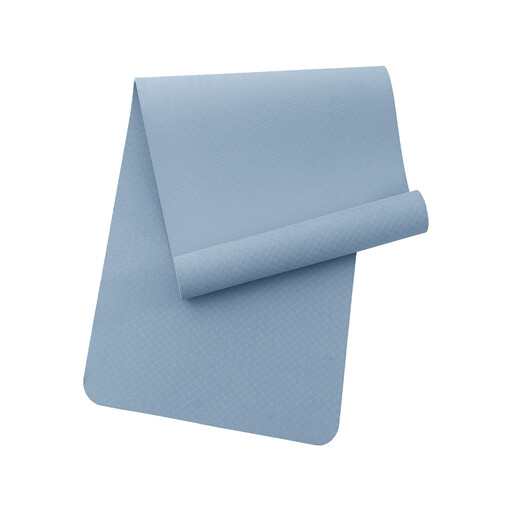
Why it suits this profile: Measuring 183 × 61 cm, it is suitable for many home workouts and yoga classes. The 6 mm thickness offers a balance between cushioning and stability.
The product description specifies a lined texture on the top and a wave pattern on the underside, as well as a carrying strap. This means you can see in advance which grip and transport features are included.
TPE material, 6 mm thickness, 183 × 61 cm and a carrying strap; suitable for yoga, Pilates and fitness according to the product information.

Why it suits this profile: This mat combines a cork surface with a TPE base and is 5 mm thick. It is a good choice for users who place greater importance on the choice of material and surface feel than on keeping weight to a minimum.
The material construction is clearly described: natural cork on top and TPE underneath. According to the product description, the surface is designed for use when perspiring and during more intensive workouts.
5 mm thick, 61 × 183 cm, cork with a TPE base and designed for yoga, hot yoga and fitness according to the product description.
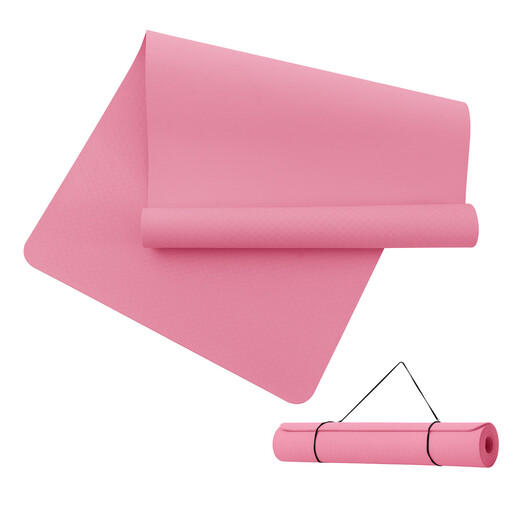
Why it suits this profile: The extra width provides more room to move during gymnastics, Pilates, stretching and fitness. This model is particularly suitable for a permanent workout area at home or in a spacious studio.
The dimensions are clearly stated, so you do not discover during wide movements that a standard mat is too narrow. The dual texture and carrying strap are also specified.
190 × 80 cm, 6 mm thick, TPE, double-sided texture and approximately 980 grams according to the product details.
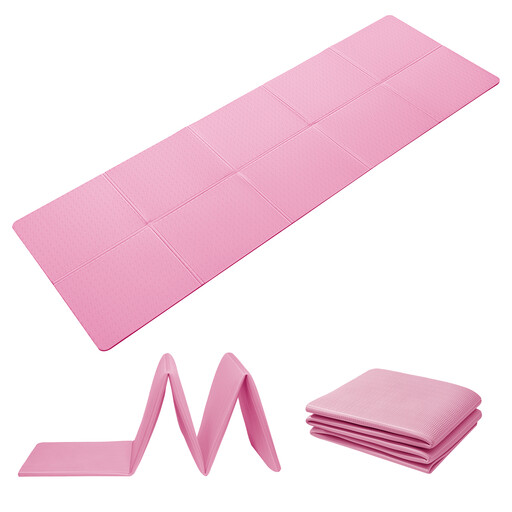
Why it suits this profile: According to the product information, this foldable yoga mat measures 37 × 30 × 6 cm when folded. This makes it practical for a gym bag, suitcase or rucksack.
You do not have to carry a large rolled-up mat. The product description mentions a double-sided structure and hand cleaning, making the transport and care options clear in advance.
Foldable design, 6 mm TPE, 183 × 61 cm when unfolded and suitable for yoga, Pilates, fitness and travel according to the product details.
We have put together a complete, up-to-date list of products that fully meet these strict selection criteria and the applicable European safety regulations.
For many users, a 6 mm yoga mat offers a useful balance between cushioning and stability. This thickness is suitable for yoga, Pilates, stretching and general fitness. Anyone who mainly practises balance poses may prefer a thinner mat. If you are looking for more comfort during floor exercises, consider a 10 mm yoga mat.
Always follow the product instructions. For the models mentioned, cleaning with a damp cloth or sponge and mild soapy water is generally recommended. Allow the mat to air-dry completely and do not use harsh products. Machine-washing a yoga mat is not recommended for this selection.
The lifespan depends on how often you train, the surface you use it on, cleaning and storage. Do not wear shoes with sharp parts, roll or fold the mat according to its design, and store it somewhere dry and away from prolonged direct sunlight. Replace the mat when the surface becomes slippery, the layers begin to separate or permanent tears and deformation appear.
