
Vandaag of morgen in huis

Kwaliteit gegarandeerd

Welkomstaanbiedingen ontgrendelen: GRATIS bezorging | Tot 80% korting | Gratis 30 dagen JoyPlus-proefperiode
Download de app
A yoga mat may seem simple to choose at first glance. However, models vary considerably in terms of material, thickness, grip and portability. A mat that feels comfortable for gentle yoga may be too soft, too small or not stable enough for HIIT or abdominal exercises.
The following three pitfalls are common:
Looking only at thickness
A thick mat feels comfortable, but may be less stable during balancing poses. For yoga and Pilates, the combination of cushioning and contact with the floor is more important than a large number of millimetres.
Treating “non-slip” as a fixed guarantee
Grip depends on the surface, moisture, pressure and movement. A non-slip yoga mat with texture on the top and bottom can help, but always place the mat on a flat, clean floor. Also check that the material is suitable for your type of training.
Underestimating dimensions and storage
A standard mat measuring around 183 x 61 cm provides space for most exercises, but does not always fit easily in a small cupboard or bike bag. If you often go to the gym, you may get more from a yoga mat with a carry strap or a foldable yoga mat.
A 4 mm yoga mat provides relatively good contact with the floor and is suitable for standing poses, yoga, light Pilates and everyday use. According to the product information, the 4 mm PVC mat measuring 68 x 24 inches has a textured surface and is designed for yoga, Pilates, fitness and floor exercises.
A 6 mm yoga mat offers a practical middle ground. This size provides more cushioning for your knees, wrists and elbows without necessarily making the mat unstable. However, pay attention to the construction and the surface underneath.
For more intensive floor exercises, a thick yoga mat or fitness mat measuring 10 to 12 mm may be more comfortable. For example, a 1.2 cm NBR mat is designed to provide extra padding and shock absorption. For balance exercises, however, such a soft surface may feel less suitable.
Terms such as “environmentally friendly”, “odourless” or “extra grip” come from product descriptions. Do not regard them as a universal guarantee. Always check the stated materials, dimensions and care instructions.
When looking at a non-slip yoga mat, check both sides. A textured underside helps keep the mat in place on a smooth floor, while a raised or lined pattern on top can provide more support during exercises.
For transport, a yoga mat with a carry strap and a foldable version are useful. A roll-up mat generally takes up more space than a model that folds into sections. After use, the product descriptions for the models mentioned generally recommend wiping them with a damp cloth, allowing them to air-dry and avoiding prolonged exposure to direct sunlight. Do not machine-wash a fitness mat unless this is expressly permitted.
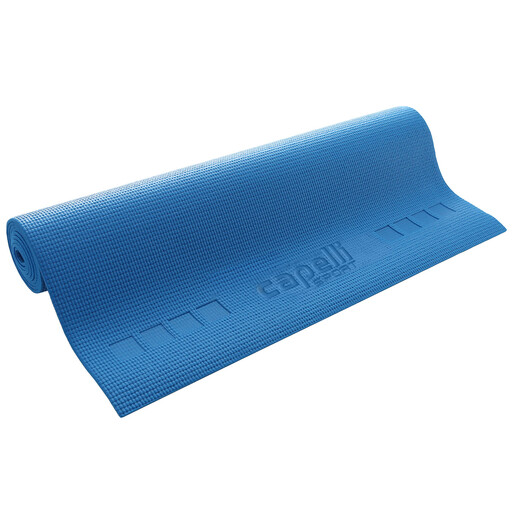
Why it suits this profile: A straightforward size for beginners who want to alternate between yoga, Pilates and light fitness at home and at the gym.
The specifications clearly state PVC, a thickness of 4 mm and dimensions of 68 x 24 inches. This means you do not have to rely solely on general marketing terms.
Textured surface, wipe-clean material and suitable for yoga, Pilates and floor exercises.
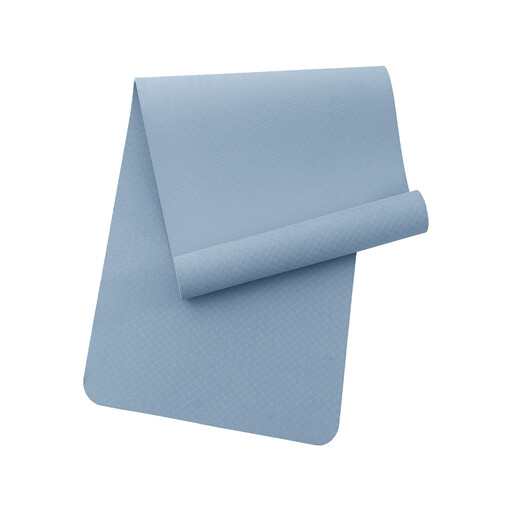
Why it suits this profile: For users who want to use one fitness mat for yoga, Pilates, gymnastics and workouts at home or in the gym.
The mat measures 183 x 61 cm and is available in 6 or 10 mm. You can therefore choose the thickness to suit your preference for stability or extra cushioning, rather than automatically opting for the thickest option.
TPE, a double surface texture, a choice of two thicknesses and a carry strap included.

Why it suits this profile: A targeted choice for anyone looking for a cork yoga mat for yoga, fitness or a session marketed as hot yoga.
The material construction is clearly described: natural cork on top and TPE underneath. Check that the floor is flat and stable before use.
5 mm thick, cork/TPE construction, dimensions of 183 x 61 cm and wipe-clean with a damp cloth.
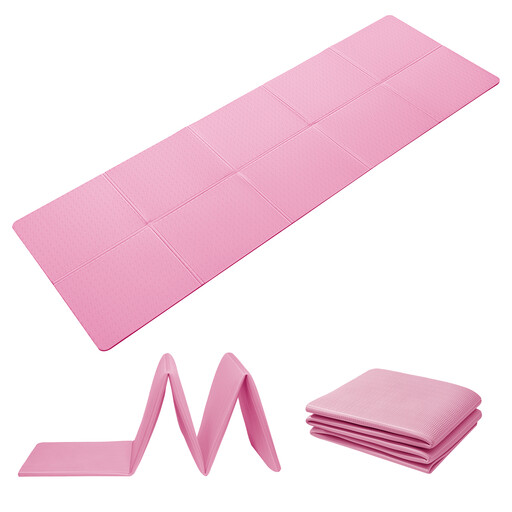
Why it suits this profile: Ideal for anyone moving between home, the office, the gym, the park or a holiday destination who does not want to carry a large rolled-up mat.
The dimensions are listed both unfolded and folded: 183 x 61 x 0.6 cm and approximately 37 x 30 x 6 cm. This allows you to assess storage and transport requirements in advance.
Foldable design, TPE material, double non-slip texture and 6 mm thickness.
We have put together a complete, up-to-date list of products that fully meet these strict selection criteria and the applicable European safety regulations.
A yoga mat is suitable for stretching, yoga, Pilates and many floor exercises. For intensive strength training, heavy fitness equipment or a larger training area, a sports mat, training mat or modular fitness puzzle mat may be more practical.
According to the product information, the Capelli Sport set consists of six PE tiles measuring 60 x 60 cm and 1.2 cm thick. The tiles interlock and are intended for a home gym, training area or use underneath fitness equipment. Check that all the pieces are fully connected before you begin.
For yoga and Pilates, 4 to 6 mm is often a useful starting point. A thinner mat provides more stability and contact with the floor, while 6 mm offers more cushioning. For floor exercises where comfort matters more than balance, 10 to 12 mm may be suitable.
Wipe the mat with a damp cloth or sponge and allow it to air-dry completely. Do not use harsh cleaning products and do not leave the mat in direct sunlight for extended periods. Always follow the product’s specific care instructions.
Its lifespan depends on how often it is used, the surface underneath, storage and cleaning. Do not drag a mat across rough tiles and store it somewhere dry. Replace the mat when the surface starts to come away, develops cracks or becomes noticeably less stable.
