
Vandaag of morgen in huis

Kwaliteit gegarandeerd

Welkomstaanbiedingen ontgrendelen: GRATIS bezorging | Tot 80% korting | Gratis 30 dagen JoyPlus-proefperiode
Download de app
A yoga mat may seem simple, but small differences in size, material and thickness can affect how comfortable it feels to move on. A mat that’s too narrow leaves little room for wide poses. A slippery surface can feel unsafe during dynamic exercises. And a thick fitness mat isn’t always suitable for balance work.
If you focus only on colour or a low price, you may run into three common pitfalls:
A size that doesn’t suit your body or exercises
A standard mat is large enough for many people, but taller users and those who move around a lot may benefit from an extra-wide or XXL yoga mat.
Non-slip claims without clear details about the surface
Don’t just look for the words ‘non-slip yoga mat’. Check whether the mat has a pattern or texture, or different surfaces on each side, and whether its underside is suitable for your floor.
A thickness that doesn’t suit how you’ll use it
A thin mat gives you more contact with the floor and can feel comfortable for balance work. A thick yoga mat offers more cushioning for kneeling, abdominal exercises and floor workouts, but may feel less stable for some yoga poses.
First, measure the space where you work out. A length of around 173 to 183 cm suits many standard workouts. A 190 cm mat gives you more room to stretch out fully. Width is just as important: 61 cm is common, while 80 or 100 cm gives you extra room to move.
An extra-wide yoga mat is useful for Pilates, gymnastics, stretching and exercises where your arms or legs might extend beyond a narrow mat. Bear in mind that a larger mat takes up more floor space and may be harder to store in a small space.
Thickness is usually given in millimetres or centimetres. A 6 mm mat, such as the Narwhal mat, offers a balance between cushioning and stability. A 7 mm model provides a little more comfort without being as bulky as a heavy exercise mat. At 1.2 cm thick, the Capelli Sport mat is noticeably thicker, making it better suited to floor workouts, fitness and exercises where extra padding is useful.
Thickness is not a medical feature and won’t prevent injuries. Choose a mat based on your exercises, the surface you’ll use it on and your personal preference. Extra cushioning can feel comfortable on a hard floor, while a less yielding mat may give you more control in standing balance poses.
Check the care instructions too. The models mentioned are designed to be cleaned with a damp cloth. Leave your mat to air fully before rolling it up, and don’t use harsh abrasive cleaners. Store it somewhere cool and dry, away from prolonged direct sunlight.
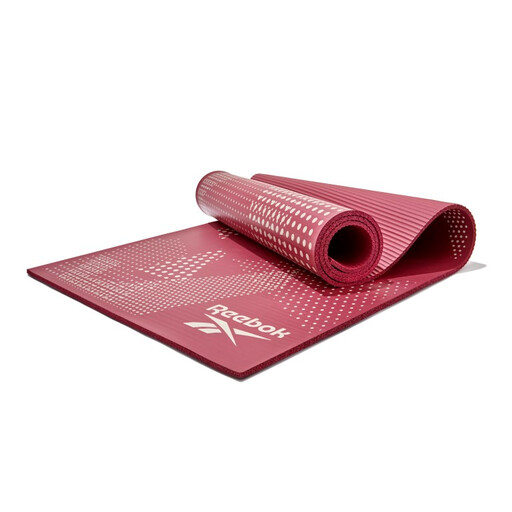
Why it suits this user: Measuring 173 x 61 cm, this mat is practical for yoga, stretching and general floor exercises at home or on the go. The included carry strap makes it easier to store and take with you.
The product information mentions a ribbed underside and a closed-cell structure. According to the description, this makes the surface easy to wipe clean and gives it more grip on the floor than a completely smooth mat.
PVC, 0.7 cm thick, closed-cell structure, wipe-clean surface and carry strap.
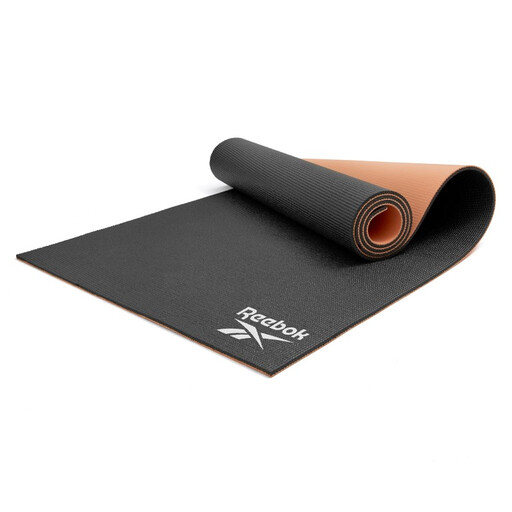
Why it suits this user: The reversible design gives you two different surfaces to practise on. That’s useful when you switch between balance poses and gentle stretching.
Rather than having one all-purpose surface, you can choose between a grippier side for balance work and a softer side for stretching, according to the product description.
PVC, two surfaces, water-repellent according to the product description, and supplied with a carry strap.
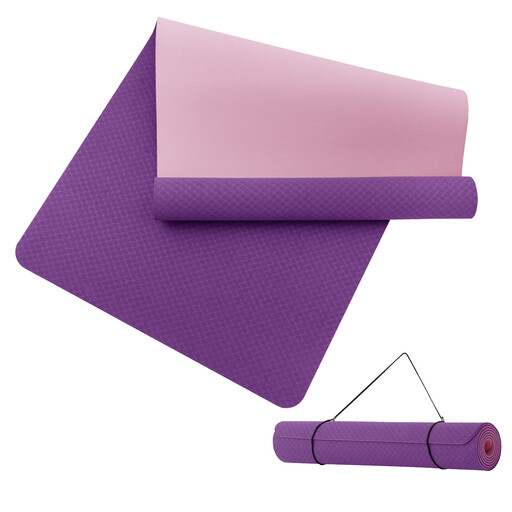
Why it suits this user: At 190 x 80 cm, this XXL yoga mat offers more room for taller users, Pilates, gymnastics, strength training and wide movements.
Its generous size helps solve the problem of having too little room to practise. According to the product information, the leaf-like texture on the top and wave pattern on the underside are designed to provide grip.
TPE, 190 x 80 cm, 6 mm thick, textured on both sides and supplied with two carry straps.
We’ve put together a complete, up-to-date list of products that meet these strict selection criteria and the applicable European safety regulations.
Wipe the mat down with a damp cloth after use. Only use a mild cleaning product if the product information says it’s suitable. Let the mat dry fully before rolling it up. According to the product description, a PVC mat with a closed-cell structure is easy to wipe clean, but that doesn’t automatically mean it’s machine washable.
Its lifespan depends on how often you use it, the surface you use it on, your body weight, how you clean it and how you store it. Look out for permanent distortion, tears, smooth patches or peeling textures. Use your mat on a flat, clean floor and don’t drag it over rough surfaces.
For Pilates and fitness, a fitness mat, sports mat, exercise mat or workout mat with enough room and cushioning is often a practical choice. A thicker NBR model suits many floor exercises. For standing yoga poses and balance work, a less yielding TPE or PVC yoga mat with a textured surface may give you more control.
