
Vandaag of morgen in huis

Kwaliteit gegarandeerd

Welkomstaanbiedingen ontgrendelen: GRATIS bezorging | Tot 80% korting | Gratis 30 dagen JoyPlus-proefperiode
Download de app
A yoga mat may seem like a simple product, but small differences in thickness, material and dimensions can make a big difference to how comfortable your exercises feel. A mat that is too narrow can quickly become impractical for Pilates or fitness. A soft mat feels comfortable, but may be less stable during balancing poses. And a non-slip surface does not perform identically on every floor.
As a Joybuy Product Recommendation Officer, I filter the most important product specifications for you. This lets you compare yoga mats based on practical features, rather than relying solely on claims such as “extra comfortable” or “professional grip”.
A 6 mm yoga mat generally provides more cushioning than a 3 mm or 4 mm yoga mat. This can feel more comfortable during exercises on your knees, back or elbows. However, a thicker mat takes up more space and may feel less direct during standing poses.
For gentle yoga, stretching and home use, 4 to 6 mm can be a useful range. For dynamic exercises, thickness is not the only important factor: the firmness of the material and the surface texture also matter.
A non-slip yoga mat may offer extra grip thanks to raised textures, a pattern or a special top layer. However, dust, moisture, smooth floors and the sportswear you wear can all affect the result. Check whether the underside makes good contact with your floor and whether the mat needs to be used on a flat surface.
Product descriptions may mention stability or grip, but this is not a universal guarantee for every user and surface.
A standard size of around 61 × 173 cm to 61 × 183 cm is sufficient for many yoga exercises. Taller users, or people who do a lot of rolling, stretching and strength training, may benefit more from a wide yoga mat or an extra-large yoga mat.
An XXL yoga mat measuring 190 × 80 cm gives you noticeably more room to move. A 190 × 100 cm version offers even more space, but also requires more storage room.
Measure the space where you want to use the yoga mat. For a yoga mat at home, it is not just the space you need during exercise that matters, but also the storage space. A 190 cm-long mat may be comfortable for taller users, but it will not fit in every cupboard.
When choosing a wide yoga mat, consider:
A 5 mm yoga mat offers a balance between cushioning and stability. A 6 mm yoga mat provides more distance from a hard floor and can be comfortable for floor exercises. A 3 mm or 4 mm mat is generally lighter and feels more direct during balancing poses.
The stated thickness is a product specification, not a personal guarantee of comfort. If you are sensitive to hard floors, you can also use a towel or additional underlay. Make sure the combination does not slide around.
Clean the mat after use according to the product instructions. Several models recommend using a damp cloth, mild soapy water and allowing the mat to air-dry completely. Avoid harsh cleaning products and prolonged direct sunlight where the instructions advise against it.
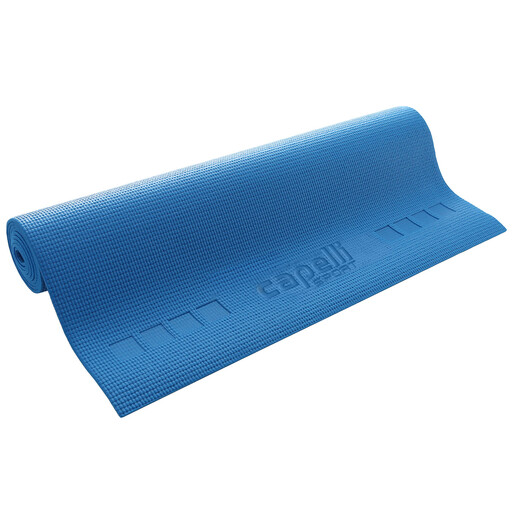
Why it suits this profile: Measuring 68 × 24 inches and with a thickness of 4 mm, it is practical for yoga, Pilates and light fitness at home or in the gym.
The product information clearly states the material, dimensions and thickness. This means you do not have to rely solely on general comfort claims.
PVC material, a textured surface and a wipe-clean outer layer according to the product description.

Why it suits this profile: This 5 mm mat combines a cork top layer with TPE underneath and is designed for yoga, hot yoga and fitness.
The product specifications state both materials, the 5 mm thickness and the care instructions. This makes the composition easy to verify.
Measures 72 × 24 inches, with cork on top, TPE underneath and a sweat-resistant surface according to the description.

Why it suits this profile: The extra-wide dimensions are suitable for taller users and movements requiring plenty of room, such as Pilates, stretching, sit-ups and general fitness.
With a width of 100 cm, you are less likely to end up directly beside the mat during wide exercises. However, grip still depends on the floor, maintenance and moisture.
190 × 100 cm, 6 mm TPE, a double texture and a carry strap; the stated weight is 1.2 kg.
Check the following before buying a yoga mat:
We have put together a complete, up-to-date list of products that fully meet these strict selection criteria and the applicable European safety requirements.
A 4 to 6 mm yoga mat is a practical choice for many beginners. A 4 mm mat feels slightly more direct and is usually easier to carry. A 6 mm mat provides more cushioning during floor exercises. Also consider the firmness of the material and how stable it is on your floor.
That depends on how you plan to use it. TPE is often flexible and lightweight, while PVC models can feel firm and are easy to wipe clean. Compare the thickness, dimensions, surface texture and care instructions instead of judging the material alone.
Its lifespan depends on how often you train, friction, storage and cleaning. Roll the mat up according to the instructions, allow moisture to evaporate first and do not store it in direct sunlight for extended periods. Replace the mat when the surface starts to come away, develops cracks or no longer remains stable on the floor.
