
Vandaag of morgen in huis

Kwaliteit gegarandeerd

Welkomstaanbiedingen ontgrendelen: GRATIS bezorging | Tot 80% korting | Gratis 30 dagen JoyPlus-proefperiode
Download de app
As a Joybuy Product Recommendation Officer, I see 3D printing hobbyists and professionals searching for the perfect material every day. However, the quest for a specific yellow PLA filament can be surprisingly difficult. The color in the photo isn't always the color that comes out of your printer, and not every filament is suitable for every project. Before you place a 1kg of filament in your shopping cart, it's wise to understand a few common pitfalls that can lead to disappointing results.
Many makers invest in a spool of filament only to find that it doesn't meet their expectations. These are the most common problems:
To avoid these pitfalls, it's helpful to focus on a few objective specifications. These determine the performance and final result of your yellow 3D printer filament.
The choice between PLA and PETG is fundamental and depends entirely on your project.
The standard diameter for most FDM printers is 1.75mm. More important than the diameter itself is the tolerance. A low tolerance, such as ±0.02mm, guarantees a consistent flow of filament through the extruder. This minimizes the risk of clogs and ensures a uniform layer thickness, which is essential for a high-quality print. Brands like yellow Creality filament often clearly specify this tolerance on the packaging.
The finish has a major impact on the appearance of your print.
Based on these criteria, we have selected a few products that suit different user profiles.
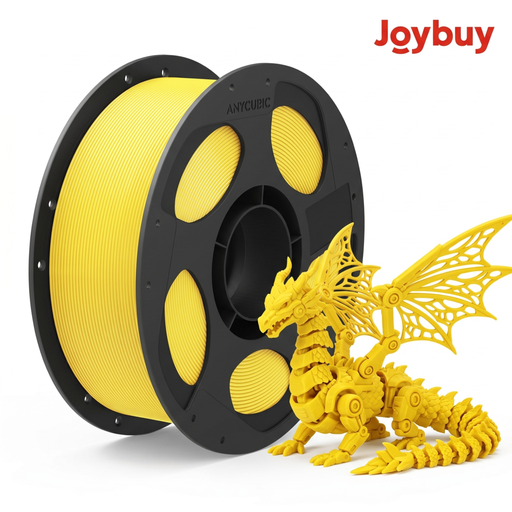
Why This Fits Their Persona: This filament is designed for reliability and ease of use. Ideal for beginners who want to learn to print without the frustration of clogs or poor adhesion. A solid choice for first projects.
The specified tolerance of ±0.02mm directly addresses the 'diameter frustration,' ensuring consistent extrusion. As a standard PLA, it avoids the brittleness of more complex materials.
Low warping and good layer adhesion make it a forgiving material for a wide range of FDM printers.
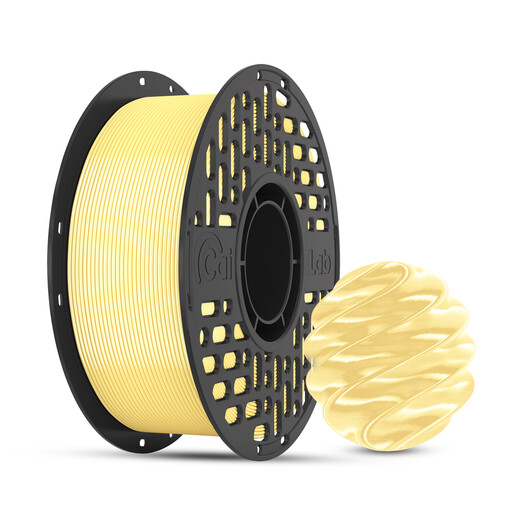
Why This Fits Their Persona: For makers where visual impact is paramount. The cream-colored, silky finish is perfect for decorative objects, vases, and artistic creations that need to stand out.
This product sidesteps the 'silk temptation' by being transparent about its limitations. The manufacturer warns that it is optimized for aesthetics, not strength, and is therefore not suitable for functional parts.
Produces a unique, high-gloss finish that gives prints a luxurious and striking appearance straight off the print bed.
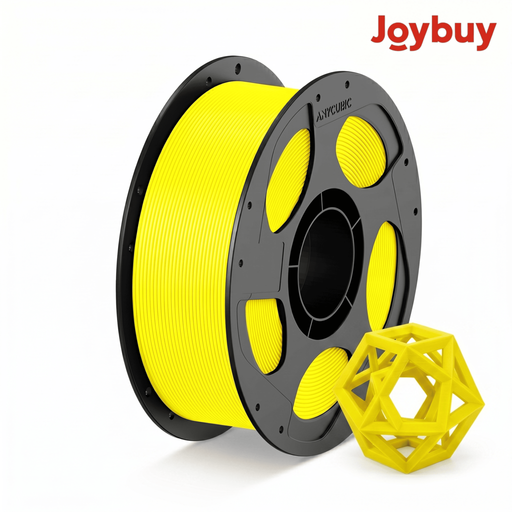
Why This Fits Their Persona: This user needs parts that can take a beating. PETG provides the necessary strength, flexibility, and heat resistance for printing tool holders, machine parts, or prototypes that will be put to the test.
By deliberately choosing yellow PETG filament, the user bypasses the limitations of aesthetic PLA variants. This material is specifically intended for durability, thus avoiding the pitfall of a material that is too brittle.
Combines higher impact resistance and temperature resistance with a relatively simple printing process compared to materials like ABS.
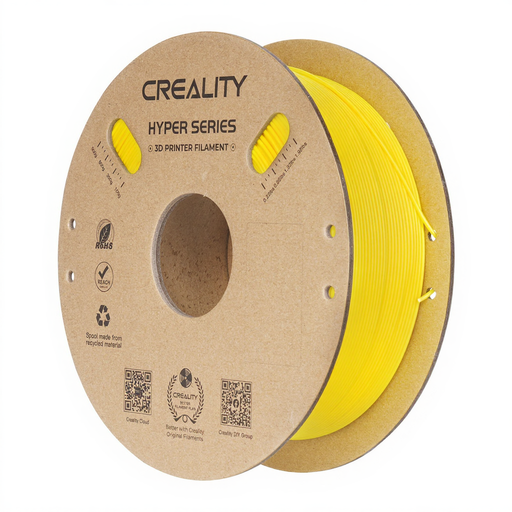
Why This Fits Their Persona: This user owns a modern, high-speed 3D printer and wants to maximize print speed without sacrificing quality. This filament is specially formulated to keep up with the high speeds and accelerations of these machines.
At high print speeds, a consistent diameter is even more crucial. The ±0.02mm tolerance of this yellow Creality filament prevents extrusion issues that are fatal to a print at high speeds.
According to Creality, this filament is suitable for print speeds up to 600 mm/s, which can significantly reduce production time for users with compatible printers.
We have compiled a complete, up-to-date list of products that meet these strict selection criteria and current regulations.
PLA is the most common and easiest material to print, ideal for visual models. PLA+ is an improved version of PLA, often with additives that make it slightly stronger and less brittle. PETG is a different type of plastic that is significantly stronger, more flexible, and more heat-resistant than PLA and PLA+, but it may require slightly more printer tuning for a perfect result.
Most filaments, including PLA and PETG, are hygroscopic, meaning they absorb moisture from the air. This can make the material brittle and lead to hissing and bubbling during printing. Therefore, always store your spool in an airtight bag or container, preferably with a sachet of silica gel (desiccant) to absorb moisture.
A consistent diameter is crucial for a reliable printing process. If a filament sold as 1.75mm actually varies between 1.70mm and 1.80mm, it can cause problems. A section that is too thick can clog the nozzle, while a section that is too thin leads to under-extrusion (too little material), resulting in weak prints with gaps. A low tolerance of ±0.02mm ensures predictable and stable extrusion.
