
Vandaag of morgen in huis

Kwaliteit gegarandeerd

Welkomstaanbiedingen ontgrendelen: GRATIS bezorging | Tot 80% korting | Gratis 30 dagen JoyPlus-proefperiode
Download de app
A 17 cm Wüsthof Santoku knife is designed for everyday cutting tasks such as preparing vegetables, fruit, herbs, fish and meat. However, a well-known brand name or the term “Damascus” does not automatically mean that a knife is right for your kitchen routine. The right choice depends on the steel, cutting angle, handle and maintenance.
A knife may arrive sharp straight out of the packaging, but how long it stays that way also depends on the hardness of the steel, the cutting angle and how you use it. So check whether the product information specifies a particular type of steel, cutting angle or sharpening method. A claim such as “razor-sharp” without technical details is less useful when comparing products.
A santoku knife is a versatile Japanese kitchen knife, but it is not designed for chopping bones, frozen food or hard stones. For these tasks, you need a cleaver. Use the knife on a suitable chopping board and make slicing movements rather than chopping forcefully.
Even when a product description states that a knife is dishwasher-safe, heat, moisture and contact with other cutlery can put strain on the blade edge and handle. For a kitchen knife that stays sharp for longer, hand washing and drying it immediately is generally the safer maintenance choice. Store the knife in a way that prevents the edge from hitting other kitchen utensils.
According to the product information, the 17 cm Wüsthof Classic Ikon santoku knife is made from X50CrMoV15 high-carbon stainless steel. The knife is manufactured from a single piece of steel. These details are easier to verify than general terms such as “premium steel” or “professional quality”.
High-carbon stainless steel combines carbon with corrosion-resistant alloying elements. This does not mean that the knife can never develop marks: prolonged contact with water, salt or acidic ingredients can affect the surface. Hand washing, drying and regular sharpening remain important.
According to Wüsthof’s own product information, this model has a 14-degree double bevel and the edge is honed by hand. Wüsthof also states that a laser-controlled sharpening method makes the knife 20% sharper than standard knives. This is the brand’s own claim, not an independently established comparison result.
A relatively small cutting angle can be useful for making fine cuts in vegetables, herbs and fish. However, the edge requires careful use: do not cut on glass, stone or ceramic, and do not use the knife as a lever.
A 17 cm blade offers a practical medium size. It is long enough for larger vegetables, while remaining manoeuvrable when preparing herbs and smaller ingredients. According to the stated specifications, the Wüsthof model weighs approximately 170 grams, has a handle of around 10.9 cm and an overall length of approximately 29.7 cm.
The handle is made from polyoxymethylene, a synthetic material. The semi-bolstered handle design is intended to make sharpening the full length of the edge easier. Whether a handle feels ergonomic will partly depend on your hand size and personal preference. So, where possible, compare the balance and grip before buying.
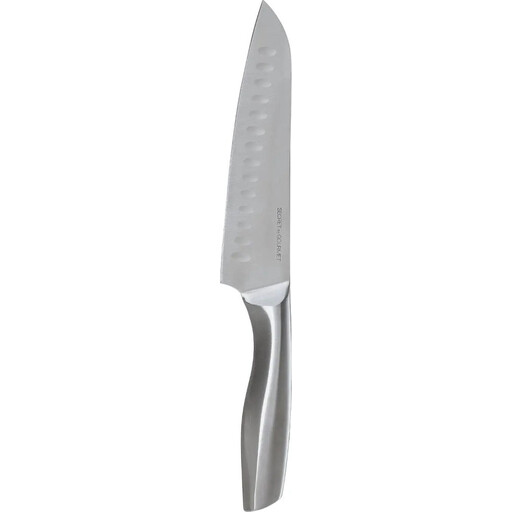
Why it suits this profile: An accessible choice for anyone wanting to try a santoku knife and who prefers a longer model for larger ingredients. The product information states that the blade is 18 cm long.
The specifications state the material, length and fully forged construction. This means you do not have to rely solely on general marketing terms.
Stainless steel, a sturdy handle and, according to the product description, dishwasher-safe construction.

Why it suits this profile: For home chefs and cooks looking for a compact, versatile size with clearly stated information about the material, cutting angle and maintenance.
The product details specify X50CrMoV15 steel, a 14° double bevel, hand honing and hand washing as the recommended maintenance method.
17 cm blade, approximately 170 grams and a synthetic polyoxymethylene handle with a described ergonomic shape.
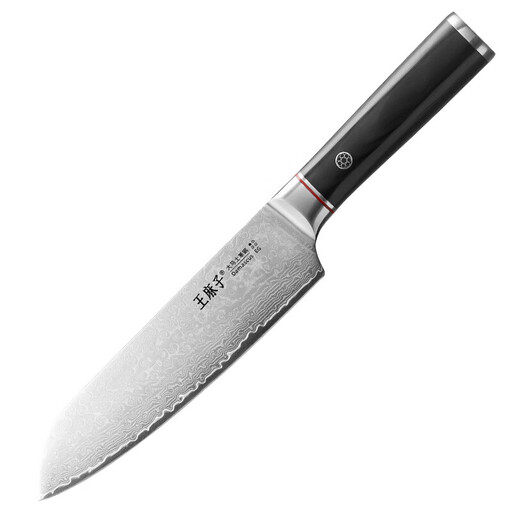
Why it suits this profile: An option for anyone specifically looking for a Damascus-style santoku knife for cutting meat and vegetables. Check the full size and steel information before buying.
The product title makes the intended use clear, but does not list all the technical specifications. This prevents you from confusing a surface pattern with information about the edge.
Santoku shape and multifunctional positioning; suitable for cutting meat and vegetables according to the product name.
We have put together a complete, up-to-date list of products that fully meet these strict selection criteria and the applicable European safety regulations.
A minimum two-year legal guarantee applies to this product under European consumer rules. Additional rights may apply under the relevant national law.
For many households, yes. A 17 cm blade offers a balance between control and cutting capacity. It is suitable for vegetables, fruit, herbs, fish and meat without being as long as a classic 20 cm chef’s knife.
That depends on how often it is used, the chopping board, the ingredients and maintenance. It is therefore not possible to give a reliable fixed timeframe. Hand washing, using the correct cutting technique and sharpening the knife in good time will help keep the edge usable for longer.
The product information does not recommend using a dishwasher for the Classic Ikon model. Hand washing and drying the knife immediately are the recommended maintenance choices if you want to protect the edge and handle as effectively as possible.
