
Vandaag of morgen in huis

Kwaliteit gegarandeerd

Welkomstaanbiedingen ontgrendelen: GRATIS bezorging | Tot 80% korting | Gratis 30 dagen JoyPlus-proefperiode
Download de app
Buying a new knife might seem straightforward until you have to choose between a Wüsthof chef’s knife, santoku knife or bread knife. Product pages often emphasise sharpness, coatings and luxury materials. Yet it is blade length, handle, maintenance and intended use that really determine whether a knife feels comfortable in everyday cooking.
When looking at Wüsthof kitchen knives, watch out for these common pitfalls:
For everyday slicing, chopping and dicing, a chef’s knife of 16 to 20 cm is generally practical. A 16 cm knife feels nimble and works well with smaller chopping boards. A 20 cm blade offers more reach for large vegetables, meat and herbs.
A santoku knife of around 17 cm has a wider shape and is suitable for vegetables, fish and meat. Small dimples on the blade can, according to the product description, help prevent sliced ingredients from sticking. This is useful for slicing and fine chopping, but it does not replace good knife technique.
For bread, a serrated blade of 20 to 23 cm makes more sense. The serrations grip a hard crust without you needing to apply much pressure. A Wüsthof bread knife can also be used for soft cakes or fruit with a tough skin, but it is not a replacement for a chef’s knife.
Many Wüsthof kitchen knives in this selection use X50CrMoV15 stainless steel. This type of steel is described in the product information as durable and suitable for everyday kitchen work. Some models are forged from a single piece of steel and have a full tang. This can contribute to balance and sturdiness.
Claims such as “20% sharper” or a certain long-lasting sharpness come from Wüsthof’s product description. Treat them as a brand claim and also look at verifiable information such as:
A narrow cutting angle, for example 14 degrees per side, can enable precise cutting. Such a cutting edge does require a suitable chopping board and careful maintenance.
An ergonomic handle should primarily suit the way you hold it. A plastic or synthetic handle is often easy to clean. Wood can feel pleasant but generally requires more attention when cleaning and drying.
A full-tang construction can make the knife feel stable, but it does not automatically mean it is comfortable for everyone. Also pay attention to the weight. A light model is nimble; a heavier knife can move more steadily through firm ingredients.
Use a wooden or plastic chopping board where possible. Glass, stone and metal can damage the cutting edge more quickly. Wash high-quality kitchen knives by hand where possible, even if the product information allows dishwasher use. Dry the blade immediately and store it in a knife block, protective sheath or drawer insert.
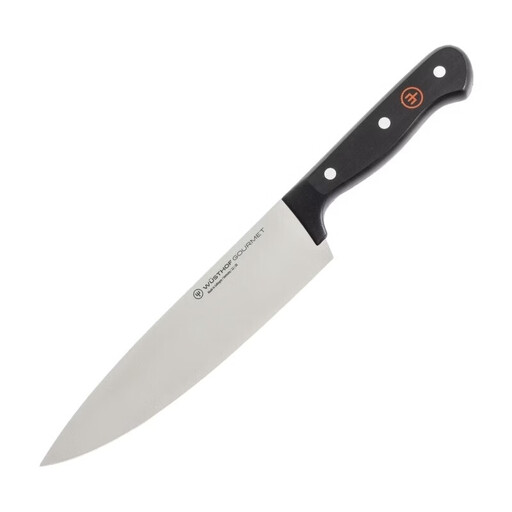
Why this fits the profile: This 20 cm chef’s knife is designed for everyday slicing, dicing and chopping. The weight of 184 grams and the plastic handle make it a straightforward choice for anyone looking for one versatile knife.
The specifications list blade length, material and weight, so you are not relying solely on appearance. Hand washing is recommended for a longer lifespan.
20 cm blade, stainless steel, ergonomic design and full-tang construction according to the product information.
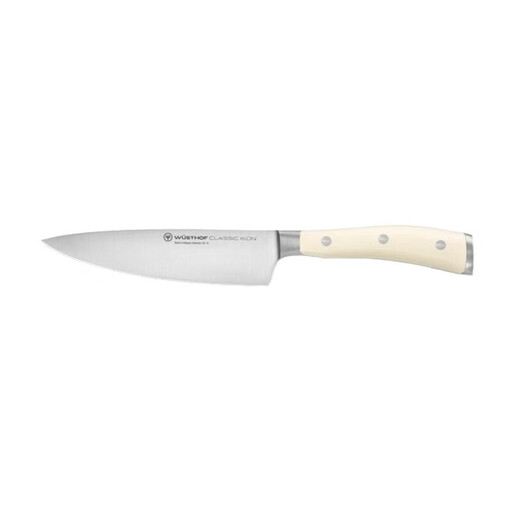
Why this fits the profile: The 16 cm length offers control for fine cutting and suits compact worktops well. The cream-coloured synthetic handle combines a striking look with an ergonomic shape.
The choice is not just about a brand name: the product information mentions stainless steel, full tang, three rivets and a 16 cm blade.
Forged construction according to the product description, full tang and a handle with finger guard.
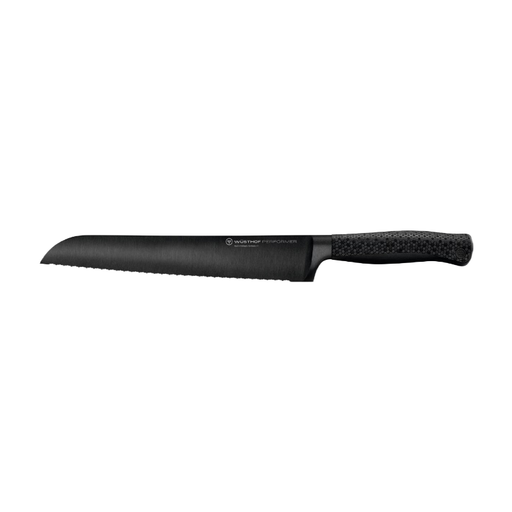
Why this fits the profile: For lots of bread, hard crusts and baked goods, a long serrated bread knife is more purposeful than a smooth chef’s knife. The 23 cm blade offers reach for large loaves.
The serrated shape is tailored to bread and soft ingredients. The product information recommends hand maintenance, despite the stated dishwasher resistance.
23 cm serrated blade, DLC-coated forged steel according to the product information and a handle with anti-slip texture.
We have put together a full, up-to-date list of products that fully meet these strict selection criteria and comply with current European safety regulations.
The ranges differ mainly in design and feel in use:
If you mainly cut vegetables, herbs and meat, you can choose a chef’s knife. For Asian preparations or a lot of vegetable chopping, a Wüsthof santoku knife is a logical addition. For everyday bread, cakes and hard crusts, a Wüsthof bread knife belongs in a separate category.
Yes, the models mentioned are intended, according to the product information, for daily kitchen work such as slicing, chopping and portioning. Choose the blade length based on your worktop, hand size and ingredients. Maintenance remains important, even with a stainless steel kitchen knife.
The lifespan of the cutting edge depends on use, chopping board, technique and maintenance. Do not use a glass or stone board, do not cut through bones with a standard chef’s knife, and regularly use a suitable sharpening stone or honing steel. Factory claims about sharpness come from the brand’s product information and are not a guarantee for every usage situation.
This varies by model. Some product pages state that a knife is dishwasher safe, yet hand washing is still recommended for a longer lifespan. Always check the specific product information and dry the knife immediately after washing.
