
Vandaag of morgen in huis

Kwaliteit gegarandeerd

Welkomstaanbiedingen ontgrendelen: GRATIS bezorging | Tot 80% korting | Gratis 30 dagen JoyPlus-proefperiode
Download de app
When you're considering purchasing a premium kitchen knife, such as a Wüsthof santoku, you are confronted with numerous specifications and marketing jargon. It's easy to get lost in promises about steel types or ergonomic designs. A poor choice not only leads to frustration in the kitchen but is also a waste of your investment.
Before you buy a santoku knife, it's helpful to recognise the most common pitfalls:
To make an informed decision, it's important to look beyond the marketing and focus on the core specifications that determine a knife's performance and lifespan.
The type of steel is the backbone of any knife. The Wüsthof Classic Ikon knives are made from X50CrMoV15 steel. This is a German stainless steel known for its sophisticated balance: it's hard enough to stay sharp for a long time, yet flexible enough not to break easily. Furthermore, it is highly rust-resistant, which simplifies maintenance compared to traditional Japanese carbon steel knives.
A forged chef's knife, as the name suggests, is forged from a single piece of steel. This process creates a heavier, stronger structure with a bolster (the thick part between the blade and the handle). This results in superior balance and durability. Stamped knives are cut from a sheet of steel, are lighter, and generally less expensive, but often lack the balance and robustness of a forged knife. The Wüsthof Classic Ikon is an example of a fully forged knife.
The Japanese kitchen knife design of the Santoku, which means "three virtues" (slicing, dicing, mincing), makes it an ideal all-purpose kitchen knife. Key features include:
Not every cook has the same needs. Below are some options that suit different preferences and uses, based on their objective specifications.

Why This Fits Their Persona: This is the workhorse for the everyday kitchen. The 17 cm length is perfect for most cutting tasks, from mincing herbs and vegetables to filleting fish or slicing meat. A true all-rounder.
The ergonomic handle and half-bolster provide excellent balance, preventing fatigue (pitfall 2). The rust-resistant steel is low-maintenance (pitfall 3).
Fully forged from a single piece of steel for superior strength. The hollow-edge indentations (kullen) reduce food sticking to the blade.
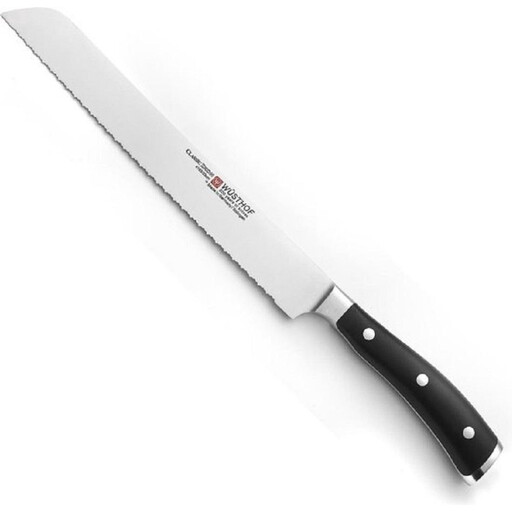
Why This Fits Their Persona: For those who regularly bake their own bread or buy large, crusty loaves. This knife is specifically designed to cut through hard crusts without crushing the soft interior. Also suitable for large vegetables like cabbage.
This knife solves the problem of using an unsuitable tool. A regular chef's knife or santoku damages the structure of bread, leading to a disappointing result.
The double serration ensures an exceptionally clean cut. The long 23 cm blade is suitable for even the largest loaves of bread.
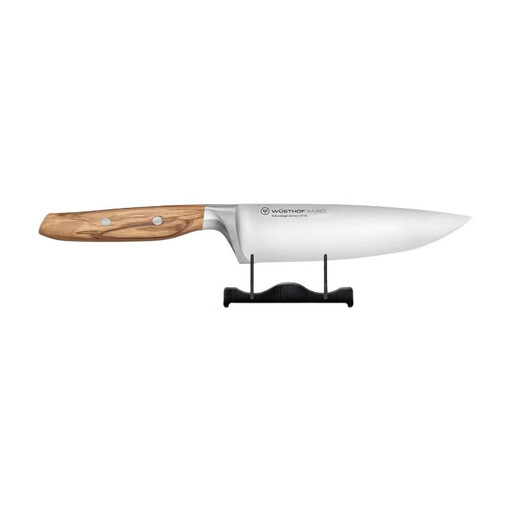
Why This Fits Their Persona: For those who want to combine functionality with a warm, Mediterranean aesthetic. The Calabrian olive wood handle gives this knife a unique look without sacrificing the performance of a classic chef's knife.
This knife proves that a beautiful design doesn't have to come at the expense of ergonomics (pitfall 2). It is forged and balanced for comfort, just like Wüsthof's other premium series.
The unique olive wood handle makes every knife different. The classic chef's knife profile is highly versatile for the rocking technique.
We have compiled a complete, real-time list of products that fully satisfy these strict selection criteria and UK safety regulations.
Although the steel is rust-resistant, it is not recommended to put a quality knife like this in the dishwasher. The harsh detergents and high temperatures can damage the handle and the blade's sharpness over time. Hand washing with a soft sponge and drying immediately is the recommended method to keep the knife in top condition.
The main difference lies in the blade shape and cutting technique. A classic European chef's knife has a more curved cutting edge, which is ideal for a "rocking" cutting motion. A santoku knife has a straighter cutting edge and a blunter tip, making it more suitable for a direct, chopping motion. Many users find a santoku more comfortable for quickly chopping vegetables.
This depends on the frequency of use. For daily edge maintenance, it is advisable to regularly hone the knife (e.g., weekly) with a honing steel. This realigns the microscopic burrs on the edge. True sharpening, which removes material from the blade to create a new sharp edge, is typically only needed once or twice a year for home use.
