
Vandaag of morgen in huis

Kwaliteit gegarandeerd

Welkomstaanbiedingen ontgrendelen: GRATIS bezorging | Tot 80% korting | Gratis 30 dagen JoyPlus-proefperiode
Download de app
Choosing a new pen, planner or notebook seems simple. Yet many purchases end up disappointing. A pen may write smoothly in the shop but bleed through thin paper. A planner may look stylish but not suit an irregular schedule. And a large set of coloured pens may contain shades that are barely distinguishable from one another.
When buying writing and stationery supplies, it is therefore worth considering how you will use them, as well as their size and materials. Below are the key points to consider for school, the office, journaling, drawing and everyday planning.
A set with lots of colours or pens may look appealing, but the number of items says little about how useful it will be. Always check the nib type, ink colour and intended use. For administrative notes, a black or blue ballpoint is often enough. For a bullet journal, hand lettering or creative projects, multiple colours and different line widths are more useful.
With brush pens, the flexibility of the nib is also important. A soft nib can create thick and thin lines, but it also requires more control than an ordinary coloured pen.
Paper weighing 80 g/m², 100 g/m² or 107 g/m² differs in thickness and sturdiness. Heavier paper generally feels more substantial, but it does not automatically prevent every type of ink from showing through. The result also depends on the type of ink and the amount of ink released by the pen.
For example, a gel pen or liquid rollerball may put more ink onto the paper than a basic ballpoint. If in doubt, test the pen on a back page or choose a notebook whose product description clearly states the paper weight.
An undated planner is practical for people whose schedule is not the same every week. You can start whenever you like and skip empty weeks without leaving unused pages filled with old dates. If you record appointments every day, it is better to pay attention to the layout of the monthly and weekly overviews.
Also check the size. A5 offers room for longer notes and planning, while A6 or A7 is easier to carry in a bag or coat pocket.
The nib width determines how precisely you can write:
Gel pens often write remarkably smoothly, but may take longer to dry on some types of paper. A ballpoint with oil-based or low-viscosity ink is generally suitable for forms, schoolwork and everyday office tasks. According to some brands’ product descriptions, quick-drying ink is designed to help reduce smudging; however, the result still depends on the paper, writing pressure and position of your hand.
An A5 notebook measures approximately 14.8 by 21 cm and offers a useful balance between writing space and portability. In addition to the size, consider:
A sewn A5 notebook can stay flatter when open. A small spiral notebook, on the other hand, is handy for short to-do lists and quick notes.
For children, it is sensible to check the recommended age and any safety information. The Faber-Castell Brush Pen Set, for example, states EN 71 and a recommended minimum age of 10. The product information also indicates that the ink is based on food colourings and is washable. Use the brush pens as intended: on light-coloured paper and not on black paper.
For all stationery supplies, check that the packaging clearly states what is included. A “set” may mean one notebook with several variations, but it could also mean several separate products. With glue rollers, coloured pens and writing sets, the number of items is particularly important.
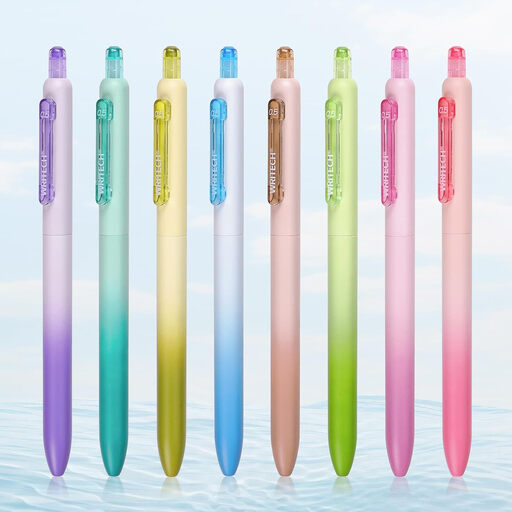
Why it suits this profile: Eight coloured gel pens offer an accessible starting point for notes, schoolwork and journaling without having to buy lots of different types of writing supplies straight away.
The product information states that the pens have a fine 0.5 mm nib and come in eight different colours. This makes their intended use clearer than with a general, unspecified writing set.
0.5 mm nib, eight retractable pens and a ribbed grip according to the product description.
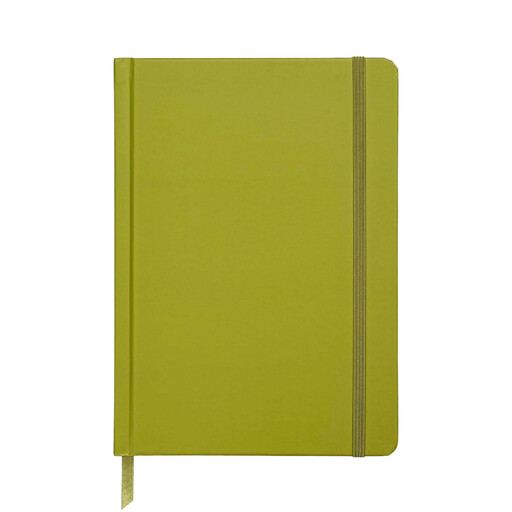
Why it suits this profile: This planner is ideal for students, office professionals and journaling enthusiasts who want to combine monthly and weekly planning with space for goals and notes.
The planner is undated, so you do not have to wait for a fixed starting month and will not pay for pre-printed weeks that you may end up skipping.
A5 format, hardcover, 112 sheets of 100gsm offset paper, monthly and weekly overviews, elastic closure and ribbon marker.
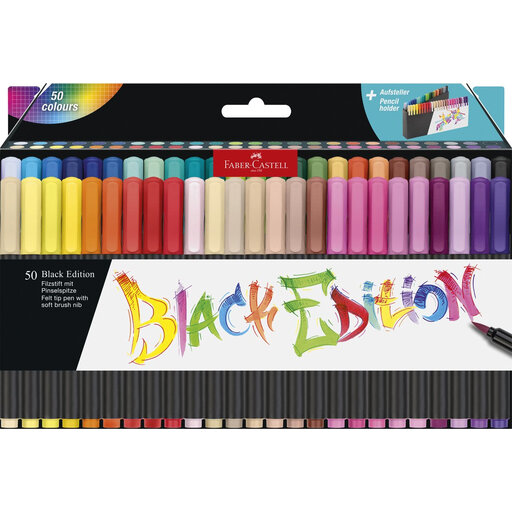
Why it suits this profile: For artists, creative hobbyists and coloured-pen users who want a wide range of shades for small drawings, headings and decorative lettering.
The product information explicitly states that the pens are suitable for light-coloured paper but not black paper. This makes the choice of materials clear in advance.
50 assorted colours, a brush nib for variable line widths and a cardboard storage box. According to the product information, the ink is washable.
Start with one pen for everyday use, such as a 0.7 or 1.0 mm ballpoint. Then add a fine gel pen for small notes and colour coding. For creative applications, brush pens, coloured pens and other drawing materials are logical additions.
For journaling, an A5 notebook, undated planner, glue roller and a few accent colours are often enough. A glue roller can be useful for photographs, cards and scrapbook pages, but check beforehand whether the product contains double-sided tape and how many metres are included. This helps prevent a small refill or roll size from falling short when used intensively.
Store pens closed and out of direct sunlight. Notebooks and planners stay in better condition when stored somewhere dry and flat. With gel pens, pay attention to the drying time and test new ink on an inconspicuous page first.
We have put together a complete, up-to-date list of products that fully meet these strict selection criteria and the applicable European safety regulations.
A 0.7 mm or 1.0 mm ballpoint is practical for forms, schoolwork and office administration. Choose a 0.5 mm gel pen when you need finer lines or colour coding. If you are left-handed, pay particular attention to the ink’s drying time.
Their lifespan depends on writing pressure, frequency of use, the paper and storage conditions. Store gel pens with the nib retracted and keep brush pens securely capped. A set containing several pens is useful for intensive use, as you are not reliant on a single pen.
A5 is suitable when you want enough space for weekly overviews, tasks and longer notes, while still being able to fit the planner in a bag. For short lists on the go, A7 notebooks are more compact. With a bullet journal, also check whether the paper is lined, squared or plain, depending on how you work.
