
Vandaag of morgen in huis

Kwaliteit gegarandeerd

Welkomstaanbiedingen ontgrendelen: GRATIS bezorging | Tot 80% korting | Gratis 30 dagen JoyPlus-proefperiode
Download de app
Buying the right writing and drawing supplies seems simple enough, until a pen skips, a marker bleeds through or a pencil lead keeps breaking. For pupils, students, teachers, office professionals and creative hobbyists, the real difference often lies not in the packaging, but in the specifications.
Pay particular attention to these common pitfalls:
The tip determines how much control and coverage you get.
Do not just look at the tip size; consider the tip shape too. A bullet tip produces an even line. A brush tip can vary in thickness depending on the pressure applied. A chisel tip is suitable for both broad highlighting and narrower underlining.
The type of ink determines how the product can be used:
A claim such as “washable” or “smudge-proof” should be considered in the context of the surface. According to Jar Melo’s product information, the ink in the dual-tip markers is water-based and largely washable from skin and most fabrics. This does not mean that every stain will disappear without treatment.
For school supplies and creative hobby products, age recommendations and safety information are important. An EN 71 label is listed for several of the products available. Also check the warnings on the product page, particularly where small parts are involved or the product is intended for use by young children.
Proper maintenance helps prevent unnecessary replacement:
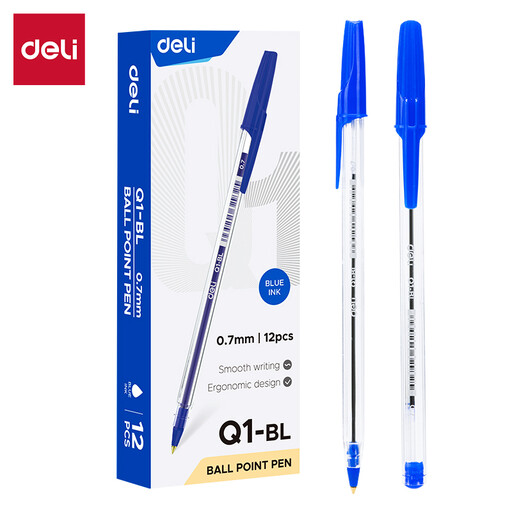
Why it suits this profile: A set of 12 blue ballpoint pens is practical for school, home or an office stationery cupboard. The 0,7 mm tip is suitable for everyday notes and forms.
The packaging clearly states the quantity, tip size, blue ink and ink type. This means you can compare the set based on concrete details rather than appearance alone.
12 pens; 0,7 mm bullet tip; blue oil-based ink for school and office work.
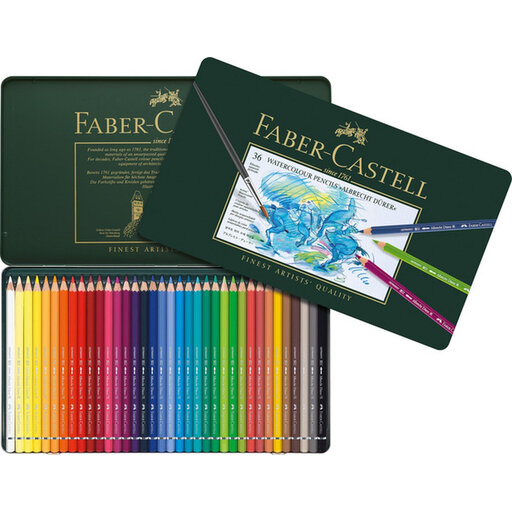
Why it suits this profile: Ideal for illustrators, experienced hobbyists and adults looking for coloured pencils with a watercolour effect. The set comes in a metal tin and contains 36 colours.
The product information lists the key details: 3,8 mm lead, 36 colours, wood, a hexagonal shape and water-soluble pigments. This makes it easier to assess the material and intended use in advance.
36 colours; water-soluble pigments; according to the product information, break-resistant 3,8 mm lead and certified cedar wood.

Why it suits this profile: This set is designed for sketching, illustrations and colour gradients. The combination of a flexible brush tip and a 0,6 mm fineliner supports both larger areas and fine details.
The product description explicitly states the use of alcohol ink, the two tip types and the 1 to 5 mm range. Bear in mind, however, that the ink may bleed through, so use suitable paper.
24 colours; 1 to 5 mm brush tip; 0,6 mm fineliner; alcohol ink according to the product information.
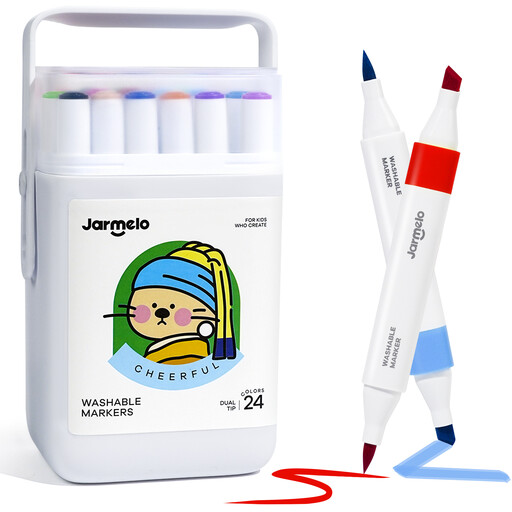
Why it suits this profile: The combination of a brush tip and chisel tip makes this set suitable for colouring, sketching and simple lettering. The storage box with handle is practical for use at home, school or on the go.
The set states the ink type, the two tip shapes, ventilated caps and a recommended age. This helps you assess in advance whether the product is suitable for children.
24 dual-tip markers; water-based ink according to the product information; storage case; brush and chisel tips.
We have compiled a complete, up-to-date list of products that fully meet these strict selection criteria and the applicable European safety regulations.
A 0.7 mm ballpoint pen is a versatile choice for forms, notes and homework. If you prefer finer lines, choose 0.5 mm gel pens or rollerball pens. Sets with multiple ink colours are practical for colour-coding and journalling.
Replace the cap immediately after use and make sure it is fully secured. Store markers away from direct sunlight and extreme temperatures. With brush pens and sketch markers, following the manufacturer’s recommended storage position can help. Use acrylic markers according to the activation instructions and test the ink on scrap paper first.
Do not just consider the purchase price; also look at the number of items, the availability of refills and the expected service life. A larger set can offer good value if you use the colours regularly. For occasional use, a smaller set of acrylic markers, coloured pencils or highlighters can help reduce waste. Also consider paper consumption: alcohol markers often require thicker or dedicated marker paper to minimise bleed-through.
