
Vandaag of morgen in huis

Kwaliteit gegarandeerd

Welkomstaanbiedingen ontgrendelen: GRATIS bezorging | Tot 80% korting | Gratis 30 dagen JoyPlus-proefperiode
Download de app
When buying writing and drawing supplies, people often look first at colour, quantity and price. That is understandable, but it is not always enough. A large set can be awkward to use, a marker may bleed through paper and a cheap pen may stop writing smoothly after a short time. Choosing the right specifications helps you avoid disappointing purchases for school, the office, journalling or creative projects.
A set with dozens of colours may look appealing, but first check whether you will actually use them. For everyday writing, a compact set is often more practical. When drawing, colour variety, blendability and the type of ink may matter more than the number of items.
Also check exactly what is included in the packaging. A set may contain refills, spare caps or accessories that are not suitable for your intended use.
Features such as quick drying, being smudge-proof or water resistance depend on the surface and the amount of ink used. An alcohol marker, for example, may bleed through thin paper. Acrylic markers can write on a range of materials, but they often require preparation and a firm surface.
When a brand makes a performance claim, treat it as a brand claim. According to the brand’s own research, a product may offer certain results; always check the product description and choose the right paper or surface.
A pen with a comfortable grip is useful during long writing or drawing sessions. Tip size also makes a difference: 0.5 mm is suitable for fine lines, while 0.7 mm generally delivers a little more ink. Capped markers should be sealed properly. Mechanical pencils need suitable leads, and coloured pencils require an appropriate sharpener.
For products intended for children, age recommendations, small parts and safety information are also important. A certification such as EN 71 provides verifiable information about certain toy safety requirements, but it does not replace reading the warnings on the packaging.
Water-based ink is often suitable for paper and may be washable in some products. Gel ink usually writes smoothly, but needs time to dry. Acrylic markers contain water-based acrylic ink and, according to the product description, can be used on paper, metal, ceramic, plastic, glass, textiles, stone, canvas and wood, among other surfaces. Always test on an inconspicuous area first.
Alcohol markers dry quickly and are intended for sketching, but they can bleed through paper. Use marker paper or place a protective sheet beneath your drawing. Watercolour pencils combine pencil pigment with water: using a damp brush or water brush, you can soften lines and blend colours.
A small set fits more easily into a pencil case. A larger set is worth considering if you need a range of colours for drawing, hand lettering or creative craft projects. Also check the packaging: a roll-up pencil case, cardboard box or plastic holder affects transport and storage.
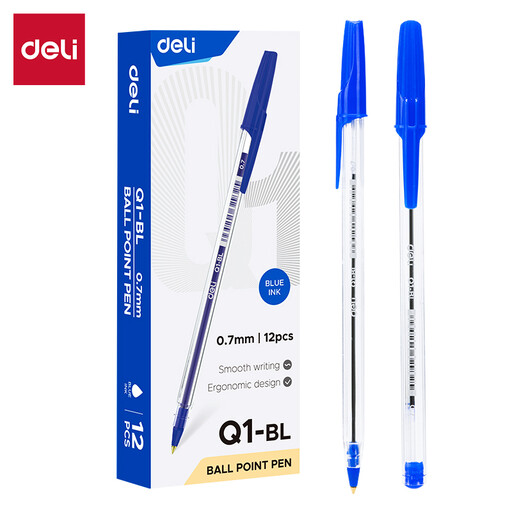
Why it suits this profile: A practical supply for school pupils, students, offices and families who regularly need blue pens.
The packaging clearly states that it contains 12 pens, with a 0.7 mm bullet tip and blue oil-based ink. This makes it easy to assess exactly what is included.
12 pens; 0.7 mm tip; blue ink for school, office and everyday writing.
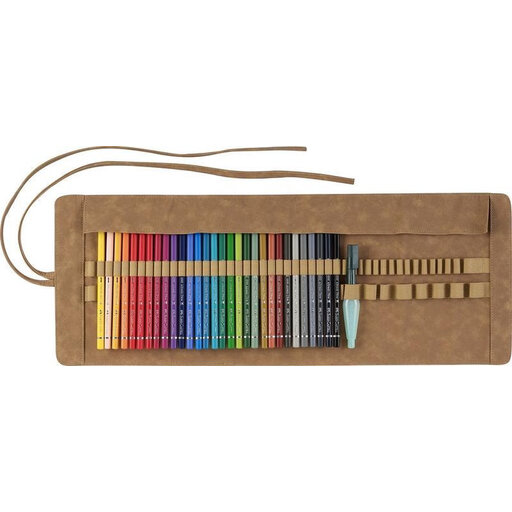
Why it suits this profile: For drawing enthusiasts and creative adults who want to use coloured pencils and watercolour effects in one set.
The specifications mention a 3.8 mm-thick core, certified cedar wood and full water solubility. This makes the intended use clearer than a colour count alone.
30 pigment-rich watercolour pencils; water brush included; break-resistant core according to the product description.

Why it suits this profile: For sketches, illustrations and colouring where you need both broad brush strokes and fine details.
The set explicitly states that it has a 1 to 5 mm brush tip and a 0.6 mm fineliner tip. Replace the caps after use and choose suitable paper because of the alcohol-based ink.
24 colours; two tip shapes; alcohol-based ink that dries quickly according to the product information.
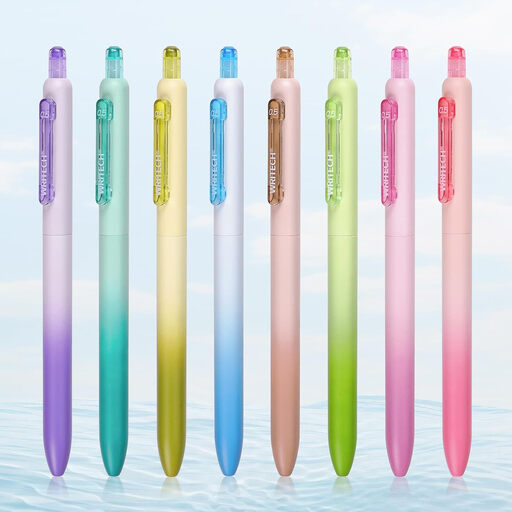
Why it suits this profile: For diaries, bullet journals, colour coding and precise notes at school, at home or in the office.
The 0.5 mm line width and eight individual colours are clearly stated. Store the pens horizontally and retract the tip when they are not in use.
8 colours; fine 0.5 mm tip; retractable design with an ergonomic grip according to the product description.
We have put together a complete, up-to-date list of products that fully meet these strict selection criteria and the applicable European safety regulations.
For everyday school use, ballpoint pens, pencils or mechanical pencils, an eraser and highlighters are usually enough. For drawing, you can add coloured pencils, brush pens or sketch markers. Check your school’s requirements: some lessons specifically call for graphite pencils with a particular hardness, such as 2B.
Seal markers properly immediately after use. Ideally, store brush pens and highlighters horizontally or as instructed by the manufacturer. Acrylic markers usually need to be shaken and activated first; do not press the tip unnecessarily often. Store all pens in a dry place away from direct sunlight.
The purchase price depends mainly on the set size, type of ink and material. A multipack of ballpoint pens is practical for regular use. For creative projects, refills, suitable paper and protective sheets can increase the overall cost. So do not look only at the price per set; also consider the contents, lifespan when stored correctly and suitability for your chosen surface.
