
Vandaag of morgen in huis

Kwaliteit gegarandeerd

Welkomstaanbiedingen ontgrendelen: GRATIS bezorging | Tot 80% korting | Gratis 30 dagen JoyPlus-proefperiode
Download de app
Whether you're taking notes for your studies, keeping a bullet journal, or drawing professionally, the right pens and pencils make all the difference. But the market for writing and drawing supplies is filled with marketing promises that fall short in practice. A pen that smudges, a pencil tip that constantly breaks, or an "ergonomic" grip that actually causes cramps; these are common frustrations. Before you invest in new materials, it's wise to know what to look for to avoid a bad purchase.
Many products seem ideal at first glance but show their flaws after only a short period of use. Here are three common pitfalls:
To sidestep these pitfalls, it's helpful to look at a few concrete specifications. These details determine the actual user experience, regardless of the marketing.
The tip size defines your writing or drawing style. A 0.5mm mechanical pencil or a fineliner of the same thickness is ideal for detailed work, such as in a planner or for technical drawings. A 0.7mm tip provides a bolder line and often writes more smoothly, which is pleasant for longer texts.
For pens, the type of ink is crucial. Gel pens use a pigment-based ink that delivers vibrant colours and is often quick-drying. Rollerball pens use a more liquid ink, which provides a very smooth writing experience but sometimes needs longer to dry. For left-handers or fast writers, quick-drying pens with gel ink are often a reliable choice.
The material of the pen or pencil affects its weight and grip. A lightweight plastic pen is easy to carry, while a heavier metal mechanical pencil can provide a sense of control and durability.
The grip is perhaps the most personal aspect. A triangular shape encourages a correct pencil grip, which is especially important for children using school supplies. For adults, a soft, rubberised grip can reduce fatigue during long writing sessions. Pay attention to the shape and material of the grip to determine if it suits your hand.
For graphite pencils, hardness is indicated by codes like HB, 2B, or 4H. HB is the standard for writing: not too hard, not too soft. Softer pencils (like 2B, 4B) produce a darker line and are better suited for sketching and shading. Harder pencils (H, 2H) produce a lighter line and are intended for technical drawing. A professional drawing set, such as one from Faber-Castell, often includes a wide range of hardness grades.
For coloured pencils, the quality of the pigment and the core is essential. A soft, waxy core allows colours to blend well and be applied in layers, which is indispensable for serious artists.
Based on objective product features, we have selected a few options that suit different users.
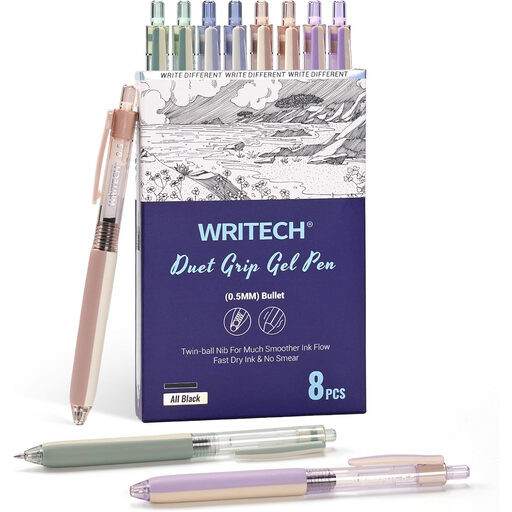
Why This Fits Their Persona: Ideal for taking quick, neat notes during lectures. The 0.5mm tip ensures clear, precise lines, even in a densely written notebook.
The quick-drying ink prevents smudges, which is useful when highlighting text immediately or for left-handed writers.
The unique 'duet grip' with two textures offers both comfort and control. The pens write smoothly without skipping.
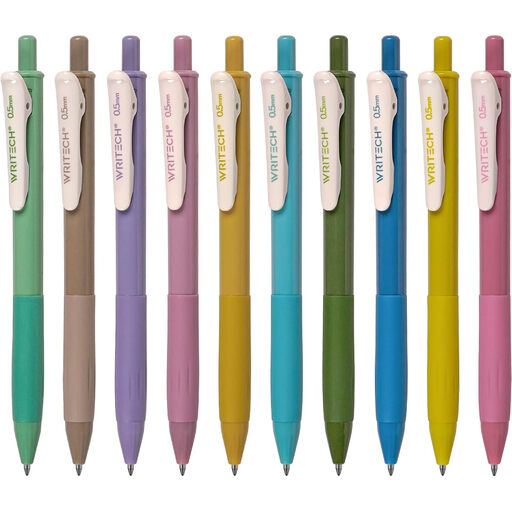
Why This Fits Their Persona: This gel pen set offers an assortment of unique, muted vintage colours that are perfect for creatively organising and decorating a journal.
The ink is quick-drying and doesn't smudge, ensuring your creative layouts and colour-coding stay crisp and clean.
The 0.5mm fine tip provides a smooth, uninterrupted line, ideal for both writing and drawing in small spaces.
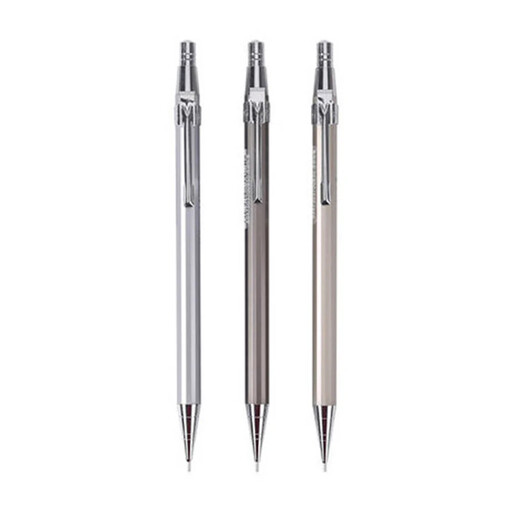
Why This Fits Their Persona: The solid metal body gives this 0.5mm mechanical pencil excellent balance and weight, providing superior control for detailed technical work or sketching.
Unlike cheap plastic alternatives, the metal construction offers durability and a reliable mechanism that won't jam easily.
Delivers consistent, sharp 0.5mm lines essential for precision work. The set of three offers excellent value for money.

Why This Fits Their Persona: These ergonomic pencils are specially designed to help young children develop a correct and stable pencil grip.
The triangular shape with special grip holes prevents a cramped hand position, unlike standard round pencils that are difficult for small hands to hold.
Made from quality wood that sharpens easily and cleanly, making the HB lead less prone to breaking. A practical set for home and school.
We have compiled a complete, up-to-date list of products that meet these selection criteria and current regulations.
The main difference is the ink. Gel pens use a thicker, pigment-based ink that is opaque and comes in vibrant colours. This ink is often quick-drying. Rollerball pens use a thinner, water-based ink that absorbs deeper into the paper, providing a very smooth writing experience, similar to a fountain pen.
This often has two causes: the quality of the pencil and the sharpener. Opt for pencils where the lead is securely bonded to the wood, like the M&G or Faber-Castell pencils mentioned. Additionally, use a sharp, high-quality pencil sharpener and don't apply too much pressure while sharpening.
Not always; it depends on your purpose. For daily notes, a reliable and comfortable pen from a brand like WRITECH or M&G is more than sufficient. For artistic applications, such as blending colours or creating depth in a drawing, a professional drawing set with high-quality pigments and materials does offer a noticeable advantage in the final result.
