
Washing in a narrow alcove
You have limited width or space in front of the machine and want to check whether a top-loader will fit and can be used with the lid open.


If width is your main constraint, look at top-loaders first. If depth is the issue and the door can open freely, compare shallow front-loaders instead. A top-loader needs space above the machine, and its stated drum capacity may not apply to every programme. Measure the entire space available and, for workwear, follow the care label and, where necessary, your workplace instructions.
You have limited width or space in front of the machine and want to check whether a top-loader will fit and can be used with the lid open.
There is room for a front-opening door, but you want a machine that does not stick out too far into the room and can handle your usual load.
You want to care for your clothes according to the care label, and protective clothing may also need to be treated in line with workplace instructions.
Choose this option if: width is the limiting factor and the lid can open freely above the machine.
Bear in mind: you need space above the machine, and the drum capacity must suit your sorted workwear. The Consumentenbond reported that top-loaders performed less well than standard front-loaders in its tests; this finding does not necessarily apply to every individual model.
Choose this option if: you have around 60 cm of width and room for the door, but depth is limited.
Bear in mind: allow extra room for hoses and connections beyond the stated cabinet depth, and measure with the door open too.
Measure the width, depth, height and opening clearance before comparing models. Match the load to the programme permitted by the care label.
| Consideration | What to look for | Who is this important for? |
|---|---|---|
| Will the machine fit? | Measure the available width, depth and height; check the lid or door clearance and space for connections. | If the alcove is tight, I want to be sure the machine will fit and can open; around 36% of consumers prioritise fitting the space. |
| Load size and washing performance | Weigh a typical sorted load and check the capacity allowed for the programme. | I want the drum to suit my usual workwear wash; around 29% of consumers put suitable load capacity and washing performance first. |
| Care instructions | Read the care label and check which workplace instructions apply to protective clothing. | For clothes with specific care requirements, I want to know first what treatment is permitted; around 21% of consumers prioritise clothing care instructions. |
| Use and installation | Compare energy-label figures on the same basis and check the installation and maintenance instructions. | If I wash clothes frequently, I also want to consider energy use and practical installation; around 14% of consumers put use and installation first. |
The lid needs clearance above the machine, so a top-loader cannot be placed under a worktop.
Before choosing a model, also measure the height, opening clearance, depth and space for connections.
The rated capacity applies to cotton; a different programme or delicate fabrics may require a smaller load.
Weigh a typical sorted load and check the maximum capacity of the programme permitted by the care label.
One appliance means you do not need a separate tumble dryer, but electric drying takes time and energy. The Consumentenbond points to the relatively high energy use and long drying times of standard washer-dryers.
Compare washing and drying capacities separately, and consider this option only if you need electric drying and cannot fit a second appliance.
A product listing for the Beko BM3WFU3741S gives different energy classes and colours. Beko lists this model as energy class A.
Before buying, check the exact model, product information sheet and supplied version.
The LTR6363A is a top-loader for a space where width is limited.
The TW 6521S SENSE WASH BE is a top-loader to consider when width matters more than having clear space above the machine.
The HW70-BP14357TU1 is a shallow front-loader for a space with around 60 cm of available width.
The BM3WFU3741S is a front-loader with a depth of 49.6 cm according to Beko.
The WAN2809XNL is a standard front-loader to compare if you do not need a shallower machine.
These Joybuy products are shallow front-loaders for spaces where installation depth is a key constraint.
 Image unavailable
An option to compare if limited depth and a 7 kg load suit your usual washing.
Stated depth: 400 mm. Capacity: 7 kg. 16 programmes.
Check that the selected programme and load suit the care label on your workwear.
 Image unavailable
A shallow option to compare if 6 kg suits your usual workwear load.
Stated depth: 45 cm. Capacity: 6 kg. BLDC inverter motor. Energy class B.
Check the permitted load for the programme that suits the care label.
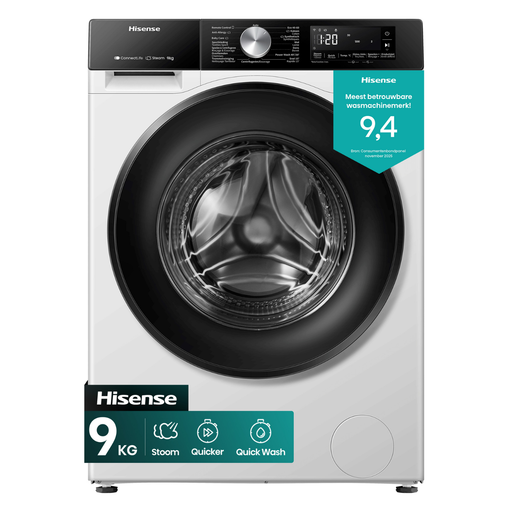 Image unavailable
An option to compare if the 50 cm depth and 9 kg capacity suit your space and laundry load.
Capacity: 9 kg. Spin speed: 1400 rpm. Energy class A.
Compare the full installation space required and check the care label for the right treatment.
 Image unavailable
Compare this model if an 8 kg capacity and the stated depth suit your laundry load and installation space.
Stated depth: 54.6 cm. Capacity: 8 kg. Spin speed: 1400 rpm. Energy class A. 15 programmes.
The product information warns against washing items treated with flammable solvents or industrial chemicals. Also follow the care label and any applicable workplace instructions.
 Image unavailable
An option to compare if a 7 kg capacity suits your sorted workwear load.
Stated dimensions: 595 × 440 × 850 mm. Capacity: 7 kg. 15 programmes. Energy class A.
Check there is room for connections and the open door, and choose a programme permitted by the care label.
No, you cannot tell from the name alone. Read the care label; according to Arboportaal, clothing that protects against workplace hazards is personal protective equipment. For such clothing, or if it may be contaminated with hazardous substances, check which workplace instructions and arrangements apply.
Weigh a typical sorted load and check the permitted capacity for the programme you have chosen. According to the Consumentenbond, the rated capacity applies to cotton; a lower load may be suitable for delicate or synthetic fabrics.
Measure the full installation space, including room for the door or lid and connections, and make sure the surface is stable. Check what delivery and installation include, and follow the maintenance instructions for your chosen model, including those for the detergent drawer, door seal and filter.
The Dutch appliance label provides energy and water information. Compare figures on the same test basis; the eco programme’s consumption will not necessarily match that of the programme your workwear needs. Costs also depend on how often you wash and your energy tariff.
No. According to the Dutch government, the Netherlands has no fixed legal guarantee period. You are entitled to a product that works properly, and what you can expect depends, among other things, on its expected lifespan and how it is used. If a product is faulty, contact the retailer.