
Workshop cook with an existing fridge
You want to check first whether your current fridge has enough space to store radishes and other ingredients properly. The Netherlands Nutrition Centre recommends storing vegetables in the salad drawer.


You don’t automatically need an extra fridge. If your current fridge has enough suitable space and you can check the temperature, you can store radishes in the salad drawer. If you need more chilled storage, choose a fridge based on the space available and the quantity of ingredients. The Netherlands Nutrition Centre recommends setting your fridge to 4 °C and removing the radish leaves before storing them.
You want to check first whether your current fridge has enough space to store radishes and other ingredients properly. The Netherlands Nutrition Centre recommends storing vegetables in the salad drawer.
You may need extra chilled storage, but you’ll need to choose an under-counter fridge that fits the space available and has the layout you want. The Consumers’ Association highlights the difference between a small under-counter model and a taller fridge with more capacity.
As well as radishes, you store other chilled ingredients and want to weigh up the capacity you need against the space a larger appliance takes up. The Consumers’ Association discusses this trade-off when choosing a fridge.
First work out how much chilled storage the workshop actually needs. Then check the drawer layout, the space available for the appliance and its stated annual energy consumption.
| What to consider | What should you check? | Who is this important for? |
|---|---|---|
| Storage and temperature | Check whether there’s a salad drawer and measure the actual fridge temperature. The Netherlands Nutrition Centre recommends a setting of 4 °C. | If I want to store radishes in a suitable place during the workshop, I’ll check the drawer and temperature. Around 36% of consumers give storage and temperature top priority. |
| Limited space for the appliance | Measure the space and the doorway; compare the external dimensions and usable fridge capacity. | If the kitchen has limited space, I want to know whether the appliance will fit without obstructing access or getting in the way of the layout. Around 29% of consumers prioritise a compact setup that fits. |
| Larger quantities of ingredients | Make a list of the ingredients and packaging that need chilling, then compare the fridge capacity and drawer layout. | If I’m chilling lots of other ingredients as well as radishes, I want enough usable space. Around 21% of consumers choose mainly based on the space they need for larger workshop supplies. |
| Energy use and aftercare | Compare the stated annual energy consumption in kWh of models that fit the space, and read the warranty terms. | If the fridge will also be switched on outside workshop hours, I want to factor in its annual energy consumption and know where to turn if it develops a fault. Around 14% of consumers prioritise running costs and aftercare. |
A drawer doesn’t replace the advice on storing radishes. The Netherlands Nutrition Centre recommends removing the leaves; protecting them from drying out is also important.
Check that the drawer is suitable and easy to reach for your workshop supplies, and decide in advance how you’ll store the radishes.
For a fridge-freezer, the total capacity isn’t the same as the space available for chilled ingredients. The Netherlands Nutrition Centre says radishes are not suitable for freezing.
Compare the fridge and freezer capacities separately. Choose a freezer compartment only if you also need it for other workshop ingredients.
The energy rating alone doesn’t tell you how much electricity a suitable appliance is stated to use each year. Milieu Centraal also points out that two cooling appliances use more energy than one.
First work out how much chilled storage you need, then compare the stated annual energy consumption in kWh.
Its performance can be affected if the ambient temperature falls outside the appliance’s specified range. The Consumers’ Association points out that the climate class indicates the ambient temperatures a model is suitable for.
Check the climate class and permitted ambient temperature for the exact model before deciding where to put it.
According to Inventum, the KK471W is a compact fridge with a 94-litre capacity and a removable salad drawer.
According to Liebherr, the Rci 1620 Plus is an under-counter model with a total capacity of 141 litres and an EasyFresh drawer.
Bosch lists a fridge capacity of 134 litres for the KTR15NWEB and 402 litres for the KSN36VLDG; according to Bosch, neither model has a freezer compartment.
According to Beko, the TSE1285N has 101 litres of capacity for its fridge and fresh-food section, as well as a freezer compartment.
This selection includes under-counter models, larger fridges and a built-in model, including models with a freezer compartment. Where stated, compare the fridge capacity separately and choose a size to suit your workshop supplies and the space available for a freestanding or built-in appliance.
 No image available
This under-counter model could suit you if you’re looking for a compact setup and also need freezer space for other products.
109 litres total capacity: 95 litres of fridge space and 14 litres of freezer space. Dimensions: 84,50 × 54,90 × 55,70 cm. Energy rating C.
 No image available
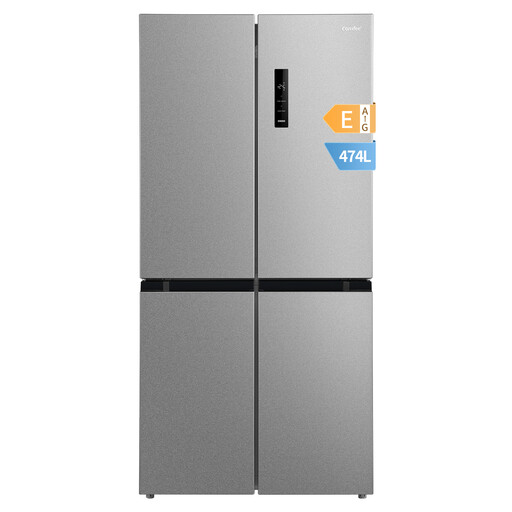
The listed salad drawer with three temperature settings could be useful if you want to store vegetables separately and need more fridge space.
474 litres total capacity. Four doors. Salad drawer with three temperature settings. The product description also mentions a freezer compartment.
 No image available
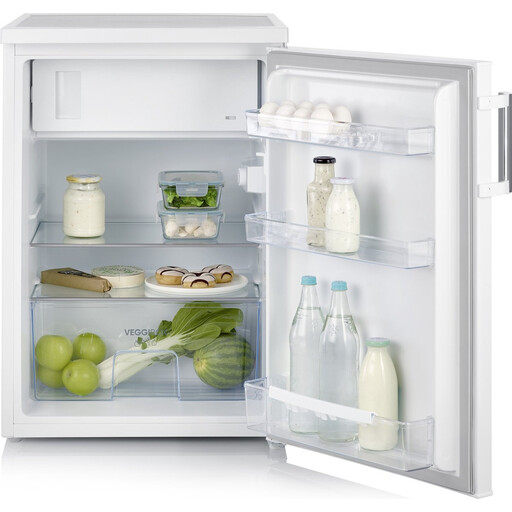
This under-counter model could suit you if space is limited and you need freezer space for other products as well as fridge space.
120 litres total capacity: 107 litres of fridge space and 13 litres of freezer space. Removable salad drawer. Energy rating C.
 No image available
This compact fridge could suit you if you’re looking for a salad drawer and adjustable temperature control for a limited space.
92 litres capacity and 47 cm wide. Seven temperature settings, adjustable shelves and a reversible door. Energy rating E.
 No image available
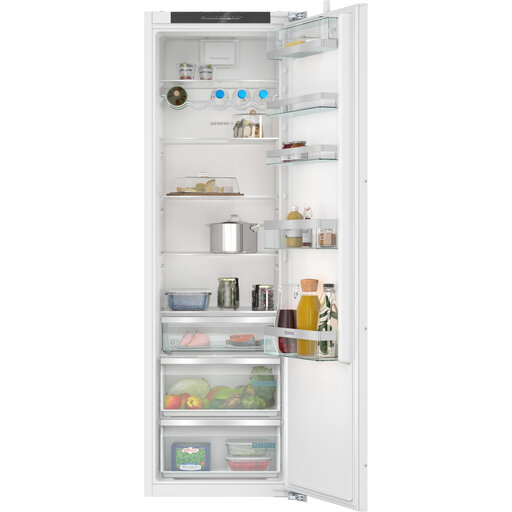
This built-in model could suit you if you need to chill a large quantity of ingredients and have a suitable space for it.
310 litres capacity, two salad drawers, digital temperature control and seven shelves. Requires a suitable built-in space.
No, not if your current fridge has enough space and you can check the temperature. Remove the leaves and protect the radishes from drying out; the Netherlands Nutrition Centre recommends storing vegetables in the salad drawer.
No. The Netherlands Nutrition Centre recommends a setting of 4 °C, but you should also check the actual temperature. In its fridge tests, the Consumers’ Association separately measures whether appliances reach their set temperature.
Wash raw vegetables under running water and use clean kitchen utensils. Keep raw meat or fish, and any drips from them, separate from the radishes.
Check the climate class and permitted ambient temperature for the exact model. Not every fridge is suitable for a cold shed or garage.
Not simply because it’s called a ‘workshop’. According to the NVWA, businesses that produce, process, sell or distribute food must work with a food safety plan or an approved hygiene code. Whether this applies to your workshop depends on the activities involved.