What should you consider when choosing?
First, work out how bright the room will be during the screening and how much distance you have. Then check that the projector works with your video source and audio setup.
Standard projector with higher stated brightness
Suitable when: some ambient light remains and there’s enough distance from the projection surface.
Bear in mind: measure the distance and assess the picture at your planned screen size; a lumen rating alone doesn’t guarantee a suitable picture.
Short-throw
Suitable when: a standard projector would need to sit too far from the screen, or the setup would obstruct a walkway.
Bear in mind: check the exact model’s distance requirements for your screen size; a short projection distance doesn’t automatically mean you can leave the room bright.
Ultra-short-throw
Suitable when: placing the projector close to the projection surface helps keep the walkway clear.
Bear in mind: check that the resolution is suitable for the film’s level of detail; according to Epson, the Epson EB-685W has WXGA rather than Full HD resolution.
Compact portable projector
Suitable when: you move the setup frequently and can darken the room effectively.
Bear in mind: assess the brightness in the actual lighting conditions and at your preferred picture size; portability alone says nothing about visibility in a bright room.
| What to consider |
What should you look for? |
Who is this important for? |
| Visibility in ambient light |
Note the lighting during the screening and the picture size you want. Compare stated brightness using the same measurement standard. |
If the workshop room stays lit, I want participants to be able to follow the film without darkening the whole room. Around 33% of consumers prioritise visibility in ambient light. |
| Positioning and walkways |
Measure the picture width and the distance from the lens to the projection surface, then compare these with the specifications for the exact model. |
When participants are moving around the room, I want to position the projector so the setup doesn’t obstruct the walkway. Around 27% of consumers prioritise positioning and a clear walkway. |
| Audio and film source |
Check the connections on both the projector and playback source, and test the complete audio setup before the screening. |
If the commentary needs to be clear, I want to make sure my source and any external speaker work together. Around 20% of consumers prioritise clear audio and a working film source. |
| Flexibility and maintenance |
Check whether the projector will be moved often, what power supply it needs and what type of light source it uses. |
For changing film setups, I want to know whether the projector is practical to move and what maintenance is needed for regular use. Around 20% of consumers give flexibility and maintenance top priority. |
Projectors at Joybuy
These Joybuy projectors are options to consider for workshop films and shared entertainment. Check that the distance, connections and intended use of each model suit your room.
 No image available
Optoma UZ38X 4K UHD Dual-Laser Projector
Could suit anyone looking for a 4K UHD projector with several HDMI sources to connect; make sure the positioning works with the available distance.
The product name lists 3,800 lumens, DLP, 1.3× zoom and a 15 W speaker. The stated projection distance is 1–8 m; the screen and playback source aren’t included.
View at Joybuy
 No image available
Projector with built-in apps and 180° rotation
Could be worth considering if you want to project in different directions; check in advance that the available connections work with your film source.
The product name lists automatic screen correction, digital zoom and compatibility with HDMI and USB.
View at Joybuy
 No image available
Optoma Photon Beam PK52
A model to include in your comparison if you’re looking for a projector for detailed films with audio from the projector itself.
The stated projection distance is 1–8 m; check that it suits the picture size you want and the projector’s position in the room.
View at Joybuy
 No image available
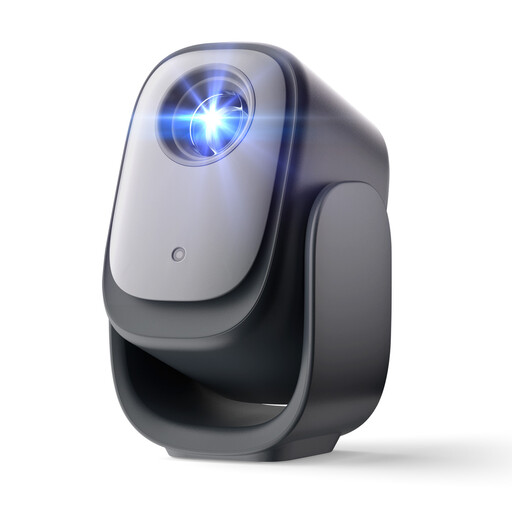
Dangbei N2 Mini portable 1080P smart projector
Could work well in a flexible setup for watching films through a built-in app; check in advance that your chosen playback method is available for your film.
The product name lists Wi-Fi, Bluetooth, 1080P, automatic focus and automatic keystone correction.
View at Joybuy
 No image available
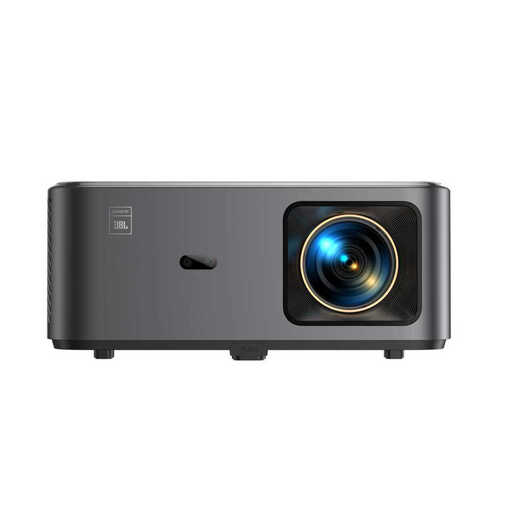
Yaber K2s projector with native 1080P
Could be suitable if you’re looking for native 1080P and want to explore a short projection distance; compare the model specifications with the space available.
The product name lists 4K support, Google TV, Wi-Fi 6, Bluetooth, and automatic focus and keystone correction. Native 1080P and 4K support are different specifications.
View at Joybuy
Frequently asked questions
How can I tell whether a projector will fit in the space available?
Measure the picture width you want and the distance from the lens to the projection surface, then compare these with the projection ratio or distance chart for the exact model. BenQ emphasises that screen size and projection distance need to be considered together.
Can I use an external speaker for clear film audio?
That depends on the connections available on both the projector and the playback source. Check whether the model you’re considering has an audio output, for example, and test the full connection. BenQ notes that support can vary by model.
What should I check if I’ll be using the projector regularly?
Compare the type of light source and the stated lifespan in each operating mode for the models you’re considering. Epson lists a lamp for the EB-FH52, while Optoma lists a laser for the HZ146X-W. If a product is faulty, you can ask the seller to put things right as a consumer; the Dutch government states that there is no fixed statutory guarantee period that applies to all products in the Netherlands.
Do I always have 14 days to change my mind when buying online?
Not in every situation. The Dutch government says that consumers buying online from a business often have a 14-day cooling-off period. Check what applies to your specific purchase; this doesn’t automatically apply to a business purchase for your workshop.
Can I show a film in the shared workshop space?
You may need permission to screen someone else’s copyrighted film. The Dutch government describes the copyright holder’s permission as a condition for using protected work, while FilmService describes licences for public film screenings. Whether this applies to your film and planned screening depends on the work, the rights granted and the circumstances. A projector doesn’t grant screening rights.


