
Workshop leader preparing lots of portions
You need to keep several containers of cooked beetroot and other ingredients chilled at the same time. Check the shelf layout and available fridge space, and use a thermometer to measure the temperature.


An extra fridge isn’t automatically necessary. First, see if your existing fridge can accommodate covered portions and you can check the storage temperature. The Netherlands Nutrition Centre advises letting cooked portions cool first and refrigerating them within 2 hours; use a thermometer to check that the fridge stays at around 4 °C. If you regularly run out of fridge space, choose a model based on the number of containers you need to store, the space available and whether you also want to freeze portions.
You need to keep several containers of cooked beetroot and other ingredients chilled at the same time. Check the shelf layout and available fridge space, and use a thermometer to measure the temperature.
You want extra fridge space without having to fit in a large cabinet. The external dimensions, installation requirements and usable layout will determine whether an under-counter model is suitable.
You want to check whether your existing fridge is big enough first, as a second fridge also uses electricity.
Start by checking your existing fridge and how you’ll monitor its temperature. Then decide whether you need another appliance and what size will suit your portions and available space.
Suitable if: covered portions fit alongside your other ingredients and you can check the temperature.
Consider: you won’t need a second appliance, but containers and frequent door openings mean you’ll need to pay attention to the layout and temperature.
Suitable if: you need extra fridge space for a few containers and have a suitable place to put the appliance.
Consider: the stated capacity won’t tell you by itself whether your containers will fit, and a second appliance uses electricity.
Suitable if: you want to chill ingredients for several workshop groups, or other ingredients, at the same time.
Consider: a larger stated capacity needs more space, and doesn’t guarantee that a domestic model will maintain its temperature with intensive use.
Suitable if: you store lots of gastronorm containers and need a cabinet for more intensive kitchen use.
Consider: check the exact configuration, container layout, installation requirements and actual temperature reached. Manufacturer claims aren’t independent performance tests.
Suitable if: you want to freeze some portions as well as keeping others chilled for a short time.
Consider: freezer space won’t replace suitable fridge space during the workshop. Also check whether the freezer compartment is suitable for fresh portions.
| What to consider | What should you check? | Who is this important for? |
|---|---|---|
| Temperature and storage | Let portions cool first, refrigerate them within 2 hours and measure the fridge temperature with a separate thermometer. If you run a food business, follow the relevant food safety procedures. | When I’m storing prepared food for a group, I want to know whether it will stay cold once it’s chilled. Around 36% of consumers say temperature control is their top priority when buying. |
| Space for portions | Count how many containers need to be chilled at the same time, measure them and compare their dimensions with the usable shelf layout of the exact model. | When several workshop portions need to go in the fridge at once, I want to be sure they’ll fit alongside the other ingredients. Around 29% of consumers put container capacity first. |
| Available space | Measure the available width, height and depth. Also check the ventilation requirements and the space needed to open the door. | In a small workshop space, I want a fridge that won’t obstruct the walkway or access to the containers. Around 21% of consumers say the space available for installation is their main consideration. |
| Energy consumption | For the exact model, compare the stated annual consumption in kWh with the fridge space you need. Don’t use that figure to estimate workshop running costs without information about how the appliance will be used. | If I need extra fridge space, I also want to know how much electricity a second appliance will use. Around 14% of consumers say running costs are their top priority. |
The Netherlands Nutrition Centre advises letting cooked portions cool first and putting them in the fridge or freezer within 2 hours of cooking. For chilled storage, it recommends a temperature of 4 °C. Check this with a separate fridge thermometer rather than relying only on the selected setting.
Capacity in litres is a starting point, not a guarantee that your containers will fit. Measure them and check the internal layout of the exact model. Milieu Centraal points out that two refrigeration appliances use more energy together than one large appliance, so first decide whether you really need the extra fridge space.
A fridge function doesn’t prove that a large quantity of warm beetroot will cool quickly enough or that other food will stay cold.
Follow the Netherlands Nutrition Centre’s advice: let cooked portions cool first and refrigerate them within 2 hours. If you run a food business, follow the relevant food safety procedures and check the temperature separately.
The stated capacity isn’t the same as the usable space for covered containers. If you’re looking at a model with a freezer compartment, you’ll also need to distinguish between the fridge and freezer space.
Measure your containers and compare their dimensions with the shelf layout and stated fridge capacity of the exact model.
An extra appliance uses electricity. Milieu Centraal advises taking the capacity you need and energy consumption into account.
First check whether your existing fridge is big enough. If you do need an extra cabinet, compare the stated annual consumption of suitable models.
External dimensions alone don’t confirm that there’s enough room for ventilation, installation and opening the door.
Before buying, check the installation and ventilation requirements in the manual for the exact model, and measure the space needed to open the door.
The KK550 is a freestanding under-counter model with a stated capacity of 131 l and a width of 55 cm. Inventum lists adjustable shelves.
According to Bosch, the KSV33VLEP is a freestanding fridge without a freezer compartment, with 324 l of fridge space and external dimensions of 176 × 60 × 65 cm.
The Compact R600 with a solid door is a commercial model. Gram lists 2/1 GN depth, a net capacity of 421 l and a temperature range of +2 to +12 °C.
The TSE1285N is a compact under-counter model with a stated fridge capacity of 101 l and external dimensions of 84 × 54 × 59 cm.
The Ke 2350 Comfort is a mid-sized freestanding fridge. Liebherr lists a total volume of 213 l, external dimensions of 114 × 55 × 63 cm and annual consumption of 101 kWh.
This selection focuses on freestanding under-counter fridges for extra chilled storage, and also includes models with a freezer compartment for those who want to freeze portions too.
 No image available
An under-counter model for anyone looking for compact extra fridge space for covered workshop portions.
The description lists 88 l of fridge space, three adjustable glass shelves and a salad drawer. No freezer compartment is listed.
 No image available
A compact fridge-freezer for anyone who wants to keep workshop portions chilled and have freezer space too.
The description lists 95 l of fridge space and 14 l of freezer space. The layout includes two glass shelves, a salad drawer and three door shelves.
 No image available
An under-counter model with fridge and freezer space for anyone who wants to freeze portions as well as keep them chilled.
The description lists 107 l of fridge space and 13 l of freezer space, plus dial temperature control. The rapid-cooling function doesn’t prove that warm portions will cool safely: let them cool first and refrigerate them within 2 hours.
 No image available
An under-counter model for anyone who wants to store several portions alongside other food.
The description lists a capacity of 129 l, two glass shelves, a salad drawer and two door compartments.
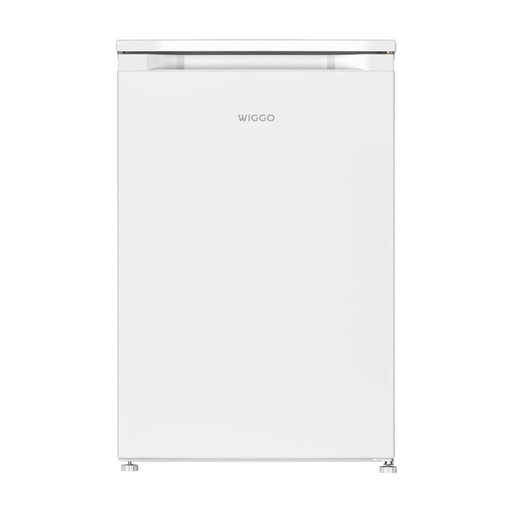 No image available
An under-counter model for anyone who wants to organise chilled portions neatly in a compact fridge.
The description lists a net capacity of 107 l, a glass shelf, a salad drawer, door shelves and a reversible door.
For opened cooked beetroot, the Netherlands Nutrition Centre recommends 2 days in the fridge. Its general advice for leftovers is to keep them covered for no more than 2 days; freeze them if you want to store them for longer.
The Netherlands Nutrition Centre recommends a temperature of 4 °C. Place a fridge thermometer in the middle of the bottom shelf, leave it there for half a day or overnight, and adjust the fridge if the reading is too high. Don’t rely solely on the selected setting.
The Netherlands Nutrition Centre advises letting leftovers cool first, then putting them in the fridge or freezer within 2 hours of cooking. If necessary, divide a large amount between smaller, clean, sealable containers. A cooling function on the appliance doesn’t replace the need to cool the food first.
The term ‘cooking workshop’ alone doesn’t determine this. According to the NVWA, businesses that produce, process, sell or distribute food must follow a food safety plan based on HACCP or an applicable hygiene code. First check whether your activity falls under these business rules.
Compare the stated annual consumption in kWh of models that meet your refrigeration needs, and decide whether you really need a second fridge. According to the Dutch government, there’s no fixed statutory guarantee period for consumer purchases in the Netherlands. Your statutory rights apply alongside any manufacturer’s guarantee. If a product is faulty, contact the seller.